











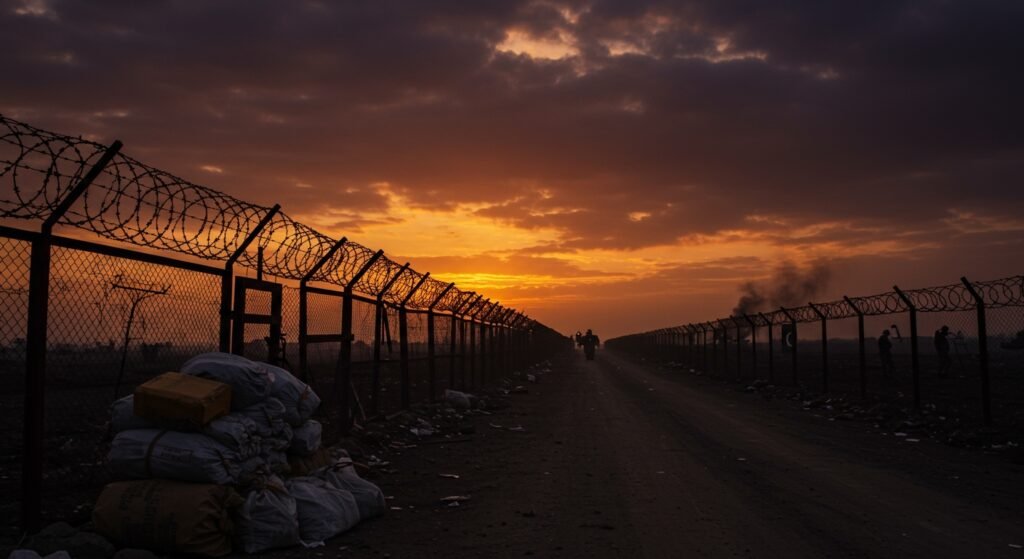
New Delhi, India – In a significant escalation of tensions following a deadly attack in Jammu and Kashmir, India has taken stringent measures against Pakistan, suspending postal services and imposing a comprehensive ban on imports. These actions come in the immediate aftermath of Pakistan test-firing a surface-to-surface missile, adding a layer of complexity to the already fraught relationship between the two South Asian nuclear powers.
The moves underscore the heightened state of alert and diplomatic friction following the recent terror attack in Pahalgam, which tragically resulted in the deaths of 26 people. The attack has renewed focus on cross-border security and the deep-seated animosity characterizing India-Pakistan ties.
Pakistan’s Missile Demonstration
Amidst the backdrop of these heightened tensions, Pakistan’s military on Saturday, May 3, 2025, conducted a test-firing of its Abdali Weapon System. The Abdali is identified as a surface-to-surface missile system. Official reports indicated the missile successfully reached its stated range of 450 km during the test.
Missile tests by either nation are often viewed through a strategic lens, interpreted as displays of capability or responses to geopolitical developments. Coming on the same day as India’s strong reactions, the timing of the Abdali test is likely to be scrutinized by international observers.
India’s Swift Retaliation: Suspending Mail and Imports
India’s response to the prevailing situation and the preceding events was swift and comprehensive, targeting communication and trade links with its neighbor.
Effective Saturday, May 3, 2025, India announced the suspension of the exchange of all categories of mail and parcels with Pakistan. This suspension applies to both air and surface routes, effectively halting official postal communication between the two countries. This measure impacts various forms of correspondence and package delivery, disrupting a long-standing, albeit sometimes inconsistent, channel of communication.
Separately, and with immediate effect, India also implemented a sweeping ban on imports from Pakistan. As per a Government Order issued on Friday, May 2, 2025, India banned the direct and indirect import of all goods from Pakistan. The order cited the interest of national security and public policy as the rationale behind this stringent economic measure. This ban represents a significant downturn in bilateral trade, effectively cutting off the import of any Pakistani products into the Indian market, regardless of the channel through which they are routed.
The dual actions – suspending postal services and banning imports – signal New Delhi’s firm stance in response to the security situation and Pakistan’s recent military activity.
Implications of India’s Measures
The suspension of mail services, while seemingly administrative, carries symbolic weight in the often-strained relationship. It affects personal correspondence and official documents, further limiting direct interaction channels between citizens and entities in both countries.
The import ban, however, is a more significant economic step. While bilateral trade volume has historically fluctuated based on political climate, a total ban impacts Pakistani exporters and Indian importers who still engaged in trade, even indirectly. The stated reasons of “national security and public policy” provide a broad legal basis for the measure, reflecting the government’s determination to prioritize security concerns over trade facilitation in the current climate.
These measures collectively deepen the freeze in diplomatic and economic relations between India and Pakistan, adding layers of complexity to any future attempts at de-escalation or dialogue.
Developments in Australia: Prime Minister Albanese’s Re-election
In separate significant international news, Prime Minister Anthony Albanese of Australia has secured a notable political achievement. Mr. Albanese won re-election, confirming his leadership for a second consecutive term.
His victory marks a significant milestone in Australian politics, as he becomes the first Australian Prime Minister in 21 years to secure a second consecutive three-year term. This electoral success provides Mr. Albanese with a renewed mandate to pursue his government’s agenda and solidify his position on the domestic and international stage.
The re-election of a prime minister for a consecutive term is relatively infrequent in recent Australian history, highlighting the political stability represented by Mr. Albanese’s win. His continued leadership is expected to influence Australia’s foreign policy, economic direction, and domestic priorities over the next three years.
Conclusion
Today’s international landscape is marked by significant developments ranging from escalating tensions in South Asia, where India has implemented strong countermeasures against Pakistan following a missile test and terror attack fallout, to political continuity in the Pacific, with Prime Minister Anthony Albanese’s re-election in Australia. These events underscore the dynamic and interconnected nature of global affairs, with distinct regional challenges and political outcomes unfolding simultaneously.
More Stories
Iran Military Scoffs as US Pushes Ceasefire Plan Amid Escalating Tensions
AI Smuggling Ring Busted: 3 Charged in $2.5B Tech Heist
Middle East Tensions Explode: Iran Launches Missile Barrage After US-Israel Strikes