











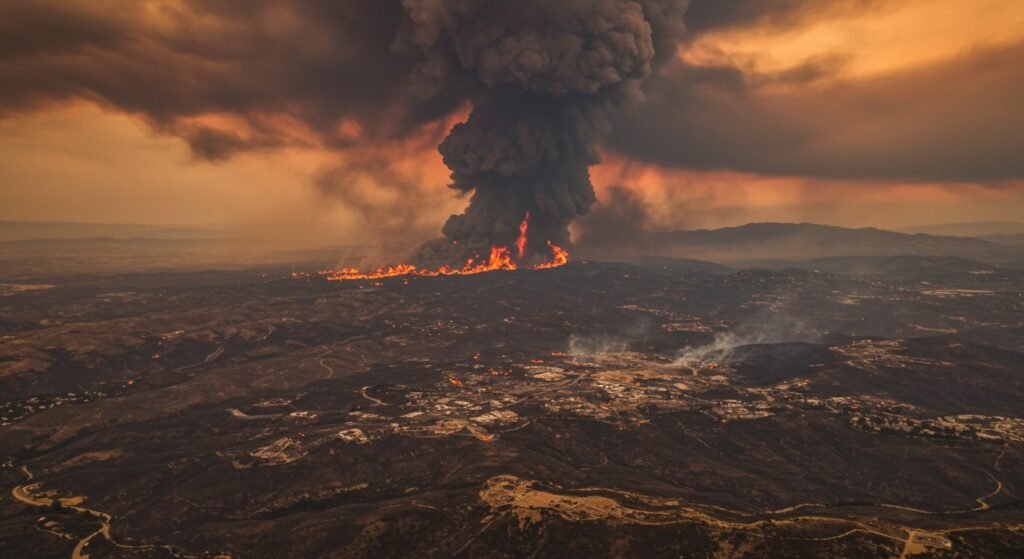
SOUTHERN CALIFORNIA – A escalating wildfire crisis sweeping across Southern California, particularly around the sprawling metropolis of Los Angeles, has claimed the lives of at least 10 people, authorities confirmed, a toll officials fear could yet rise as search and rescue efforts continue.
The blazes, fueled by dry conditions and gusty winds, have wrought unprecedented destruction, transforming vast swathes of landscape into charred ruins and forcing the displacement of hundreds of thousands of residents.
Escalating Crisis and Human Toll
The confirmed death toll of 10 underscores the severe human cost of the fast-moving infernos. Emergency responders are navigating challenging and often dangerous conditions to search affected areas, raising concerns that more victims could be discovered as access improves and assessments are completed.
Los Angeles County Sheriff Robert Luna offered a stark assessment of the devastation witnessed by his personnel. Touring affected communities, Sheriff Luna commented that the areas look as if an “atomic bomb” had been dropped, a powerful metaphor reflecting the complete obliteration of structures and landscapes in the fires’ path.
Battle Against the Flames
Firefighters from across the region and beyond are engaged in a relentless battle against multiple significant wildfires. Among the most concerning are the Palisades and Eaton fires, which represent the largest blazes currently active.
As of early morning, containment efforts showed limited progress on these major fronts. The Palisades fire was reported to be only 6% contained, while the Eaton fire, a massive and aggressive blaze, remained 0% contained, posing significant challenges to firefighting crews attempting to establish control lines.
The situation was further complicated on Thursday evening by the rapid emergence of a new fire, dubbed the Kenneth fire. Originating in the West Hills north of Calabasas, the Kenneth fire expanded with alarming speed, consuming 1,000 acres in a matter of hours and adding another critical front to the overwhelmed emergency response.
Fighting conditions remain arduous, with rugged terrain, unpredictable winds, and the sheer scale of the fires hindering progress and putting firefighters at constant risk.
Widespread Destruction and Displacement
Experts are beginning to assess the full scope of the damage, and early indicators suggest these wildfires could rank among the most destructive in U.S. history. The economic fallout is also projected to be immense, with analysts predicting these blazes are likely to become the most costly disaster on record for the nation.
The physical damage is staggering. Preliminary estimates indicate that over 10,000 homes and other structures have been damaged or completely destroyed by the fires. Entire neighborhoods have been wiped out, leaving behind only foundations and twisted metal.
The threat to human life and property has necessitated large-scale evacuations. As of the latest reports, at least 180,000 residents across affected areas have been placed under mandatory evacuation orders, seeking refuge in shelters or with friends and family as they await news of their homes.
Weather Challenges Persist
The challenging weather conditions that have helped fuel these catastrophic fires are not expected to abate soon. Red flag fire weather warnings remain in effect across much of the region, indicating critical conditions for fire ignition and spread, including low humidity, dry vegetation, and potential for strong winds.
Forecasters are monitoring weather patterns closely and warn that the region could see the return of dangerous gusty dry winds as early as Sunday. Such winds could significantly complicate firefighting efforts, potentially leading to renewed fire growth and increased risk to communities already under threat.
Federal Response and Climate Context
The severity of the California wildfires has drawn attention from the highest levels of government. President Biden addressed the ongoing crisis, explicitly linked the fires to the climate crisis, and pledged federal support for the affected areas.
The President vowed federal aid would be provided to assist in recovery and rebuilding efforts. Specifically, he committed that the federal government would cover 100% of disaster assistance costs for the state over the next 180 days, a significant commitment aimed at accelerating the recovery process for individuals and communities devastated by the fires.
As firefighters continue their arduous work and residents cope with the trauma of displacement and loss, the focus remains on containing the uncontained blazes, ensuring the safety of remaining residents, and beginning the long process of recovery in the face of historic destruction.
More Stories
Iran Military Scoffs as US Pushes Ceasefire Plan Amid Escalating Tensions
AI Smuggling Ring Busted: 3 Charged in $2.5B Tech Heist
Middle East Tensions Explode: Iran Launches Missile Barrage After US-Israel Strikes