











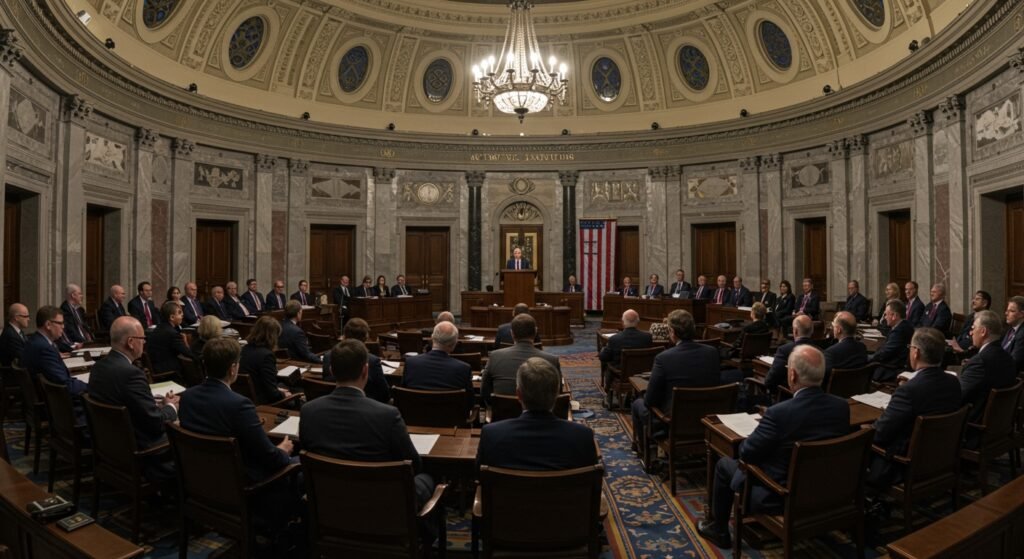
Donald J. Trump was formally inaugurated as the 47th President of the United States on Monday, January 20, 2025, in a ceremony notably relocated indoors at the U.S. Capitol. The decision to move the proceedings inside came after President Trump cited cold weather conditions. Chief Justice John Roberts administered the oath of office, marking the commencement of Trump’s second term in the nation’s highest office.
Inaugural Address Outlines “America First” Agenda
In his inaugural address, delivered shortly after taking the oath, President Trump reiterated his commitment to an “America first” agenda, signaling a return to the nationalist themes that defined his previous presidency. A key focus of his speech was immigration policy. President Trump declared a national emergency at the southern border, a move that provides broad executive powers to address the situation. He also vowed to initiate mass deportations, specifically targeting “millions and millions of criminal aliens,” and promised the reintroduction of his contentious “Remain in Mexico” policy, which requires asylum seekers to wait in Mexico while their cases are processed in the U.S.
Immediate Executive Actions: Pardons and Clemency
Hours after being sworn in, President Trump utilized his executive clemency powers to pardon or commute the sentences of individuals who were charged in connection with the January 6, 2021, Capitol insurrection. The beneficiaries of these actions included leaders associated with far-right groups involved in the events of that day, such as the Proud Boys and Oath Keepers, all of whom Trump described as his supporters.
This series of pardons and commutations marked one of President Trump’s first official acts, immediately signaling a significant shift in the federal government’s stance regarding those involved in the January 6th events. The move is expected to draw significant political commentary and legal analysis in the coming days.
Separately, before concluding his term, former President Joe Biden also exercised clemency, granting it to Indigenous political prisoner Leonard Peltier. Peltier’s case has long been a subject of activism and legal debate.
Prominent Tech Leaders Attend, Sparking Political Commentary
The inauguration ceremony was attended by a number of high-profile figures, including the chief executives of some of the world’s largest technology companies. Elon Musk, who heads Tesla, X (formerly Twitter), and SpaceX; Mark Zuckerberg of Meta; Jeff Bezos, founder of Amazon; Tim Cook of Apple; and Sundar Pichai, CEO of Google and Alphabet, were all given prominent seating at the event.
The conspicuous presence of these powerful business leaders drew sharp commentary from some political figures. Vermont independent Senator Bernie Sanders remarked on the seating arrangement, noting that the presence of what he described as the three wealthiest men in America positioned behind the newly sworn-in president signified that the “billionaire class now controlled the government.” Sanders’s comments highlight ongoing debates about the influence of corporate wealth and power in American politics.
The indoor inauguration, coupled with the swift policy announcements on immigration and the controversial pardons, sets a distinct tone for the beginning of President Trump’s second term. The policies outlined and the executive actions taken immediately upon entering office suggest a rapid implementation of key campaign promises, particularly concerning border security and addressing the legal outcomes for those involved in the January 6, 2021 events at the Capitol. The attendance and prominent seating of major tech industry leaders also underscore the complex intersection of business interests and political power in the current American landscape.
More Stories
AI Smuggling Ring Busted: 3 Charged in $2.5B Tech Heist
Middle East Tensions Explode: Iran Launches Missile Barrage After US-Israel Strikes
Russia Shares Intel with Iran to Target US Forces Amid Escalating War