










US Votes Against Ukraine Resolution, Joins Russia at UN
United Nations, New York – In a significant diplomatic maneuver on Monday, February 25, 2025, the United States broke ranks with its European allies at the United Nations, casting votes that aligned with the Russian Federation regarding resolutions concerning the ongoing war in Ukraine. This decision, executed by envoys from the Trump administration, marked a notable departure from the unified front typically presented by Western nations on the issue of Russian aggression in Eastern Europe.
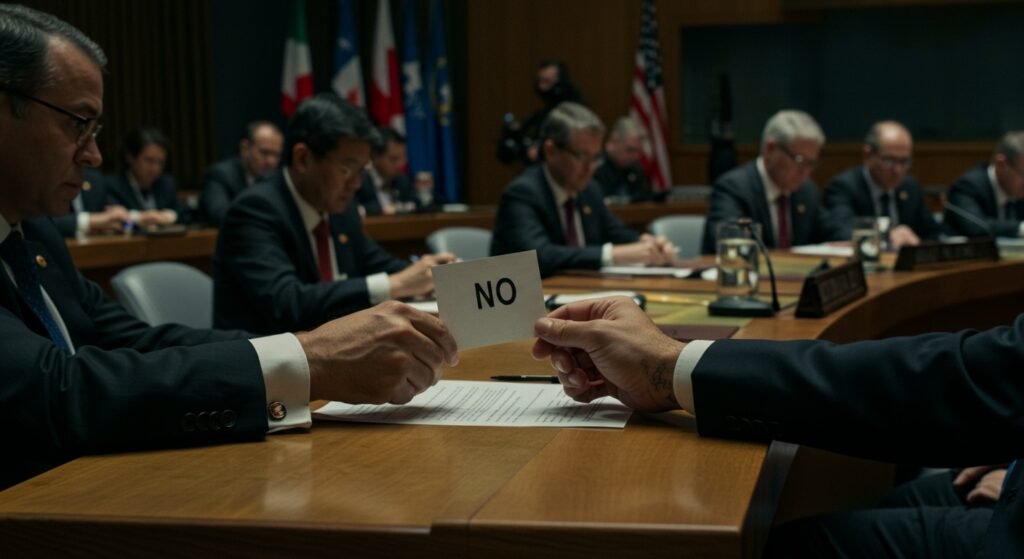
At the General Assembly, the primary deliberative body of the UN, the United States joined Russia in voting against a resolution put forth by a coalition of member states. This resolution specifically called for a swift deescalation of hostilities in Ukraine and urged the pursuit of a “comprehensive, just and lasting peace.” The US ‘No’ vote on this non-binding resolution sent ripples through the international community, particularly among allies who have staunchly supported Ukraine and advocated for measures condemning Russia’s actions.
Security Council Adopts US-Drafted Resolution
Separately, within the powerful 15-member U.N. Security Council, a different resolution concerning Ukraine was under consideration. This resolution, titled “The Path to Peace,” was notably drafted and put forward by the United States itself. On the same day, Monday, February 25, 2025, the Security Council adopted this US-led initiative.
However, the text of “The Path to Peace” contained a conspicuous omission: it did not place blame on Russia for its invasion of Ukraine. This aspect of the US-drafted resolution drew scrutiny and further highlighted the divergence in the Trump administration’s approach compared to that of its traditional European partners, many of whom have consistently sought to hold Moscow accountable through UN mechanisms and international law.
Commemoration and Condemnation on Anniversary
The day’s votes coincided tragically with a somber milestone – the third anniversary of Russia’s full-scale invasion of Ukraine. The gravity of the occasion was underscored by remarks delivered to the Security Council by U.N. Under-Secretary-General Rosemary DiCarlo prior to the vote on “The Path to Peace.”
DiCarlo addressed the council members, reflecting on the devastating impact of three years of intensified conflict. In her address, she unequivocally described Russia’s full-scale invasion of Ukraine as a clear violation of the U.N. Charter and international law. Her statements served as a stark reminder of the foundational principles upon which the United Nations was established and the severity of the crisis unfolding in Eastern Europe.
Implications for Alliances and Diplomacy
The United States’ decision to vote alongside Russia in the General Assembly and to advance a Security Council resolution omitting blame for the invasion signals a potential shift in its diplomatic posture regarding the Ukraine conflict. European allies, who have implemented extensive sanctions against Russia and provided significant military and financial aid to Ukraine, expressed surprise and concern over the US stance.
Analysts suggest that this divergence could complicate efforts to maintain a united international front against Russian aggression. The General Assembly vote, while not legally binding, carries significant political weight as a reflection of global sentiment. The Security Council, on the other hand, has the power to pass binding resolutions, though its actions on Ukraine have frequently been complicated by Russia’s veto power as a permanent member.
The adoption of the US-drafted “The Path to Peace” resolution, despite its controversial wording on responsibility, represents a specific diplomatic approach by the Trump administration aimed at navigating the complex dynamics of the Security Council while proposing a framework, albeit one that sidesteps direct condemnation of Russia’s initiating act.
Looking Ahead
The events of Monday, February 25, 2025, at the United Nations are likely to have lasting repercussions for transatlantic relations and the broader international response to the conflict in Ukraine. As the war enters its fourth year, the alignment of a permanent Security Council member and key NATO ally like the United States with Russia on specific UN votes presents a new challenge for the global diplomatic landscape. The international community will be closely watching to see how this shift influences future peace initiatives and the cohesion of alliances dedicated to supporting Ukraine’s sovereignty and territorial integrity.
More Stories
Iran Military Scoffs as US Pushes Ceasefire Plan Amid Escalating Tensions
AI Smuggling Ring Busted: 3 Charged in $2.5B Tech Heist
Middle East Tensions Explode: Iran Launches Missile Barrage After US-Israel Strikes