











The landscape of cinema continues to grapple with the complexities of fame and the media machine that surrounds it. A recent entry into this space, the A24 thriller “Opus,” directed by Mark Anthony Green, attempts to dissect these themes. However, early reception, notably from Paste Magazine, suggests the film encounters significant hurdles in effectively communicating its intended critique of media and celebrity culture. The review highlights specific areas where the film struggles, pointing to deficiencies in clarity, the articulation of a strong central thesis, the cohesion of its plot, and ultimately, its narrative payoff.
Navigating Professional and Public Pressures
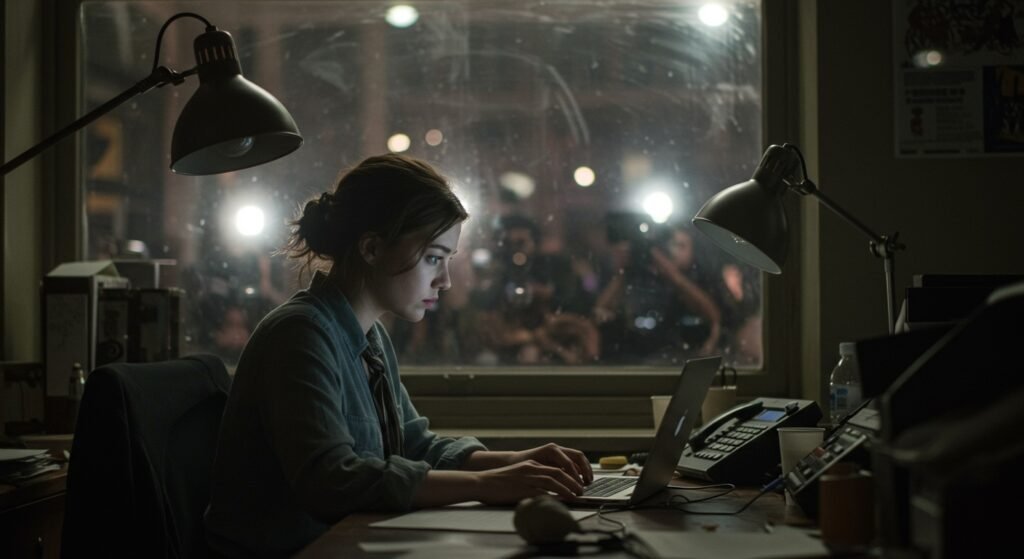
At the heart of “Opus” is the character of Ariel Ecton, portrayed by Ayo Edebiri. Ariel is presented as a 27-year-old staffer at a New York-based culture publication. Her personal journey in the film appears to be defined by a sense of stagnation within her professional role. This internal anxiety regarding her career trajectory serves as a key character element, grounding the narrative in a relatable personal struggle.
This personal narrative unfolds against the dramatic backdrop of a seismic event in the music world: the unexpected return of Moretti. Described as a globally renowned pop maestro, Moretti emerges from a lengthy, 27-year retreat from the public eye. His re-emergence is tied to the imminent release of his 18th studio album, titled “Caesars’ Request.”
The Maestro’s Return and Media Frenzy
Moretti’s decision to end his nearly three-decade hiatus generates precisely the kind of intense public and media scrutiny that the film ostensibly seeks to examine. The release of “Caesars’ Request” becomes a major cultural moment, triggering a widespread media frenzy. This plot device establishes the high-stakes environment of modern celebrity and the insatiable appetite of the media landscape.
The film’s premise — juxtaposing a young professional’s anxieties with the spectacle of a returning legend — sets the stage for an exploration of ambition, legacy, and the pressures of public life in the digital age. The A24 thriller framework suggests a potentially dark or suspenseful lens through which these themes are viewed.
Critical Assessment from Paste Magazine
According to the Paste Magazine review, despite this intriguing setup and the thematic ambition, “Opus” falters in its execution. The central critique leveled is that the film struggles significantly to land its intended commentary on media and celebrity culture. The review attributes this failure to several key weaknesses.
Firstly, the film is noted to lack clarity. This suggests that the thematic intentions or narrative direction may feel muddled or difficult for the audience to fully grasp. Without a clear perspective, a critique, especially one targeting complex societal structures like media and fame, can lose its impact.
Secondly, the review points to the absence of a strong thesis. A compelling critique typically requires a well-defined argument or statement about its subject. If “Opus” lacks this foundational element, its observations about celebrity and media may come across as scattered or underdeveloped, failing to build towards a cohesive point.
Compounding these issues, the review identifies problems with the film’s structural integrity, specifically citing a lack of a cohesive plot. A fragmented or disjointed narrative can make it challenging for viewers to follow the story, connect with the characters, or understand how different elements contribute to the overall theme.
Finally, the Paste Magazine critique concludes that the film suffers from a lack of narrative payoff. This suggests that even if the film builds towards a conclusion, it may not feel earned, satisfying, or insightful, leaving the audience feeling that the journey did not culminate in a meaningful resolution or thematic insight.
The Soundtrack’s Contribution Examined
Beyond the narrative and thematic structural issues, the review also comments on the film’s musical component, particularly the three original songs featured. These tracks were reportedly written by renowned artists Nile Rodgers and The-Dream. However, the review states that these original songs also “lack impact,” suggesting they do not significantly enhance or contribute to the film’s atmosphere or thematic resonance in the way intended.
The review offers specific examples to illustrate this point. A ’90s hit attributed to Moretti, titled “Dina Simone,” is presented within the film as a great pop song. Yet, according to the critic, its chorus is “not catchy,” creating a dissonance between how the song is framed in the narrative and its actual impact on the viewer. This detail highlights a potential misstep in conveying the artistic prowess attributed to the fictional maestro.
Furthermore, new material from Moretti’s comeback album, “Caesars’ Request,” is described as “hardly evocative of a late-period masterpiece.” The review underscores this point by quoting a particularly jarring lyric from one chorus: “Bring me ass, bring me lips.” This specific detail is presented as indicative of the new songs’ failure to capture the sophistication or depth expected from a legendary artist’s return, further undermining the film’s portrayal of Moretti’s artistic comeback and, by extension, its commentary on the nature of fame and legacy.
Conclusion:
In summary, Mark Anthony Green’s A24 thriller “Opus,” while aiming to provide a critical perspective on media and celebrity culture through the intertwined stories of a young cultural staffer and a returning pop icon, appears to stumble in its execution according to Paste Magazine. Criticisms regarding its clarity, thematic focus, plot cohesion, and narrative resolution, coupled with observations about the impact of its original music, suggest that the film struggles to effectively land its intended commentary, potentially leaving its audience feeling disconnected from its central message and characters like Ariel Ecton and Moretti.
More Stories
Waterbaby’s ‘Memory Be a Blade’ Delves Deeply into Post-Breakup Healing
Waterbaby’s Debut ‘Memory Be a Blade’: A Deep Dive into Post-Breakup Healing
Latest Movie Reviews: Four New Films Offer Diverse Critical Praise