










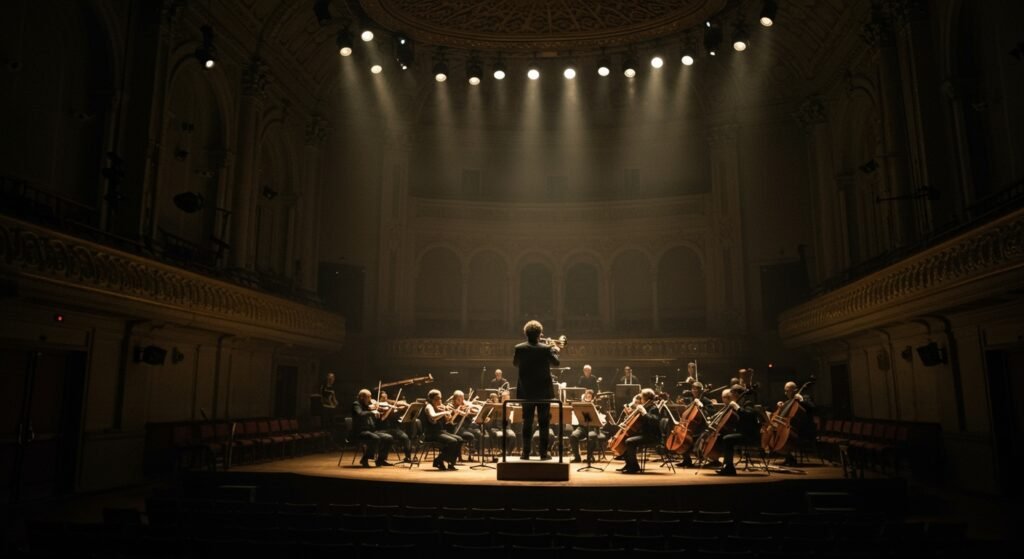
BOSTON, MA – On March 22, 2025, the Boston Symphony Orchestra (BSO) undertook a bold artistic endeavor, presenting “Coltrane: Legacy for Orchestra” at the iconic Symphony Hall. This concert, curated by Carlos Simon, aimed to reframe the monumental works of legendary jazz saxophonist John Coltrane through the expansive palette of the symphony orchestra.
A Bold Artistic Fusion
The ambitious project brought together orchestral arrangements contributed by a diverse group of composer-performers from around the globe. This collaborative approach sought to interpret Coltrane’s groundbreaking compositions and improvisational spirit through new, large-scale sonic textures, bridging the worlds of jazz and classical music in one of the world’s most revered concert halls.
The curation by Carlos Simon was central to the program’s vision, assembling a collection of perspectives that collectively paid tribute to Coltrane’s enduring influence. The concept itself was a statement, acknowledging Coltrane not just as a jazz innovator but as a figure whose musical legacy warrants exploration and reimagining across genres and instrumental configurations.
On the Symphony Hall Stage
The performance at Symphony Hall featured the distinguished presence of jazz titan Terence Blanchard on trumpet, adding an authentic and potent voice to the orchestral landscape. Blanchard, a renowned composer and performer in his own right, brought his signature sound and improvisational depth to the stage, engaging directly with the orchestral interpretations of Coltrane’s music.
Conducting the Boston Symphony Orchestra for this unique program was Edwin Outwater. His direction navigated the complexities of the varied arrangements, guiding the orchestra and featured soloist through a program that ranged from familiar Coltrane themes to more abstract explorations inspired by his later work.
The sensory experience of the evening was further enhanced by overhead projections showcasing exclusive and recently exhibited photographs of John Coltrane. These visuals provided a poignant backdrop, connecting the abstract musical interpretations on stage with the tangible image of the artist whose legacy was being celebrated.
The Critical Reception
The concert drew attention from various cultural observers, including Steve Elman, who reviewed the performance for The Arts Fuse. Elman’s assessment, while acknowledging the inherent challenges of such a complex undertaking, highlighted both the project’s ambitious scope and specific moments of profound impact.
Elman noted that with “so many cooks” contributing arrangements, “flaws were inevitable” in terms of stylistic consistency or execution challenges inherent in adapting complex jazz forms for orchestral forces. However, this critical observation was tempered by a clear recognition of the project’s fundamental value.
Despite the acknowledged difficulties, Elman emphatically stated that the “effort was noble,” underscoring the artistic courage and intellectual merit behind attempting to translate Coltrane’s improvisational genius and unique harmonic language into a classical orchestral setting. The sheer act of commissioning and performing these new arrangements was presented as a valuable contribution to cross-genre exploration.
Crucially, Elman pinpointed a particular highlight: hearing Terence Blanchard‘s trumpet sound specifically within the acoustically renowned environment of Symphony Hall. This moment was described as a “transcendent experience,” suggesting that the combination of Blanchard’s artistry and the hall’s acoustics created a synergy that elevated the performance beyond its structural challenges.
Legacy and Interpretation
The “Coltrane: Legacy for Orchestra” project, as presented by the Boston Symphony Orchestra, represents a growing trend in classical programming to engage with and acknowledge the profound influence of jazz on the broader musical landscape. By commissioning new works and arrangements, ensembles like the BSO are fostering a dialogue between genres, introducing audiences to different facets of beloved artists’ legacies.
The inclusion of a major jazz figure like Terence Blanchard not only lent authenticity but also underscored the living, evolving nature of Coltrane’s influence. His interaction with the orchestral settings provided a vital link between the original source material and its contemporary reinterpretation.
Conclusion
The Boston Symphony Orchestra’s “Coltrane: Legacy for Orchestra” concert on March 22, 2025, at Symphony Hall was an evening of ambitious and, at times, challenging artistic exploration. While navigating the inherent complexities of a multi-composer, cross-genre project, the effort curated by Carlos Simon demonstrated a genuine commitment to honoring John Coltrane’s legacy in a new and meaningful way. As noted by Steve Elman in The Arts Fuse, the project was a “noble effort,” and the opportunity to witness Terence Blanchard’s artistry resonate within Symphony Hall proved to be a particularly memorable and “transcendent experience.” The event served as a reminder of Coltrane’s enduring power to inspire musical innovation across all stylistic boundaries.
More Stories
Waterbaby’s ‘Memory Be a Blade’ Delves Deeply into Post-Breakup Healing
Waterbaby’s Debut ‘Memory Be a Blade’: A Deep Dive into Post-Breakup Healing
Latest Movie Reviews: Four New Films Offer Diverse Critical Praise