











Introduction
The release of the Western film “Rust” in 2025 arrives burdened by a history unlike most productions. Reviewed by Sheila O’Malley for the esteemed Roger Ebert website on May 2, 2025, the film is noted not merely as a cinematic release but as a production irrevocably tied to a tragic on-set incident that resulted in a fatality.
The Shadow of Tragedy
The film’s path to completion was marked by profound real-world events. In October 2021, cinematographer Halyna Hutchins died following the discharge of a prop gun handled by star and co-producer Alec Baldwin. The incident, which occurred on the film’s New Mexico set, also injured the film’s writer and director, Joel Souza. This tragedy halted production and cast a long shadow over the project’s future.
Production on “Rust” eventually resumed approximately two years later, a decision made with the approval of Hutchins’ widower, Matthew Hutchins, who was subsequently granted a producer credit on the film. This unprecedented circumstance set the stage for a viewing experience inevitably colored by the knowledge of the events that transpired during its making.
Narrative and Premise
At its core, “Rust” tells the story of an aging outlaw, also named Rust (played by Alec Baldwin), who embarks on a desperate mission to save his 12-year-old grandson, Lucas (portrayed by Patrick Scott McDermott), from being hanged. This central premise drives the film’s narrative through the rugged landscapes of the American West.
Critical Reception and Complexities
Sheila O’Malley’s review on the Roger Ebert website acknowledges the inherent difficulty in separating the film’s artistic merits and narrative flaws from the tragic reality of its production history. This struggle is central to the critical assessment presented.
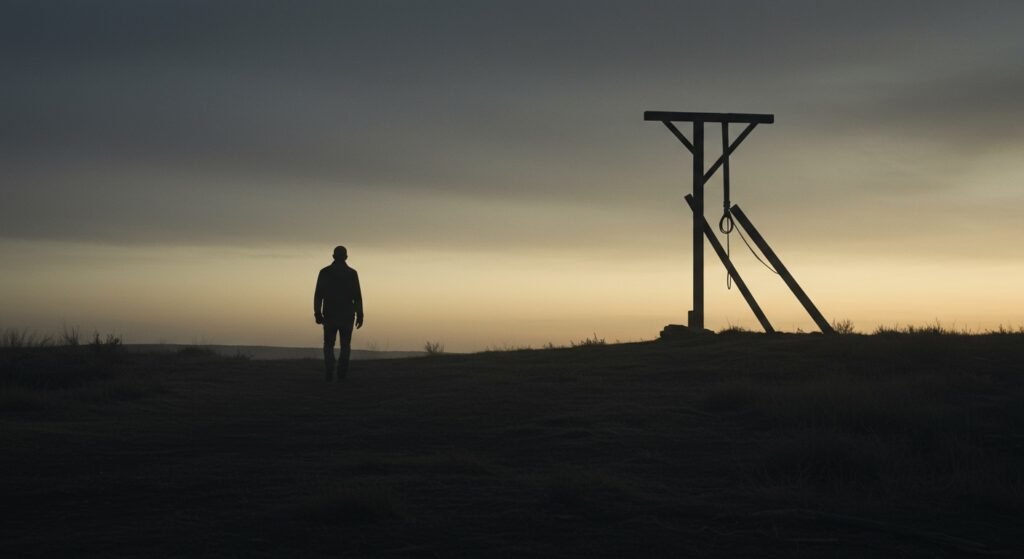
The review highlights Halyna Hutchins’ contribution, specifically praising her striking wide-format cinematography and its evocative use of silhouettes. This aspect of the film is singled out as a notable artistic achievement.
However, the review also points to significant structural and narrative shortcomings. It observes that out of the three main storylines present in the film, only the arc focusing on the outlaw Rust and his grandson Lucas is sufficiently developed. Even this central storyline, the review suggests, could have benefited from tighter editing and potential cuts to improve pacing and focus.
Pacing, Length, and Production Details
Clocking in at two hours and eighteen minutes, “Rust” is described in the review as feeling considerably longer than its actual runtime. This impression likely stems from the pacing issues and underdeveloped narrative threads noted by the critic.
Further critiques touch upon specific production details, such as costumes that appear too new for the historical setting and certain scenes exhibiting a distinct theatrical quality, potentially detracting from the film’s intended realism.
Conclusion
“Rust” arrives on screens in 2025 as a film defined as much by its production history as by its on-screen narrative. While featuring moments of visual beauty, particularly in the cinematography by the late Halyna Hutchins, the film faces challenges in its pacing, narrative development, and the inescapable context of the tragedy that occurred during its making. As assessed by the review on the Roger Ebert website, it is a production where the real-life cost remains inextricably linked to the cinematic experience, making it a complex and challenging subject for both critics and audiences.
More Stories
Waterbaby’s ‘Memory Be a Blade’ Delves Deeply into Post-Breakup Healing
Waterbaby’s Debut ‘Memory Be a Blade’: A Deep Dive into Post-Breakup Healing
Latest Movie Reviews: Four New Films Offer Diverse Critical Praise