











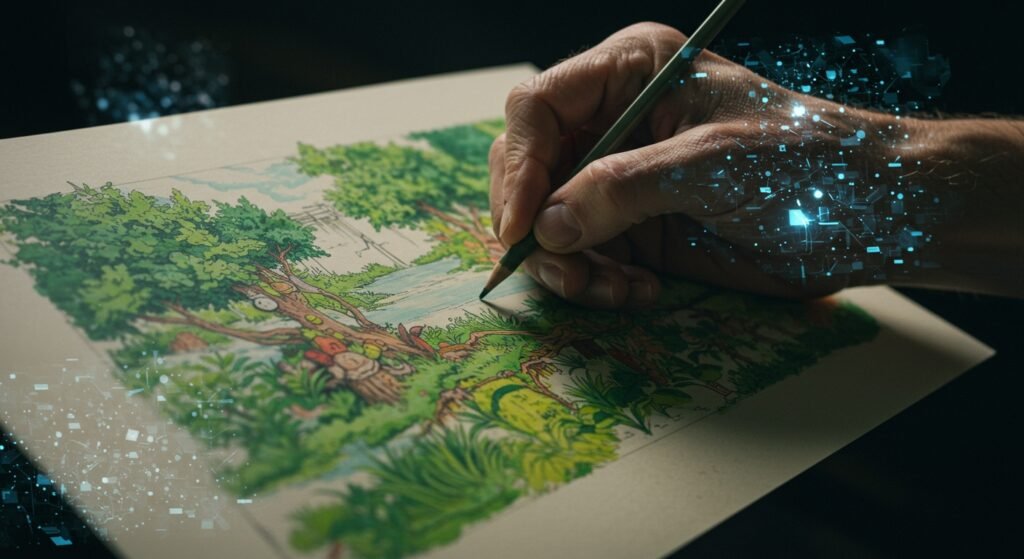
NEW YORK – GKIDS, the prominent North American distributor renowned for bringing the cherished animated works of Studio Ghibli to audiences, has issued a statement widely interpreted as a direct response to the burgeoning trend of artificial intelligence attempting to replicate the Japanese studio’s universally recognizable and deeply personal hand-drawn aesthetic.
Navigating the Digital Frontier
The statement emerges at a pivotal moment, coinciding with the successful IMAX theatrical rerelease of Hayao Miyazaki’s acclaimed 1997 masterpiece, Princess Mononoke. The film demonstrated enduring appeal, garnering an impressive $1.2 million in previews alone, underscoring the public’s sustained appreciation for traditional animation presented on the big screen. Against this backdrop, GKIDS’ commentary appears to draw a deliberate contrast between the value placed on authentic, human-led artistic creation and the rapid advancements in AI-generated imagery.
Chance Huskey, Vice President of Distribution for GKIDS, provided insight into the company’s perspective. While not explicitly naming AI, his remarks focused on what he described as “theatrical experience that respects and celebrates Hayao Miyazaki and Studio Ghibli’s masterpiece in all its cinematic hand-drawn glory.” He juxtaposed this against technological efforts that, in his words, “When Technology Tries to Replicate Humanity,” echoing the sentiment from the original discussion surrounding the issue. This phrasing suggests a philosophical stance on the nature of artistic creation and the limitations perceived when technology attempts to mimic or replace the nuanced output of human hands and minds.
The Heart of Hand-Drawn Animation
Studio Ghibli, co-founded by Hayao Miyazaki and the late Isao Takahata, has long been a global standard-bearer for the craft of hand-drawn animation. Their films are celebrated not only for their intricate narratives and imaginative worlds but also for their distinctive visual style, characterized by meticulous detail, fluid motion, and a palpable sense of life breathed into every frame by human animators. Hayao Miyazaki himself is legendary for his deeply involved and painstaking creative process, often personally drawing significant portions of key animation or overseeing every minute detail of production.
Akihiko Yamashita, a supervising animator on one of Ghibli’s other iconic films, Howl’s Moving Castle, has previously spoken on the studio’s dedication to this craft, highlighting Miyazaki’s hands-on approach as fundamental to the Ghibli identity. This commitment to human artistry stands in stark contrast to the automated processes employed by AI, which learns from and extrapolates vast datasets of existing images – including, potentially, copyrighted works – to generate new content.
Industry Concerns and Artistic Integrity
Across the animation and broader artistic communities, the rapid proliferation of AI art generation tools has ignited significant debate and apprehension. Artists and animators have voiceConcerns about the potential erosion of traditional art forms, the devaluation of skilled craftsmanship, intellectual property rights, and the ethical implications of training AI on existing human-created works without explicit consent or compensation. The speed and scale at which AI can produce images raise questions about the future livelihoods of artists whose careers are built upon years of developing unique styles and technical skills.
GKIDS’ statement, therefore, resonates within this wider context of an industry grappling with disruptive technology. By emphasizing the intrinsic value and respect due to the “cinematic hand-drawn glory” of Ghibli’s work and the importance of the “theatrical experience” built around it, the distributor implicitly champions the human element that AI, at least currently, struggles to replicate authentically.
A Timely Reaffirmation of Value
The timing of GKIDS’ statement, arriving amidst the successful limited run of Princess Mononoke in IMAX theaters, serves to amplify its message. The film’s strong box office performance for a rerelease underscores that audiences continue to cherish the depth, detail, and soul embedded in animation created through dedicated human effort. It suggests that while AI can generate images quickly, the cultural and emotional resonance of works born from human creativity, passion, and decades of honed skill remains unparalleled and highly valued by the public.
The distributor’s comments frame the issue not just as a technological challenge but as a fundamental question about what audiences value in art and storytelling. It’s a subtle but powerful affirmation of the irreplaceable human touch that defines the legacy of Studio Ghibli and resonates deeply with fans worldwide, prompting reflection on the path forward as technology continues to evolve.
More Stories
Waterbaby’s ‘Memory Be a Blade’ Delves Deeply into Post-Breakup Healing
Waterbaby’s Debut ‘Memory Be a Blade’: A Deep Dive into Post-Breakup Healing
Latest Movie Reviews: Four New Films Offer Diverse Critical Praise