











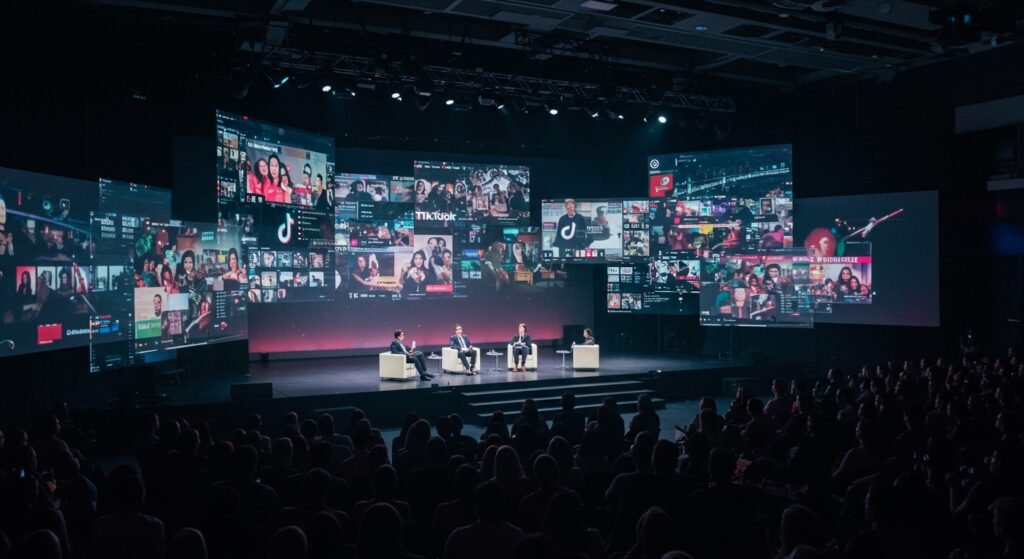
MIAMI – The nature of entertainment is undergoing a fundamental transformation, driven primarily by the consumption habits and expectations of Generation Z. This shift, where the lines between content, community, and commerce are increasingly blurred, presents both challenges and opportunities for brands seeking to remain relevant in a rapidly evolving digital landscape.
A recent panel discussion at the Possible conference in Miami brought together leading figures from major organizations to dissect this phenomenon. Moderated by Ziad Ahmed, head of next gen at United Talent Agency (UTA), the panel featured Amy Powell, head of entertainment marketing at Amazon; Lexi Riegelhoust, senior director of entertainment and culture marketing at Adobe; and Michael Vito Valentino, editor in chief at Now This. Their insights underscored the profound impact Gen Z is having on media consumption and how brands are strategically adapting.
Defining the Gen Z Media Landscape
The core theme emerging from the discussion was that Gen Z doesn’t merely consume entertainment; they “live in it.” This perspective fundamentally changes how content creators and brands must approach their audiences. For this generation, media is not a passive experience but an interactive, integrated part of their daily lives, flowing seamlessly across various platforms.
Mr. Ahmed initiated the conversation by highlighting this experiential aspect, setting the stage for a deep dive into how brands are navigating this new reality. The traditional silos between different media types are crumbling, giving way to what panelists described as a unified media system.
Brands Adapt to a Unified Ecosystem
In this unified system, the conventional distinction between social media content and traditional, long-form entertainment has largely disappeared. Platforms like TikTok, once seen purely as social networks, now rival established shows and traditional media formats in their ability to capture and hold attention.
Responding to this shift, brands are recognizing the imperative to move beyond transactional advertising. The focus is now on creating authentic, entertaining content that integrates naturally into consumers’ lives. Ms. Powell of Amazon articulated this by emphasizing the need to weave brand values and messaging directly into the entertainment experience, rather than placing them adjacent to it.
Strategic Approaches and Success Stories
Panelists shared specific examples of how their organizations are implementing these strategies. Ms. Powell cited Amazon’s “Celebrity Substitute” series, hosted by Julian Shapiro-Barnum, as a prime illustration. This series, featuring unexpected celebrities stepping into substitute teaching roles, is designed to be inherently entertaining while subtly reflecting Amazon’s brand identity and values within the narrative itself.
Ms. Riegelhoust from Adobe detailed their approach to creator collaborations. Adobe has found significant success partnering with creators who actively use their products, allowing for organic and credible brand integration. Interestingly, Ms. Riegelhoust noted that mid-tier talent often engages audiences more effectively than mega-talent. This suggests that authenticity and relatability can sometimes outweigh sheer scale or fame in connecting with Gen Z audiences within this integrated media environment.
Mr. Valentino provided the perspective of a digital-native news and entertainment outlet, reinforcing the idea that content must be designed for discovery and engagement across a multitude of platforms simultaneously. The expectation is not just to find content, but to interact with it and be a part of a community around it.
The Path Forward: Content is King (Again)
The overarching consensus from the panel was clear: brands must prioritize content creation to remain relevant and competitive in the current media ecosystem. Simply buying ad space is insufficient; success hinges on becoming a producer of compelling, entertaining content that resonates with Gen Z’s desire for authentic, integrated experiences.
The discussion at the Possible conference highlighted that the future of entertainment is participatory, platform-agnostic, and deeply intertwined with identity and community. For brands, understanding and embracing this paradigm shift is no longer optional but essential for future growth and connection with the next generation of consumers.
More Stories
Callodine Fund Expands Into Aviation and Entertainment Debt
R&B Icons TLC, Salt-N-Pepa, En Vogue Hit Iowa State Fair
Bachelorette Season Canceled Over Assault Video Scandal