











Metropolis, [Current Date], [City/State]
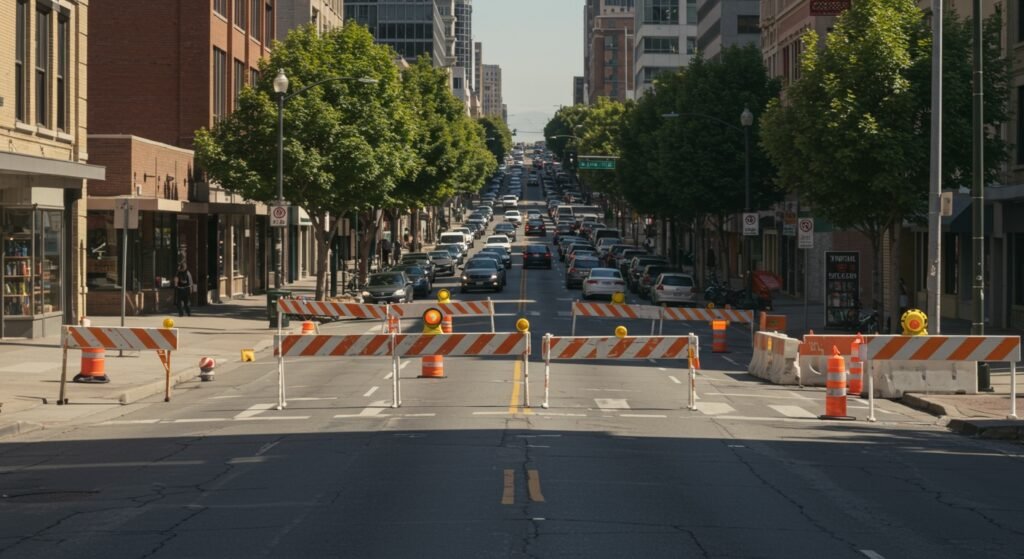
Metropolis officials today initiated the controversial “Urban Flow Initiative,” a sweeping urban mobility plan designed to significantly reduce traffic congestion and promote public transportation usage. The phased implementation began with the immediate closure of key arterial routes, including the 100 through 500 blocks of Main Street and Elm Avenue, signaling a transformative, albeit disruptive, period for the city’s downtown core.
The initiative, first announced earlier this year, involves significant infrastructure changes and transit expansions. Alongside the road closures, which are slated to last for a duration of six months, the plan introduces a new express bus line, the “Route 7 Express,” and includes a substantial expansion of the existing “Metro Line B.” These transit enhancements are intended to mitigate the impact of the closures and offer commuters viable alternatives to driving.
Understanding the Initiative’s Core Components
The Urban Flow Initiative is built upon several pillars aimed at reshaping how residents and visitors navigate Metropolis. The most immediate and visible change is the six-month closure of the 100-500 blocks of both Main Street and Elm Avenue. These closures effectively cordon off a significant portion of the central business district, diverting thousands of vehicles daily onto alternative routes, many of which were not designed for such traffic volumes.
Simultaneously, the city has rolled out the new “Route 7 Express” bus service, designed to provide a faster connection between key residential areas and the downtown core, bypassing many local stops. Furthermore, the capacity and frequency of “Metro Line B” have been significantly increased, incorporating longer train sets and more frequent service during peak hours. These transit upgrades are part of a broader $5 million budget allocation dedicated to the initiative’s infrastructure requirements and public awareness campaigns.
Mayor Jane Adams has been a vocal proponent of the plan, arguing that the short-term disruption is a necessary trade-off for long-term benefits. “We understand that change is difficult, and these closures will present challenges,” Mayor Adams stated at a recent press briefing. “However, the projected outcomes – a 15% reduction in peak hour congestion and a 10% increase in public transport ridership – are essential for the sustainable growth and livability of Metropolis. We must invest in a future that moves beyond reliance on personal vehicles.” The plan has also received endorsements from groups like the Sustainable City Coalition, which cites environmental benefits and improved air quality as key advantages.
Businesses and Residents Voice Strong Opposition
Despite the city’s assurances, the launch of the Urban Flow Initiative has been met with significant resistance from local businesses and many residents. The Metropolis Business Alliance has been particularly critical, expressing grave concerns about the economic viability of stores located within or near the closure zones. They project a potential 20% drop in revenue for affected businesses over the next six months due to reduced foot traffic and accessibility issues.
Owners of establishments like the “Corner Cafe,” “Metropolis Books,” and “Fashion Forward Boutique,” all situated within the affected blocks, have publicly shared anxieties about surviving the closure period. The Alliance also warns of potential job losses, estimating that up to 50 jobs could be at risk if businesses are unable to sustain operations during the disruption. “This isn’t just an inconvenience; it’s an existential threat to businesses that have served this community for decades,” commented a spokesperson for the Metropolis Business Alliance.
Residents, while acknowledging the city’s traffic woes, have voiced frustration over increased commute times, confusion regarding the new transit routes, and the general disruption to daily life. Parking has become a significant challenge in areas surrounding the closures, further exacerbating tensions.
Public Discourse and Future Prospects
The debate surrounding the Urban Flow Initiative has been intense and is expected to continue. A packed public meeting held on September 15, 2024, at the Metropolis City Hall Auditorium saw residents and business owners share passionate testimonies, both for and against the plan. City officials were present to answer questions, though many attendees left feeling their concerns were not adequately addressed.
The success or failure of the initiative in achieving its stated goals while minimizing negative impacts remains to be seen. The six-month closure period will serve as a critical test case. Looking further ahead, there are discussions about the potential for a ballot measure, tentatively identified as “Proposition 3B,” which could seek voter approval for permanent elements of the plan or future funding, potentially appearing on the ballot as early as March 4, 2025.
As Metropolis navigates this significant transformation, the city remains divided. The coming months will be crucial in determining whether the Urban Flow Initiative delivers on its promise of a more efficient, sustainable urban environment or if the economic and social costs prove too high for the community to bear.
More Stories
Callodine Fund Expands Into Aviation and Entertainment Debt
R&B Icons TLC, Salt-N-Pepa, En Vogue Hit Iowa State Fair
Bachelorette Season Canceled Over Assault Video Scandal