








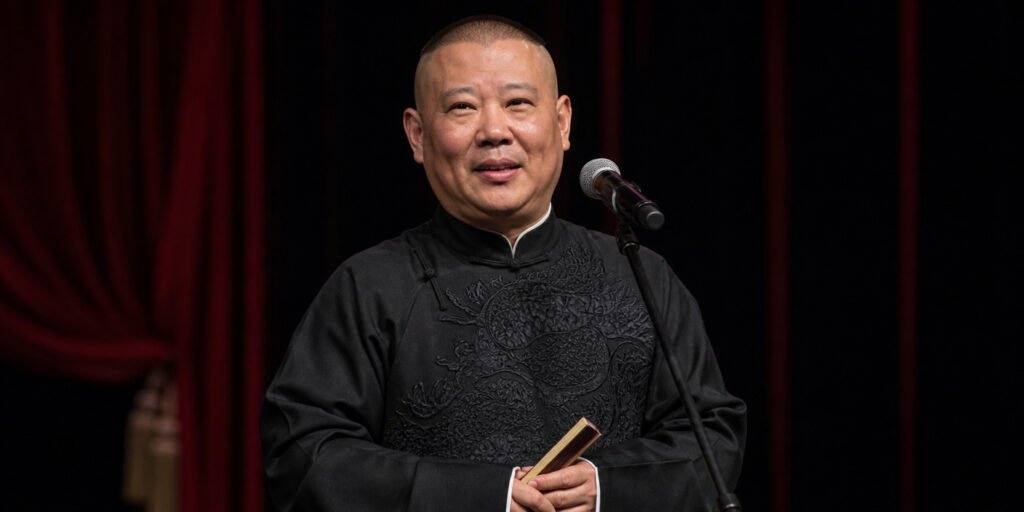
The intersection of entertainment and political sensitivity has once again come into sharp focus in China, as renowned comedian Guo Degang finds himself under official investigation following a performance in Wuhan. The probe was launched after reports emerged that the comedian altered the lyrics of a well-known revolutionary song, an act that has drawn the ire of local cultural regulators. This development has not only halted the performer’s immediate schedule but also serves as a stark reminder of the narrowing boundaries for entertainers operating within the Chinese cultural sphere.
The Wuhan Incident and Official Scrutiny
The incident took place during a recent live comedy set in Wuhan, a city known for its vibrant performing arts scene. According to early reports, during a musical segment of his performance, Guo Degang allegedly modified the lyrics to a “revolutionary song”—a genre of music deeply ingrained in China’s historical and political identity. These compositions, often hailing from the mid-20th century, are treated with high reverence in public spaces, and altering them—even for comedic effect—is frequently interpreted as a form of “historical nihilism” or disrespect toward the nation’s political legacy.
Following the performance, the reaction was swift. Local regulatory bodies in Wuhan initiated an investigation into the show’s content. The immediate consequence has been the cancellation of several upcoming performances for the comedian. This administrative move effectively halts the artist’s ability to generate revenue and perform in the region, signaling the severity with which local authorities view the breach of performance protocols.
The Cultural Weight of ‘Red Songs’
To understand the gravity of the situation, one must recognize the status of revolutionary songs, or “red songs,” within the PRC. These tracks are more than mere music; they are considered cultural artifacts that define the spirit of the founding of the modern state. For entertainers, these songs occupy a “no-go” zone for parody or improvisation.
When a performer alters these lyrics, the backlash is rarely limited to administrative fines. It often triggers a cascade of social media condemnation, where netizens—ever vigilant for perceived slights against national dignity—amplify the incident, effectively forcing the hands of regulators to intervene. The investigation into Guo Degang highlights this dynamic: the performer did not just offend the authorities; they triggered a broader societal mechanism designed to protect cultural orthodoxy.
Economic and Career Implications
The cancellation of performances is a significant financial blow, but the long-term career implications for Guo Degang are potentially more damaging. In an industry where venues operate under strict licensing agreements, an artist who is perceived as a “liability” or a “political risk” becomes toxic. Theater operators and local sponsors are highly risk-averse; they fear that hosting a performer under investigation could lead to the revocation of their own business licenses or bring unwanted scrutiny from the state.
This creates a chilling effect on the comedy industry. Performers who rely on improvisation, wordplay, and satire are increasingly finding their creative toolkits restricted. The “Guo Degang case” serves as a warning to other entertainers: the cost of a “joke” can be the end of a career. Many are now expected to sanitize their scripts, removing anything that could be construed as controversial, satirical, or suggestive.
The Future of Chinese Comedy and Censorship
The ongoing investigation into Guo Degang illustrates the broader tightening of the “rectification” campaigns that have been sweeping across China’s entertainment and media sectors. For the past several years, the state has consistently emphasized that artistic content must align with “core socialist values.”
Looking forward, industry analysts predict that the comedy circuit in China will likely see a move toward highly scripted, vetted content. The days of spontaneous, edgy improvisation are being replaced by pre-approved material that adheres strictly to state-sanctioned narratives. This shift raises questions about the long-term viability of professional comedy as a form of cultural critique in China. If comedy cannot push boundaries or challenge societal norms, it risks losing its defining characteristic—the ability to act as a mirror to society.
Ultimately, the situation in Wuhan is not just about one comedian or one song. It is a microcosm of the current state of artistic expression in China. As Guo Degang awaits the outcome of the investigation, the rest of the entertainment industry is watching, adjusting, and self-censoring to ensure they do not become the next subject of a similar probe.
More Stories
Lady Gaga Welcomes Daughter Rose Bean Polansky
Ranbir & Alia Launch Major 20-School Mumbai Makeover
Kevin Hart Confirmed to Host the 99th Academy Awards