











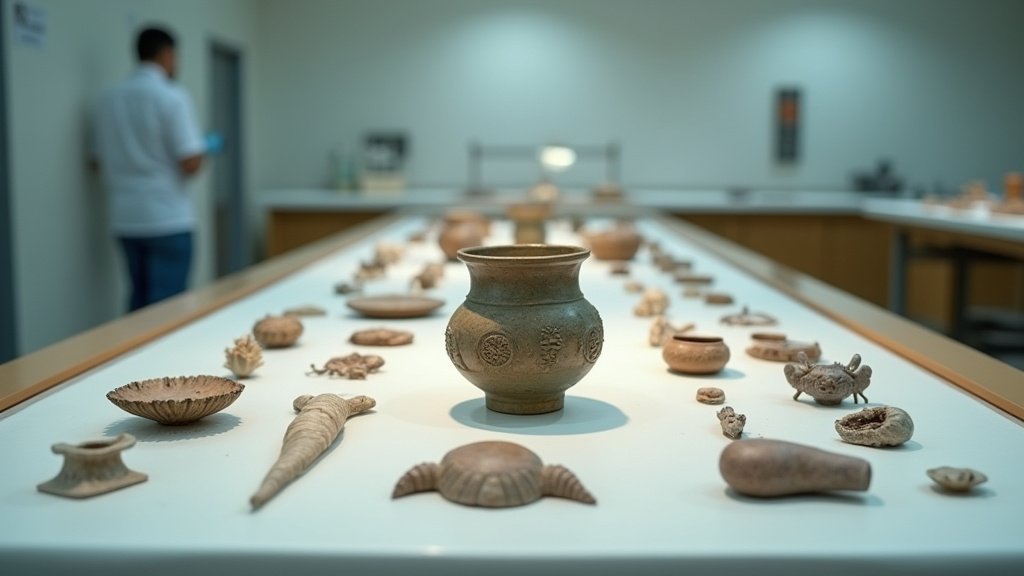
The United States government has completed the formal repatriation of 64 Chinese cultural relics and paleontological fossils, concluding a complex series of investigations into illegally trafficked artifacts. This transfer of cultural heritage represents a significant checkpoint in international cooperation, particularly between the Chinese National Cultural Heritage Administration (NCHA) and U.S. law enforcement agencies. The items, which include a diverse range of artifacts spanning ancient statues to rare prehistoric fossils, were surrendered through the coordinated efforts of the Manhattan District Attorney’s Office and U.S. Homeland Security Investigations (HSI).
The Operational Success Behind the Repatriation
The handover process was the result of long-standing bilateral agreements aimed at curbing the illicit trade of cultural property. The Manhattan District Attorney’s Office, which has been aggressively pursuing international antiquities trafficking rings for several years, worked in tandem with federal agents from Homeland Security Investigations. These agencies identified the 64 items as having been illegally exported from China, effectively bypassing international treaties that govern the movement of cultural goods.
According to official statements, the collection is highly eclectic, reflecting the vast scope of China’s history. The shipment includes delicate ancient pottery, bronze vessels, and paleontological specimens—fossils that offer critical insight into the prehistoric development of the region. The NCHA verified the authenticity of these items, noting that their return not only serves a legal function but also aids in the ongoing effort to reconstruct the historical narrative of the areas from which they were looted.
Historical and Scientific Significance
The inclusion of paleontological fossils in this repatriation batch adds a unique scientific layer to the diplomatic success. Unlike art objects, which are primarily of cultural and historical value, these fossils provide paleontologists with tangible evidence of environmental and evolutionary changes in ancient China. The loss of such fossils to the black market often creates ‘blind spots’ in scientific study, as the provenance and geological context are frequently severed during illegal excavation and transit.
By returning these items, the U.S. is not only complying with the 2009 bilateral Memorandum of Understanding (MoU) on cultural heritage—which restricts the import of Chinese archeological materials into the U.S. without proper documentation—but is also actively participating in the global preservation of scientific knowledge. This collaboration signals to international art and fossil markets that provenance documentation is no longer a bureaucratic suggestion, but a strictly enforced necessity.
The Legal Architecture of Cultural Protection
The success of this operation relies heavily on the ‘Cultural Property, Art, and Antiquities Investigations’ program within HSI. This federal initiative focuses on tracking illicit trade routes that often stretch across multiple continents. When items are seized in the United States, the legal process involves verifying their origin through expert analysis, often conducted in partnership with source nations like China.
This specific repatriation is part of a growing trend in international law where nations are increasingly prioritizing the return of looted heritage. The Manhattan District Attorney’s Antiquities Trafficking Unit has emerged as a global leader in this space, having successfully repatriated thousands of artifacts to nations across the Middle East, Asia, and Europe over the last decade. Their methodology involves tracing objects from the point of seizure in high-end auction houses or private collections back to the original source country.
Future Implications for Global Heritage
Looking ahead, the successful return of these 64 relics sets a precedent for how future disputes regarding cultural property may be resolved. As China continues to tighten its internal regulations regarding the export of cultural relics, the U.S. government’s willingness to facilitate their return reinforces a strong diplomatic bond. Analysts suggest that such acts of goodwill often serve as a buffer in broader geopolitical relations, providing a non-contentious venue for cooperation between the two largest global economies.
Furthermore, the return of these items encourages museums and private collectors to conduct more rigorous due diligence before acquiring artifacts. The ‘provenance gap’—the period for which ownership history is unknown or undocumented—is increasingly being treated as a red flag rather than a historical mystery. This shift in market culture is perhaps the most significant outcome of consistent, high-profile repatriation operations like the one completed this week.
As the items arrive back in China, they will undergo further analysis and potential exhibition, ensuring that the public has access to their own heritage, rather than the objects remaining isolated in private holdings. This repatriation is not merely a transfer of physical goods; it is a restoration of historical access for the Chinese people, solidified by the strength of international legal frameworks.
More Stories
Betting on Viral Fame: Novig’s Strategic Use of Sydney Sweeney
DHS Scrubs Optimus Prime Posts After AI Misuse Backlash
DHS Deletes AI-Generated Optimus Prime Deportation Posts Over IP Risks