











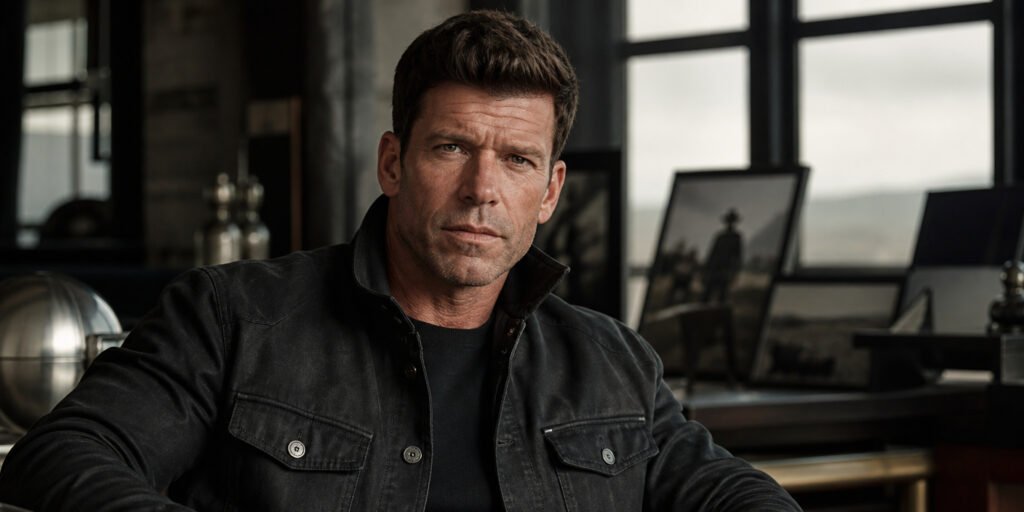
The runaway success of Paramount’s Yellowstone has officially entered a contentious new chapter, as Taylor Sheridan, the creative force behind the modern Western phenomenon, finds himself at the center of new legal allegations. The dispute centers on claims that the series, which has fundamentally reshaped the landscape of cable television and streaming, was derived from a project pitch originally rejected in 2016. As the franchise prepares for its highly anticipated conclusion, these allegations of intellectual property infringement threaten to cast a long shadow over the Dutton family legacy and the massive economic empire Sheridan has built around it.
Key Highlights
- The lawsuit alleges that the core creative elements of Yellowstone were lifted from a pitch document that was shopped to industry executives in 2016.
- Plaintiffs contend that Sheridan was exposed to this material prior to the development of his own series, raising questions about the threshold for intellectual property theft in Hollywood.
- The legal action comes at a critical juncture for the franchise, which has generated billions in revenue and spawned multiple spinoffs, including 1883 and 1923.
Unpacking the Copyright Controversy: A Test for Hollywood IP
The fundamental nature of Hollywood “pitch culture” has always been a high-stakes, gray-area landscape. Writers and producers frequently shop concepts, treatments, and loglines to production companies, hoping to secure financing. When a major hit emerges that shares thematic DNA with a previously rejected project, legal disputes are unfortunately common, yet rarely successful. However, the current allegations regarding Taylor Sheridan’s Yellowstone are distinct due to the unprecedented scale of the show’s success and the specific nature of the 2016 connection being alleged.
The Anatomy of the 2016 Pitch Allegation
According to the filings and reports circulating within industry circles, the core of the grievance lies in the timeline. The plaintiffs assert that a written treatment or “bible” for a show centered on the dynamics of a massive, multi-generational ranching operation—and the intersection of modern corporate interest and traditional land rights—was pitched during the 2016 cycle. The lawsuit suggests that Sheridan, who was already establishing himself as a formidable creative voice, had access to the materials during a time when the foundational concept of the Dutton family was ostensibly still in development.
In intellectual property law, proving infringement requires showing both “access” and “substantial similarity.” It is not enough for two shows to feature cowboys or ranch life; the plaintiffs must demonstrate that the specific narrative architecture, character archetypes, and plot trajectories are unique enough to constitute an expression of an idea rather than just an idea itself. This is the crux of the battle: determining where the generic tropes of the Western genre end and where the protected, proprietary creative choices of the pitch begin.
The Economic Stakes of the Yellowstone Franchise
Why does this matter now? Yellowstone is not merely a television show; it is an economic engine. Under the guidance of Paramount Network and 101 Studios, the franchise has anchored an entire streaming strategy for Paramount+. The show’s popularity—boasting millions of viewers per episode—has driven significant revenue through syndication, international licensing, and the successful launch of high-budget prequels.
If the allegations were to gain traction, the impact would be profound. For the production companies, this is a matter of protecting their biggest asset. For Sheridan, who has maintained tight creative control over his universe, this represents a challenge to his reputation as an original storyteller. The financial implications are massive, potentially involving complex profit-sharing negotiations or, in the worst-case scenario, forcing a re-evaluation of the show’s creative ownership.
Creative Independence and Industry Precedent
Taylor Sheridan has long been praised for his distinct “voice”—a gritty, cynical, yet grandly cinematic style that blends neo-Western aesthetics with Shakespearean family drama. His defenders argue that the Yellowstone concept is an amalgamation of his own life experiences and a lifetime of immersion in the world of American ranching.
This legal battle serves as a litmus test for the industry. In an age of “franchise fatigue” and endless reboots, the value of original concepts is higher than ever. However, the entertainment industry is notoriously circular, with ideas often floating between agents, managers, and executives for years before finding a home. This lawsuit will likely force a deeper examination of how studios protect themselves from claims of “stolen” ideas, potentially leading to more rigid documentation processes during pitch meetings to prevent these exact scenarios in the future.
FAQ: People Also Ask
Q: Could this lawsuit shut down the Yellowstone franchise?
A: It is highly unlikely that this litigation will stop the production of the franchise. In major Hollywood legal disputes involving copyright, the most common outcomes are monetary settlements or licensing agreements, rather than injunctions that force a show off the air. The studio has a massive vested interest in protecting the future of the brand.
Q: What is the specific legal challenge regarding a ‘pitch’?
A: The legal difficulty lies in the fact that, under U.S. Copyright law, you cannot copyright an “idea,” only the specific “expression” of that idea. Plaintiffs must prove that Sheridan did not just take a vague concept (like a family fighting for their land) but stole specific characters, dialogue, or non-generic plot structures that were defined in the 2016 pitch.
Q: Is Taylor Sheridan personally liable for these claims?
A: While the lawsuit names Sheridan, it also targets the production entities involved. If the allegations move to discovery, Sheridan will likely be required to testify regarding the development history of the show, providing clarity on how the series concept evolved from his own original writings to the final product on screen.
More Stories
Lady Gaga Welcomes Daughter Rose Bean Polansky
Ranbir & Alia Launch Major 20-School Mumbai Makeover
Kevin Hart Confirmed to Host the 99th Academy Awards