











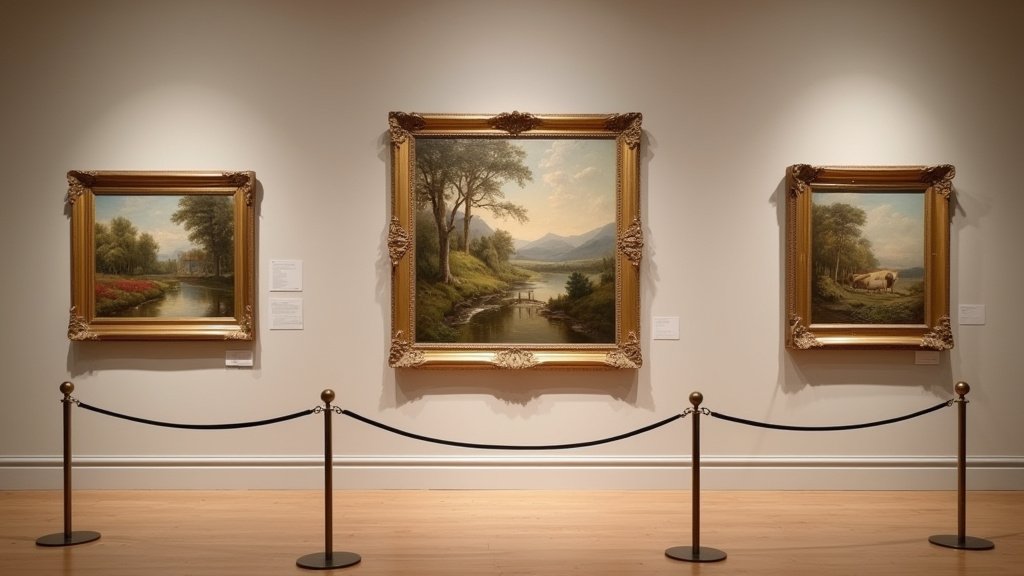
The fine art world is bracing for one of its most significant liquidity events in recent memory as Sotheby’s prepares to auction a private collection of 12 Impressionist and Modern masterpieces. With a total estimated value approaching $450 million, the sale represents a rare confluence of historical importance and market scarcity. These works, which include seminal contributions from titans such as Vincent van Gogh and Paul Cézanne, have remained largely unseen by the public for the past 50 years, existing in the quiet realm of private ownership until now.
Key Highlights
- Total Valuation: The collection is estimated to command nearly $450 million, signaling continued resilience in the high-end art market.
- Historical Rarity: The 12 pieces have been held in private collections and remain virtually unseen by the public for five decades, creating a “fresh-to-market” premium.
- Featured Masters: The auction centers on cornerstone works by Vincent van Gogh and Paul Cézanne, two of the most sought-after names in the Impressionist and Post-Impressionist eras.
- Market Impact: The sale serves as a bellwether for the Modern art category, testing collector appetite for “trophy assets” amidst shifting global economic conditions.
The Anatomy of a Half-Century Resurgence
The announcement of this collection is not merely an auction event; it is a reintroduction of cultural assets that have been dormant in the private sphere. In the art world, the term “fresh-to-market” is often used to justify inflated valuations, but in this case, the provenance holds genuine weight. When works of this caliber—specifically those by Van Gogh and Cézanne—disappear from public view for 50 years, they bypass the saturation of the exhibition circuit. Collectors are not just bidding on the aesthetic value of the brushwork; they are bidding on the rarity of ownership.
The Economics of Impressionist Scarcity
The Impressionist and Modern art market has historically been the bedrock of the global auction landscape. Unlike contemporary art, which can be subject to the volatility of fashion and emerging trends, the value of Van Gogh and Cézanne is cemented by art history and institutional demand. The $450 million estimate for just 12 pieces suggests an average valuation of $37.5 million per lot. This figure underscores a critical reality: the supply of museum-quality Impressionist works is effectively finite. As more pieces are permanently absorbed into major museum collections, the pool of available, high-value works continues to shrink, driving prices upward for the few that remain in private hands.
Van Gogh, Cézanne, and the Provenance Factor
Vincent van Gogh and Paul Cézanne are more than artists; they are global brands. The specific inclusion of their works in this Sotheby’s offering is designed to anchor the entire auction. For the discerning collector, owning a work by these masters is the ultimate acquisition. The auction house’s strategy likely involves leveraging the “unseen” nature of these pieces to create an emotional urgency among bidders. When a piece has not appeared in a catalogue raisonné or at public auction since the 1970s, it allows the buyer to claim a discovery, or at the very least, a revitalization of that work’s history.
Assessing the Market Climate
Beyond the art itself, the success of this auction will be read as a wider economic indicator. High-end art transactions are often used as a hedge against inflation and a store of value by ultra-high-net-worth individuals. While interest rates and macroeconomic uncertainty have cooled the broader auction market, the “trophy segment”—comprising works valued over $50 million—remains relatively insulated. If Sotheby’s clears the $450 million mark, it will confirm that for the top 0.1% of collectors, historical significance remains the ultimate currency.
FAQ: People Also Ask
Why are these 12 pieces estimated at $450 million?
The valuation is based on the extreme rarity and historical significance of the artists involved, specifically Van Gogh and Cézanne, combined with the fact that these pieces have been out of the public eye for 50 years, creating a massive “fresh-to-market” premium.
What makes a collection “fresh-to-market”?
“Fresh-to-market” refers to art that has not been bought or sold at public auction or featured in major public exhibitions for a significant period. This scarcity increases value because it offers collectors an opportunity to own a piece with a clean provenance that hasn’t been over-exposed.
How does the art market determine these prices?
Auction houses utilize historical data, past sales of similar works by the same artist, the piece’s condition, its provenance (history of ownership), and current demand from top-tier collectors to arrive at an estimate.
Is this auction considered a good indicator of the global economy?
Yes, the ultra-luxury art market is often used as a litmus test for the financial health of the ultra-wealthy. A strong performance in this auction would suggest that capital remains available and willing to deploy into alternative, tangible assets despite global economic fluctuations.
More Stories
Chris Brown Faces Sentencing in London Assault Case
Derrick Harriott, Reggae Legend and Crystal Records Pioneer, Dies at 87
Remembering Michael Gray: The ‘Shazam!’ and ‘Brady Bunch’ Icon Dies at 75