








The 2026 midterm election cycle is witnessing a definitive departure from the hyper-digital strategies that dominated the early 2020s. Political operatives across the American heartland are pivoting toward a movement known as “prairie populism,” an approach that rejects the efficiency of targeted social media advertising in favor of old-school, high-touch, “shoe-leather” politics. By committing to the premise that “talking to every single person matters,” candidates are attempting to reconnect with rural voters in historically red districts who have felt increasingly alienated by nationalized, coastal-centric campaign messaging. This cultural pivot is not merely nostalgic; it is a calculated response to the diminishing returns of digital ad saturation and a burgeoning demand for localized, agrarian-focused representation.
Key Highlights
- The Return to Localism: Campaigns are shifting substantial portions of their budgets away from digital micro-targeting and into hiring local field organizers who prioritize door-to-door interaction.
- Agrarian Values as Policy: Messaging has pivoted from abstract culture-war rhetoric to tangible agrarian concerns, including local water rights, commodity pricing, and rural broadband infrastructure.
- Demographic Targeting: The strategy specifically focuses on rural, historically red districts where population density is low, but voter turnout in local primaries remains a decisive factor.
- Combating Digital Fatigue: Internal polling suggests that voters in rural heartlands are experiencing high levels of burnout from digital political advertising, making in-person visits the primary driver of voter trust.
The Resurgence of Front-Porch Politics
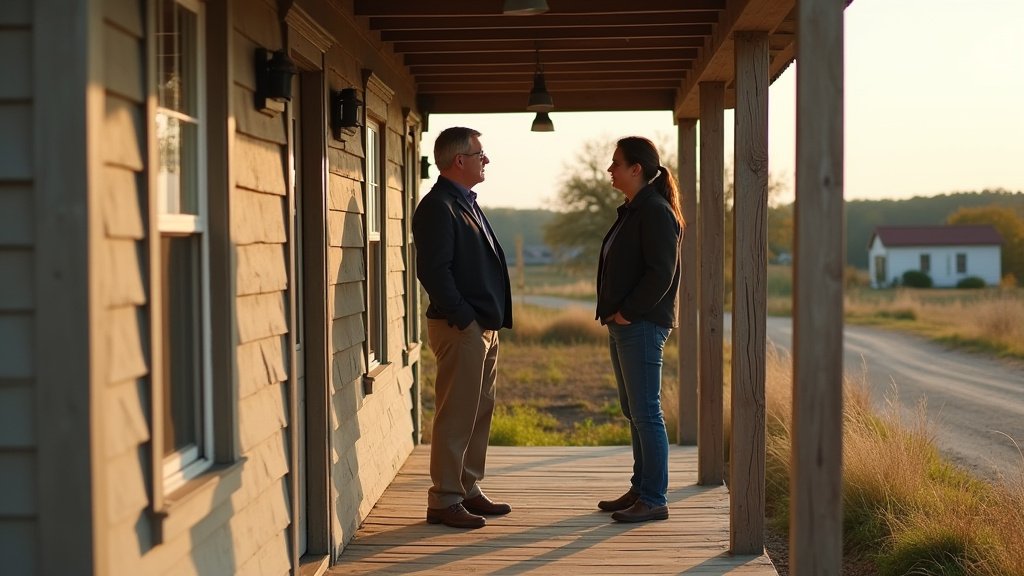
For nearly a decade, the gold standard of modern campaigning was the algorithm. Data-driven micro-targeting allowed campaigns to push bespoke messages to hyper-specific segments of the population. However, as the 2026 cycle approaches, a “prairie populist” counter-movement is challenging the supremacy of digital dominance. In rural counties across the Midwest and Great Plains, candidates are discovering that a handshake still holds more political currency than a 30-second pre-roll video.
This movement is defined by its refusal to outsource voter engagement to screens. Instead, organizers are deploying field teams trained in the art of long-form conversation. The philosophy is straightforward: rural voters often feel that national parties treat their geographic reality as an abstraction. By showing up—often literally driving hundreds of miles to engage a single community—these candidates are creating a perception of respect and presence that digital ads simply cannot replicate. This is “shoe-leather politics” in its purest form, where the number of miles a candidate puts on their vehicle often correlates directly with their polling numbers.
Deciphering the ‘Agrarian Values’ Pivot
A central tenet of the prairie populist approach is the reframing of “values.” In the recent past, rural voters were often targeted with generic national talking points. The new strategy, however, centers on what organizers call “agrarian values”—a political framework that elevates local economic stability above national partisan conflict. This includes localized debates over land-use regulations, the impact of centralized agricultural policies on small-family farms, and the practicalities of rural healthcare access.
By focusing on these issues, candidates are effectively creating a semantic web of trust with the electorate. When a candidate discusses the specific price of inputs for corn or soybeans, or the exact timeline for regional broadband rollout, they are signaling that they understand the daily life of their constituents. This approach strips away the national party label, allowing the candidate to appear as a neighbor and advocate rather than a distant political entity.
The Logistics of ‘Talking to Everyone’
Implementing a strategy that requires “talking to every single person” presents significant logistical hurdles. Rural districts suffer from low population density, making the traditional cost-per-contact model of political consulting look disastrous on a spreadsheet. Yet, the prairie populist movement argues that the cost is justified by the conversion rate. When a voter feels heard, they are not only more likely to show up for the primary and general elections; they are more likely to become vocal advocates within their own social networks.
This “multiplier effect” is the secret weapon of the prairie populist model. In close races, the ability to flip a single county through deep, personal engagement can lead to cascading victories in surrounding, culturally similar districts. It creates a grassroots momentum that is immune to national news cycles or scandals occurring thousands of miles away in Washington, D.C.
Secondary Angles: Beyond the Ballot
1. The Economic Impact on Local Economies: Beyond the political implications, the resurgence of in-person campaigning is injecting capital into local communities. Instead of sending money to coastal media agencies for ad buys, campaigns are hiring local residents, renting small town offices, and utilizing local print shops. This “local spend” strategy serves as a soft-power economic stimulus, further ingratiating candidates with local business owners.
2. Historical Context of Populism: It is essential to view this not as a new invention, but as a reboot of the Populist movement of the 1890s. Then, as now, the movement was driven by a sense that political centers of power were disconnected from the needs of the working agrarian class. The 2026 cycle is demonstrating that these historical cycles are not merely repetitive; they are foundational to the American political experience.
3. Future Predictions: If the prairie populist strategy proves successful in 2026, we can expect a permanent structural shift in how national parties approach rural states. The “digital-first” mindset may be downgraded to a “digital-support” role, with massive field operations becoming the mandatory baseline for any competitive campaign, regardless of party affiliation.
FAQ: People Also Ask
Q: What exactly defines a ‘prairie populist’ in the 2026 context?
A: It refers to a political candidate who rejects top-down, nationally coordinated messaging in favor of hyper-local, in-person engagement, focusing on the specific economic and cultural issues of agrarian communities.
Q: Why are digital ads failing in rural districts?
A: Studies suggest voters in rural, historically red districts have developed high levels of skepticism and fatigue regarding digital political advertising, viewing it as “outside noise” rather than genuine engagement.
Q: How do candidates manage the high cost of in-person canvassing?
A: They reduce spending on television and social media advertising, reallocating those significant funds into local field infrastructure, staffing, and travel logistics.
Q: Is this strategy effective for both major political parties?
A: Yes, while historically associated with conservative politics, the “prairie populist” methodology of local, high-touch engagement is currently being adopted by candidates across the political spectrum to gain traction in overlooked rural districts.
More Stories
Privacy Under Fire: Doctors Denounce Student Genital Exams
In Pursuit: Reclaiming American Leadership Values
Trump Nixes Hegseth’s Televised Execution Plan