









The Salish Sea Early Music Festival has become a beacon for classical enthusiasts this spring, drawing widespread attention for its dedicated, multi-stop presentation of Georg Philipp Telemann’s celebrated ‘Paris Quartets.’ As audiences across the Pacific Northwest gather in intimate, acoustically rich settings, the festival offers more than just a concert series; it provides a direct, visceral window into the 18th-century musical imagination. By pairing world-class, period-instrument specialists with one of the most intellectually and emotionally rich collections in the Baroque canon, organizers are proving that early music is not merely an archival exercise, but a living, breathing art form that continues to resonate with modern listeners.
The Historical Significance of the Paris Quartets
To understand the magnitude of this festival, one must first appreciate the history of the music itself. Georg Philipp Telemann, a composer whose prolific output arguably rivaled that of his contemporary Johann Sebastian Bach, composed the ‘Paris Quartets’ under unique circumstances. Unlike much of his other work, which was produced for the Hamburg municipal scene, these quartets—twelve in total—were born from a specific request in 1730 by the finest Parisian virtuosos of the day.
The resulting compositions represent a cultural synthesis. They are at once quintessentially German in their structural integrity and inherently French in their rhythmic flair and ornamental delicacy. The quartets were published in two sets: the first in 1730 and the second in 1738, during a period that marked Telemann’s only significant journey away from his home in Hamburg. This trip to Paris, arguably the most celebrated visit by a foreign musician to the city during the era, was a triumph. The ‘Paris Quartets’ remain a testament to that moment of artistic exchange, challenging performers to balance the technical rigor of the German Baroque with the refined, gallante style of the French court.
The Performers: Breathing Life into 18th-Century Notes
Central to the success of the Salish Sea Early Music Festival’s current run is the caliber of the ensemble. The festival has assembled a quartet of contemporary virtuosos, each a specialist in the nuances of period performance practice: violinist David Greenberg, harpsichordist Elisabeth Wright, viola da gambist Susie Napper, and artistic director Jeffrey Cohan on baroque flute.
The challenge for these musicians is twofold. First, they must contend with the idiosyncratic demands of the instruments themselves—baroque flutes, for instance, lack the key systems of their modern counterparts, requiring a more nuanced approach to intonation and projection. Second, they must interpret Telemann’s specific request for a ‘dialogue’ between the instruments. In these quartets, no single voice dominates; rather, the flute, violin, viola da gamba, and continuo lock into a complex, equitable conversation. When performed well, as these artists have demonstrated throughout their spring tour, the music feels less like a performance of a relic and more like an impromptu, highly sophisticated debate between four distinct, witty personalities.
A Community-Centric Festival Model
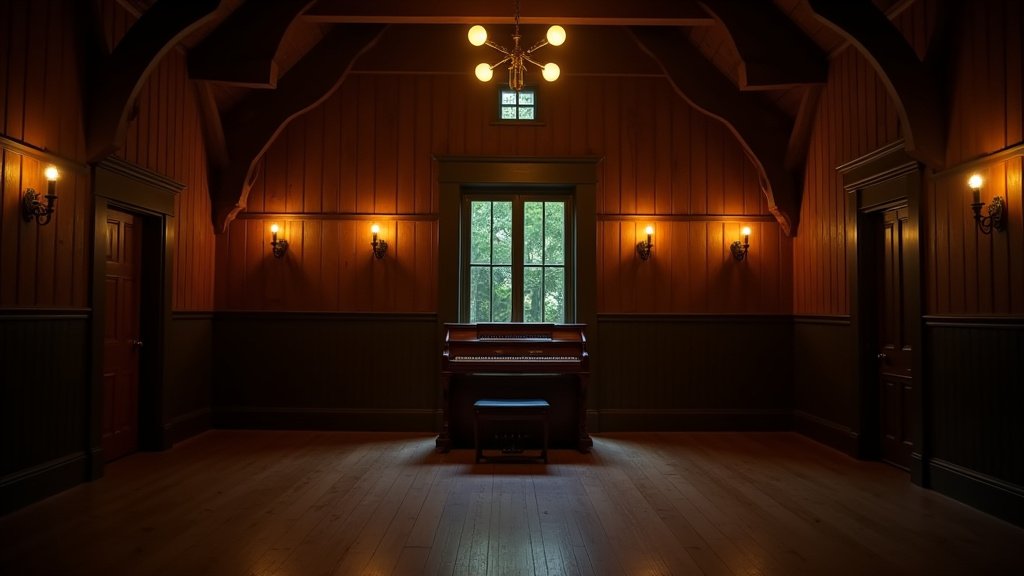
The structure of the Salish Sea Early Music Festival is as notable as its repertoire. By distributing performances across multiple island and coastal venues—including churches and community halls—the festival democratizes the experience of early music. The ‘free-will offering’ model, combined with free entry for youth, signals a commitment to accessibility that is increasingly rare in the classical music world. This community-focused approach does more than fill seats; it creates a specific kind of intimacy. Listeners are placed in close proximity to the musicians, allowing them to hear the ‘breath’ of the flute and the ‘grit’ of the bow on gut strings, elements often lost in the vast, sterile acoustics of modern concert halls.
Secondary Angle: The Global Resurgence of Period Performance
The current enthusiasm for the ‘Paris Quartets’ is part of a broader, systemic resurgence of period performance practice that has been building over the last several decades. For a long time, Baroque music was viewed through the prism of modern, heavy instrumentation—the so-called ‘Romanticized’ approach. Today, the pendulum has swung decisively. Audiences are no longer content with heavy, vibrato-laden interpretations of 18th-century works. They demand transparency, clarity, and the specific tonal colors that only period instruments can provide.
This trend is economically and culturally significant. The rise of independent, regional festivals like the one in the Salish Sea indicates that Baroque music is no longer tethered to major metropolitan symphony halls. It has found a new home in smaller, niche venues where the ‘authenticity’ of the sound can be appreciated in a quiet, focused environment. This shift is fueling a market for luthiers, specialized teachers, and concert promoters who understand that the audience for classical music is changing—it is becoming more decentralized, more educated, and more discerning.
The Future of Early Music Education
Perhaps the most compelling aspect of this tour is the festival’s emphasis on youth involvement. By inviting young audiences to experience the complexity of the Baroque repertoire without the financial barrier of a ticket price, the festival is seeding the ground for future generations of listeners. Early music, with its emphasis on improvisation and ornamentation, is often more relatable to younger audiences raised on contemporary musical genres than the rigid, monumental structures of later orchestral music.
Looking forward, the success of programs like this suggests a roadmap for the future of arts organizations. The intersection of rigorous historical scholarship—represented here by the careful selection of Telemann’s original scores—and localized, high-engagement outreach is a powerful formula. It suggests that if we want to save classical music, we should stop trying to make it bigger and start making it better, more intimate, and more historically grounded.
FAQ: People Also Ask
Why are these works called the ‘Paris Quartets’?
They are called the ‘Paris Quartets’ because Telemann composed them for a group of Parisian virtuosos who performed them during his famous visit to Paris in 1737-1738. Though Telemann was German, the style of the music is heavily influenced by the French musical taste of the time, characterized by elegance and ornamentation.
What makes a ‘period instrument’ different from a modern one?
Period instruments are either original antiques from the 18th century or high-fidelity replicas. They differ from modern instruments in construction—often using gut strings instead of steel, no internal support bars, and, in the case of woodwinds, lacking modern key systems. This creates a distinct, thinner, and more transparent sound that is considered more ‘authentic’ to the Baroque era.
Why is the Salish Sea Early Music Festival significant?
The festival is notable for its commitment to bringing high-level, historically informed performance to non-traditional venues across the Pacific Northwest. Its model of community-based performances and accessible pricing (free-will offerings and free entry for youth) helps maintain the relevance of Baroque music in rural and island communities that might otherwise lack access to such specialized ensembles.
More Stories
iHeartRadio Music Festival 2026 Ignites Las Vegas
Hyde Park Jazz Fest at 20: A Sonic Milestone for Chicago
Americanafest 2026: Nashville Readies for Global Roots Music Milestone