








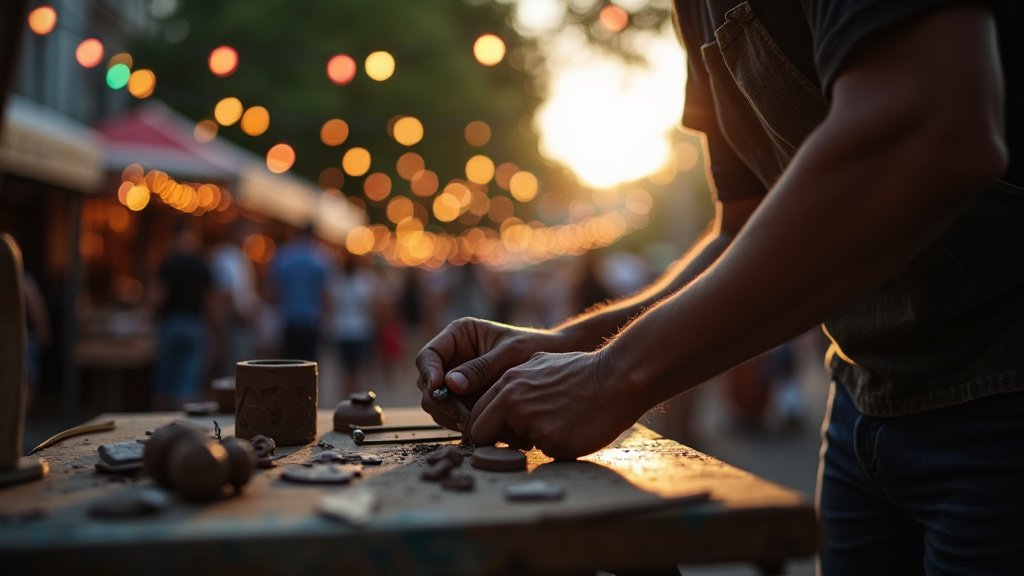
The 39th annual Main St. Fort Worth Arts Festival has officially opened its gates, transforming eighteen blocks of downtown Fort Worth into a vibrant, open-air gallery. Running from April 16 through April 19, 2026, the festival, presented by PNC Bank, serves as the cornerstone of the city’s spring cultural calendar. With over 200 jury-selected artists from across the nation and nearly 100 musical performances, the event is set to reaffirm Fort Worth’s position as a major destination for fine art, live entertainment, and community engagement.
Key Highlights
- Event Timeline: The festival runs from April 16 to April 19, 2026, in the heart of downtown Fort Worth.
- Artistic Scale: Over 200 juried artists showcasing 15 different mediums, selected from nearly 1,000 national applicants.
- Diverse Entertainment: Nearly 100 musical acts perform across four stages, featuring regional headliners like Ian Moore and Ghosts of Hill County.
- Economic Impact: The festival remains a vital economic driver for the region, generating significant revenue for local businesses and the arts sector.
- Community Integration: The TCC Makers Zone offers hands-on educational activities, bridging the gap between professional art and community participation.
The Resurgence of the Downtown Cultural Economy
When Robert Bass spearheaded the inaugural festival in 1986, the primary objective was urban revitalization—a mission to turn the Central Business District from a sleepy commercial zone into a bustling, 24/7 destination. Nearly four decades later, the Main St. Fort Worth Arts Festival has transcended its origins as a simple city-promotion event to become a sophisticated economic powerhouse.
The Anatomy of an Arts-Driven Economy
Modern economic analysis of the festival reveals that it is not merely a transient event but a sustained engine of growth. Recent data from the Americans for the Arts and local impact studies indicate that the nonprofit arts and culture industry in Fort Worth generates over $507 million in annual economic activity. A significant portion of this is catalyzed during high-traffic events like the Main St. Festival.
For local vendors, hospitality partners, and regional merchants, the four-day event provides a critical boost. It isn’t just about the art sales—which are estimated to reach $4 million this year alone—but the ancillary spending: lodging, dining, and transit. The presence of the festival encourages residents and visitors alike to engage with the city’s permanent cultural infrastructure, such as the Nancy Lee & Perry R. Bass Performance Hall and the surrounding museum district. This ripple effect creates a year-round demand for high-end dining and entertainment services, proving that investing in temporary, world-class outdoor events pays long-term dividends for local business stability.
Curating a Nationally Ranked Experience
Maintaining the festival’s ranking as one of the top fine arts events in the U.S. requires a rigorous selection process. The jury process for the 2026 iteration involved reviewing nearly 1,000 applications. This level of curation ensures that attendees are not just seeing ‘crafts’ but are exposed to museum-quality work across 15 distinct media, including fiber arts, ceramics, glass, and mixed-media sculpture. By highlighting award-winning talent from previous years, such as YanFang Inlow and Karen Libecap, the festival creates a continuity of excellence that keeps collectors returning.
The Soundtrack of the Southwest
Beyond the visual arts, the musical curation for the 2026 festival has been carefully calibrated to reflect the diverse soundscape of Texas and the broader Southwest. The inclusion of four distinct stages—the UTA West “Main” Stage, the Thomas J. Henry Stage, the Studio 80 Pirate Ship, and the San Simeon Wine Pavilion—allows for a stratified listening experience.
Sonic Diversity as a Cultural Anchor
Music has become the heartbeat of the festival, acting as a secondary draw that keeps foot traffic moving through the 18-block footprint. By mixing established names like blues-rock veteran Ian Moore with emerging Americana and Tejano acts, the festival avoids the repetitive monotony often found in smaller, single-genre street fairs. This deliberate programming reflects a shift in festival strategy: prioritizing ‘experiential’ consumption. Attendees aren’t just walking past booths; they are lingering, socializing, and participating in an immersive environment. The musical acts, ranging from jazz to funk to traditional Texas roots, serve as the soundtrack to the broader narrative of the festival—a narrative of inclusivity, heritage, and creative expression.
Future Projections: Sustainability and Innovation
Looking beyond 2026, the Main St. Fort Worth Arts Festival faces the challenge of maintaining its ‘authentic’ feel while embracing necessary technological and logistical upgrades. The move toward cashless vendor systems is a clear indicator of the event’s modernization, aimed at increasing transaction speed and security. As downtown Fort Worth’s residential population continues to grow, the festival is shifting from being a destination for commuters to a backyard event for local urbanites. This transition necessitates a greater focus on sustainable logistics—managing crowds, waste, and transit more efficiently. The heavy reliance on regional partners like Trinity Railway Express underscores the city’s commitment to making the event accessible without contributing to the congestion of a 21st-century urban core. The future of the festival likely lies in these deeper integrations—blending the physical experience of the art fair with digital engagement, such as virtual gallery tours and app-based schedules that enhance, rather than replace, the physical presence on Main Street.
FAQ: People Also Ask
Is the festival free to attend?
Yes, the Main St. Fort Worth Arts Festival is a free, public event. Attendees can enjoy all art exhibits and musical performances at no cost.
What are the parking options for the event?
Organizers recommend utilizing the Trinity Railway Express (TRE) for public transit access. There are also numerous parking garages available throughout downtown; however, guests are encouraged to arrive early, as spaces fill quickly during peak festival hours.
Are pets allowed at the festival?
Event organizers strongly encourage guests to leave pets at home due to the high volume of crowds and the nature of the street-level exhibits, ensuring both the safety of the animals and the enjoyment of the other attendees.
Can I bring my own chairs and coolers?
While folding chairs are permitted, they must be placed outside of high-traffic walkway areas to ensure the flow of the crowd. Please check the official festival website for specific restrictions regarding large items in particular zones like the Sundance Square Plaza area.
What if it rains during the festival?
The event typically proceeds rain or shine. However, severe weather plans are in place. Attendees are advised to check the festival’s social media channels for real-time updates regarding any potential schedule disruptions.
More Stories
iHeartRadio Music Festival 2026 Ignites Las Vegas
Hyde Park Jazz Fest at 20: A Sonic Milestone for Chicago
Americanafest 2026: Nashville Readies for Global Roots Music Milestone