











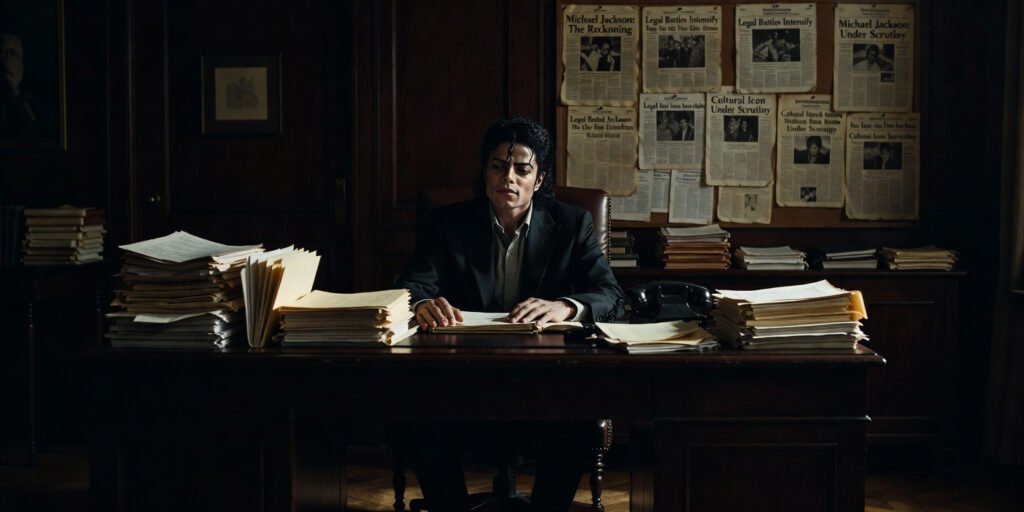
Just as the global rollout of the Michael Jackson biopic, Michael, begins to dominate headlines and box office projections, the late singer’s estate has been thrust into a fresh, high-stakes legal battle. On the heels of the film’s theatrical debut, a new lawsuit has been filed by the Cascio family—a group that once occupied a position of profound trust in Jackson’s inner circle, often referring to themselves as his “second family.” This development marks a significant escalation in the ongoing scrutiny of the pop icon’s legacy, reigniting debates that the new film attempts to navigate.
The Legal Allegations
The complaint, which emerged in court filings today, alleges a pattern of systematic child sexual abuse spanning over a decade. The Cascio family, including parents Dominic and Connie and their children, claim that the abuse took place across various international locations, including Neverland Ranch, concert tour stops, and private family trips. The filing describes an environment of grooming and manipulation, alleging that Jackson used his immense influence, gifts, and access to his celebrity lifestyle to isolate the children from their parents and manipulate their perception of the interactions.
Key Highlights
- The Lawsuit: The Cascio family has filed a new lawsuit alleging sexual abuse by Michael Jackson, describing a long-term pattern of grooming and manipulation.
Timing: The filing coincides with the global theatrical release of the biopic Michael*, casting a shadow over the film’s opening weekend.
- The Alleged Settlement: The lawsuit claims that the two parties previously entered into a confidential, private settlement agreement worth $16 million, which supposedly collapsed in 2025 when payments ceased.
- Estate’s Rebuttal: Attorney Marty Singer, representing the Jackson Estate, has vehemently denied the allegations, characterizing the lawsuit as a “desperate money grab” and a calculated attempt to exploit the media frenzy surrounding the new film.
Cultural Catalyst: The plaintiffs state that viewing the 2019 documentary Leaving Neverland* played a critical role in helping them process their past experiences and emboldened them to come forward with their account.
A Legacy Under Fire: The Biopic and the Legal Reckoning
The timing of this lawsuit is not merely coincidental; it is a direct collision between historical narrative and modern accountability. The film Michael, directed by Antoine Fuqua and produced with the involvement of the Jackson estate, aims to provide a comprehensive look at the singer’s life. However, the emergence of the Cascio lawsuit serves as a stark reminder of the complexities inherent in maintaining a musical legacy when the personal history of the artist remains heavily contested in court.
The Shift from ‘Second Family’ to Plaintiffs
For decades, the Cascio family was publicly viewed as one of Jackson’s staunchest support systems. Their relationship was characterized by deep intimacy; they appeared on high-profile television programs, including The Oprah Winfrey Show, to defend Jackson against previous allegations of misconduct. To the public, they were the proof of Jackson’s purported innocence—a family that knew him better than most and saw no harm.
This shift from defender to accuser is the core of the drama. The legal filings suggest that the family felt the need to “deprogram” their past perceptions of Jackson, specifically citing the impact of the 2019 documentary Leaving Neverland. The documentary, which explored the allegations of Wade Robson and James Safechuck, apparently served as a catalyst for the Cascios to re-examine their own childhood experiences. This highlights a broader cultural phenomenon where contemporary media is enabling a re-evaluation of past associations with influential figures.
The Economics of Silence and Settlement
The lawsuit brings to light the murky world of private settlements surrounding high-profile celebrity abuse cases. The claim that a $16 million, five-year agreement existed—and that payments stopped in 2025—adds a layer of financial friction to the case. It positions the conflict not just as a matter of seeking justice for abuse, but as a contractual dispute over an alleged failure to uphold a confidentiality agreement. The Estate’s reaction, calling the move a “transparent forum-shopping tactic,” underscores the high stakes involved. If these allegations are brought to trial, they force a public airing of documents and claims that the estate has spent years trying to keep out of the spotlight.
The Defense Strategy
Marty Singer, a long-time defender of the Jackson estate, has framed this lawsuit as a strategic maneuver by the plaintiffs to leverage the current media cycle surrounding the biopic. By emphasizing the family’s 25 years of public defense of Jackson, the estate is attempting to undermine the credibility of the new claims. Their legal strategy appears to be twofold: first, to invalidate the allegations by pointing to the family’s long history of contradictory public statements; and second, to aggressively frame the motivation as financial, rather than restorative. This approach is standard in high-stakes litigation, but it remains to be seen whether it will hold up in a court of law that is increasingly sensitive to the complexities of long-term trauma and survivor testimony.
The Biopic’s Vulnerability
The release of Michael was always going to be a lightning rod. By choosing to produce a project that, by necessity, must address the controversial aspects of Jackson’s life, the estate opened itself up to intense scrutiny. This lawsuit essentially forces a competing narrative into the public consciousness at the exact moment the film is trying to shape the audience’s perception of the singer. It creates a “two-track” experience for the public: the cinematic, authorized version of Jackson’s life on screen, and the raw, unpolished, and devastating allegations in the court filing. This duality is likely to dominate the discourse for the foreseeable future, making it nearly impossible for the public to view the film in a vacuum.
FAQ: People Also Ask
Who are the Cascio family in relation to Michael Jackson?
The Cascio family was a close-knit group that Michael Jackson befriended in the 1980s. For over two decades, they were arguably his closest confidants, famously calling themselves his “second family” and appearing on major television networks to defend him against abuse allegations.
What is the significance of the $16 million claim?
The lawsuit alleges that the Jackson estate entered into a private, confidential settlement of $16 million over five years to resolve the family’s claims. The plaintiffs assert that the estate stopped making these payments in 2025, which they argue was the breaking point that led them to take legal action.
How has the Michael Jackson Estate responded?
The Estate, through attorney Marty Singer, has strongly denied all allegations. They described the lawsuit as a “desperate money grab” and accused the family of attempting to exploit the current media cycle surrounding the new biopic to force a payout, while pointing to the family’s previous long-standing defense of the singer.
How does this impact the ‘Michael’ biopic?
The lawsuit presents a direct challenge to the narrative presented in the film. While the film is a commercial and artistic endeavor sanctioned by the estate, this legal filing keeps the most damaging accusations against Jackson in the headlines, potentially affecting public perception of the movie and the estate’s ability to control the singer’s narrative.
What do the plaintiffs claim motivated them to come forward now?
The lawsuit states that viewing the 2019 documentary Leaving Neverland helped the family members process their past experiences and re-evaluate their relationship with Jackson. They claim the film acted as a catalyst that allowed them to confront the alleged abuse they had previously sought to minimize or ignore.
More Stories
Sweet Magnolias Creator Bids Emotional Farewell After Cancellation
Lady Gaga Welcomes Daughter Rose Bean Polansky
Ranbir & Alia Launch Major 20-School Mumbai Makeover