











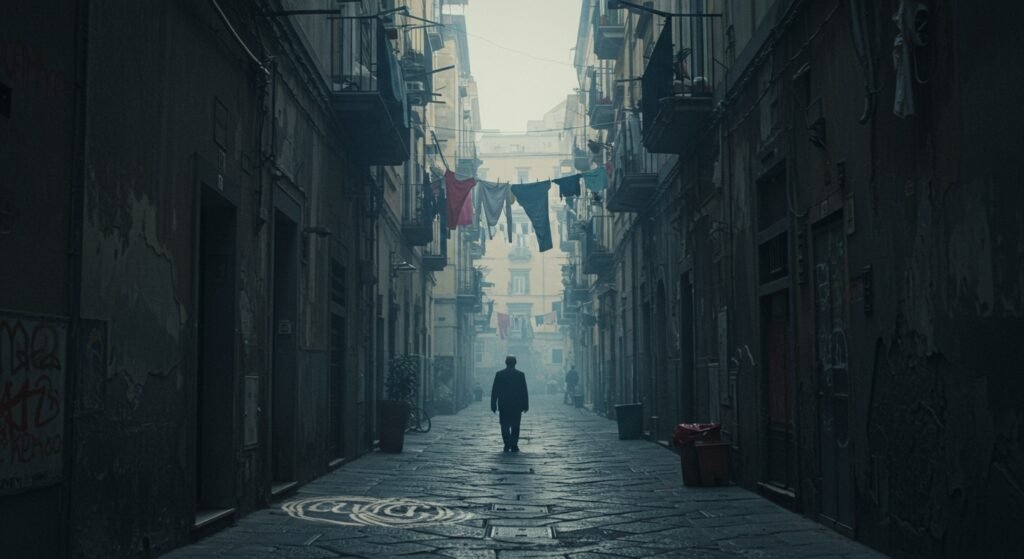
In his latest cinematic endeavor, acclaimed director Paolo Sorrentino delivers “Parthenope,” a film described by reviewer James Larmour as a sweeping love letter to Naples. This visually stunning work weaves together the city’s tangible reality with the ethereal echoes of its ancient mythology, centering on a young woman who embodies the spirit of the legendary siren for whom the city was once named.
A City Unveiled: Naples as a Character
Sorrentino’s portrayal of Naples is, according to Larmour’s review, nothing short of breathtaking. The film employs meticulously composed shots that capture the multifaceted nature of the city, presenting a panorama that encompasses both its renowned beauty and its grittier, less-romanticized aspects. This visual approach is central to the narrative, establishing Naples not merely as a backdrop but as a vibrant, living character deeply intertwined with the protagonist’s journey. The cinematography is particularly highlighted, lauded for its ability to evoke the city’s unique atmosphere and contribute significantly to the film’s overall impact.
The Myth and the Mortal: Exploring Appearance and Reality
The narrative follows the titular character, a young, beautiful woman whose presence resonates with the myth of Parthenope, the siren from Neapolitan folklore. Her inherent charm and striking appearance are central to the story, exploring how her allure impacts the lives of those around her. The film uses her character as a lens through which to examine the often-complex interplay between appearance and reality, delving into how external perception shapes identity and interaction in the vibrant Neapolitan setting.
Performances: Depth Amidst Narrative Nuance
The cast features notable performances, with Celeste Della Porta delivering a standout portrayal in the lead role of Parthenope. Larmour observes that Della Porta masterfully conveys depth and complexity through subtle expressions, navigating the character’s journey with nuance. While the review notes that the script occasionally limits her range, her central performance is singled out as a compelling anchor for the film.
The ensemble also includes veteran actor Gary Oldman, who portrays the figure of John Cheever. Oldman’s performance is described as compelling, bringing a distinct presence to his role. However, Larmour points out that his screen time is notably limited, suggesting that while impactful, his contribution serves more as a potent cameo within the broader narrative fabric.
Sorrentino’s Signature Visual Storytelling
Paolo Sorrentino, known for his distinct visual style and evocative storytelling, utilizes “Parthenope” to once again showcase his command of the cinematic medium. The film’s visual splendor, as praised by Larmour, is a hallmark of Sorrentino’s direction. The deliberate pacing and aesthetic composition underscore the film’s thematic concerns, from the mythic undercurrents to the raw depiction of urban life. The synergy between Sorrentino’s direction and the exceptional cinematography creates a rich, immersive experience for the viewer, reinforcing the film’s identity as a tribute to Naples.
Conclusion: A Visual Feast with a Complex Core
In summary, “Parthenope,” as reviewed by James Larmour, stands out primarily for its stunning visual artistry and its profound engagement with the city of Naples and its mythological heritage. While acknowledging potential narrative constraints in the script that may affect character exploration, particularly for the lead, the film is elevated by Celeste Della Porta’s strong central performance and the compelling, albeit brief, appearance of Gary Oldman. Ultimately, Sorrentino crafts a visually arresting work that functions as both a cinematic ode to a historic city and a layered exploration of myth, identity, and perception through the eyes of its compelling protagonist.
More Stories
Mike Flanagan’s ‘Carrie’ Stuns Fantastic Fest
J Mascis: How Black Sabbath Turned Him Into a Rock Outlier
Sound Strokes: A Sonic Bridge Between China and Scotland