











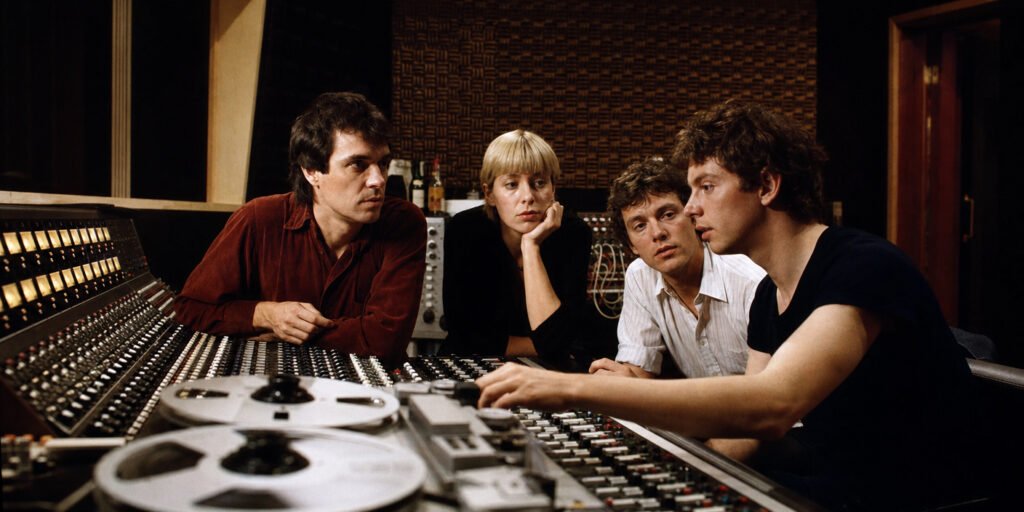
The 2026 super-deluxe reissue of Talking Heads’ 1979 landmark album ‘Fear of Music’ arrives not as a mere nostalgia trip, but as a forensic examination of a group at the height of their creative paranoia. While the industry often treats catalog reissues with a heavy hand, this specific collection successfully strips away the accumulation of decades of digital artifacting to recapture the band’s original, claustrophobic sonic depth. However, the package remains a bifurcated experience; the studio remaster is an absolute revelation, standing as the definitive way to consume this post-punk masterwork, while the inclusion of supplemental live concert recordings provides a mixed, occasionally underwhelming verdict that fails to capture the lightning-in-a-bottle energy of the studio sessions.
Key Highlights
- Masterful Remastering: The 2026 reissue utilizes state-of-the-art audio engineering to restore the subterranean bass lines and crisp, jagged guitar work that defines the album’s dark, ambient production style.
- The Studio Benchmark: The record continues to hold up as Talking Heads’ most cohesive artistic statement, arguably surpassing the more sprawling ‘Remain in Light’.
- Live Disappointments: The accompanying live concert recordings included in the box set lack the fidelity and performance intensity expected of a super-deluxe edition, creating a jarring contrast with the impeccable studio tracks.
- Production Insight: The reissue highlights the instrumental role of producer Brian Eno, whose influence on the album’s texture remains a focal point of the 2026 liner notes and sonic analysis.
The Anatomy of the 2026 Sonic Restoration
When ‘Fear of Music’ was first released in August 1979, it was a polarizing shift for the band. Moving away from the nervy, straightforward new wave of ’77 and ‘More Songs About Buildings and Food’, the group—David Byrne, Tina Weymouth, Chris Frantz, and Jerry Harrison—embraced a colder, more industrial aesthetic. The 2026 reissue team, tasked with modernizing the master tapes, faced a significant challenge: how to enhance the audio without destroying the ‘lo-fi’ grit that gave the album its character.
Fortunately, the result is nothing short of surgical. The new master elevates the rhythm section, specifically the syncopated lock between Tina Weymouth’s bass and Chris Frantz’s drumming. In tracks like ‘I Zimbra’, the polyrhythmic layers are separated with a clarity that was previously muddied in earlier digital transfers. This isn’t just a volume boost; it is a tonal reclamation. For audiophiles, the subtle ghost notes in the percussion, once buried under mid-range compression, now provide a distinct, driving momentum that makes the album feel urgent and contemporary.
The ‘Eno’ Factor and Studio Paranoia
Central to the evaluation of this reissue is the acknowledgement of Brian Eno’s architectural approach to the recording process. The 2026 edition includes enhanced documentary notes that peel back the layers of the sessions at the Record Plant and Atlantic Studios. The album remains Talking Heads’ most ‘paranoid’ recording—a deliberate reflection of New York City in the late 1970s.
Byrne’s vocals, often detached and observational, are brought forward in the mix in a way that accentuates his lyrical anxieties about cities, life, and the future. Songs like ‘Life During Wartime’ and ‘Cities’ serve as the anchors for the album’s thematic dread. In the high-definition remaster, one can hear the subtle room ambience that Eno famously manipulated to create a ‘drier’ sound, a contrast to the reverb-drenched pop music of the era. It is here that the reissue justifies its existence; it allows the listener to hear the specific room textures that made ‘Fear of Music’ so distinct from its predecessors.
The Live Recording Conundrum
While the studio component of this super-deluxe package is a triumph, the decision to include archival live recordings proves to be the collection’s Achilles’ heel. Throughout the mid-to-late 1970s, Talking Heads were undeniably one of the most exciting live acts on the planet. However, the selections chosen for this box set appear to be culled from sources with inconsistent sound quality.
Where the studio remaster feels crystalline and intentional, the live cuts fluctuate between bootleg-quality muddiness and over-processed equalization. The nuance of the band’s interaction on stage—which is arguably better represented in the band’s own ‘Stop Making Sense’ documentation—is lost in these specific transfers. For a super-deluxe price point, fans might rightfully expect a more curated, high-fidelity live archive. The energy is there, but the technical execution leaves much to be desired, making it difficult to justify these tracks as anything more than curiosities for the completist rather than essential listening.
Historical Context and Cultural Impact
To understand the gravity of this reissue, one must look at the climate of 1979. ‘Fear of Music’ was released at a turning point for post-punk. It bridged the gap between the raw urgency of the punk explosion and the sophisticated, world-music-influenced experimentalism that would define the early 1980s. The 2026 retrospective re-establishes the album’s place as a seminal text in the canon of art-rock. It is not just about the songs; it is about the production of the atmosphere. By revisiting this record, we are reminded of how Talking Heads managed to commercialize avant-garde ideas without stripping them of their alienating, fascinating core. This reissue succeeds in placing the album back into the cultural conversation as the band’s most refined, focused, and terrifyingly precise work, even if the surrounding bells and whistles aren’t all created equal.
FAQ: People Also Ask
Q: Is the 2026 ‘Fear of Music’ reissue worth the investment for casual fans?
A: For the studio remaster alone, yes. The improvement in audio fidelity for core tracks like ‘Life During Wartime’ and ‘Heaven’ is significant. However, if you are looking for high-quality live recordings, the bonus material may disappoint.
Q: How does this remaster compare to the original 1979 vinyl release?
A: The 2026 version offers better separation and depth, reducing the ‘smear’ often associated with older analog-to-digital transfers, while maintaining the intended raw aesthetic of the original production.
Q: What is the significance of ‘Fear of Music’ in the Talking Heads’ discography?
A: Many critics argue it is the group’s most unified work, perfectly balancing the nervy energy of their early years with the experimental, atmospheric production techniques they would perfect on ‘Remain in Light’.
Q: Why are the live recordings considered inconsistent?
A: The live tracks selected for this specific box set suffer from uneven soundboard capture, leading to a noticeable drop in fidelity compared to the professionally produced studio tracks in the same package.
More Stories
Leighton Meester Dazzles in Netflix’s Holiday Hit ‘Guarding Stars’
Heartland Review: Chastain’s Netflix Thriller Falls Flat
Aftermath Review: A Tense Portrait of Reentry and Regret