











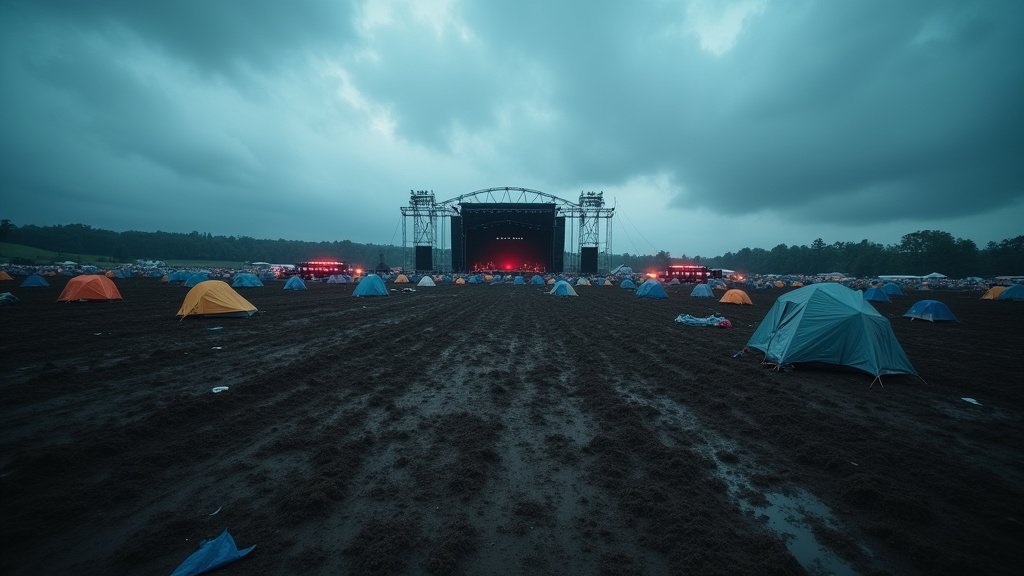
Major music festivals and stadium tours are staples of summer entertainment, but sometimes, things don’t go as planned. From extreme weather to technical failures and security breaches, concerts can quickly turn from a night of fun into a chaotic event. These incidents not only disrupt the experience for thousands of fans but can also pose significant safety risks.
Key Highlights:
- Extreme weather events have frequently caused concert cancellations and safety concerns.
- Technical malfunctions and power outages are common culprits for concert disruptions.
- Security lapses and overcrowding have led to dangerous situations at large music events.
- Artist safety and fan well-being are paramount concerns during concert planning and execution.
When the Show Must Stop: Concert Disasters Unpacked
The allure of live music is undeniable, drawing millions to experience their favorite artists in person. However, the infrastructure and logistics required for large-scale concerts make them susceptible to a variety of problems. These issues can range from minor inconveniences to full-blown emergencies, impacting artists, crew, and attendees alike. Understanding the common causes of concert disasters is crucial for both organizers and fans.
The Specter of Nature: Weather Woes
Weather is perhaps the most unpredictable and uncontrollable factor affecting outdoor concerts. Thunderstorms, hurricanes, extreme heat, or even unexpected snow can force the cancellation or postponement of events. In 2017, a major hurricane threatened to disrupt the Made in America festival in Philadelphia, leading to severe logistical challenges and partial cancellations. Similarly, outdoor festivals like Glastonbury have frequently contended with torrential rain, turning fields into mud baths and creating hazardous walking conditions. The aftermath often involves immense financial losses for organizers and disappointment for fans who have traveled long distances.
Technical Glitches and Power Plays
Modern concerts rely heavily on sophisticated technology, from massive sound systems and lighting rigs to complex stage mechanics. When these systems fail, the show can grind to a halt. Power outages are a perennial concern, especially at large venues or festivals where energy demands are enormous. A well-documented incident occurred at a major music festival where a cascading power failure plunged the main stage into darkness mid-performance, leaving thousands of concertgoers in suspense and frustration. Beyond power issues, audio equipment malfunctions, pyrotechnics gone awry, or structural failures of stage elements can also lead to abrupt halts and, in severe cases, injuries.
Security, Crowds, and the Unforeseen
Ensuring the safety of tens of thousands of people in a confined space is a monumental task. Security breaches, such as unauthorized access or crowd surges, can lead to dangerous stampedes. The tragic events at the Astroworld Festival in 2021, where a crowd surge resulted in multiple fatalities and numerous injuries, serve as a stark reminder of the potential dangers. Overcrowding, inadequate crowd management, and insufficient security personnel are often cited as contributing factors. Furthermore, unforeseen events, like fires or medical emergencies spreading through a crowd, require swift and decisive action from event organizers and emergency services.
The Fallout: Financial and Emotional Costs
Concert disasters have far-reaching consequences. For organizers and artists, the financial implications can be devastating, involving lost ticket revenue, production costs, and potential lawsuits. The reputational damage can also be significant, impacting future bookings and fan trust. For attendees, the emotional toll of a negative or traumatic experience can overshadow the intended enjoyment. The loss of irreplaceable memories and the fear instilled by unsafe conditions are significant factors.
FAQ: People Also Ask
What are the most common reasons for concert cancellations?
The most common reasons for concert cancellations include severe weather (thunderstorms, hurricanes, extreme heat), technical failures (power outages, sound system malfunctions), artist illness or injury, and unforeseen safety concerns such as security threats or venue issues.
How do organizers ensure fan safety at large concerts?
Organizers ensure fan safety through comprehensive risk assessments, robust security plans, crowd management strategies, well-trained security and medical staff, clear emergency protocols, and adherence to venue safety regulations. They also work closely with local authorities and emergency services.
What happens if a concert is canceled due to weather?
If a concert is canceled due to weather, organizers typically offer refunds for ticket holders or reschedule the event for a later date. The specific policy often depends on the promoter, venue, and the severity of the weather.
Can fans get refunds if a concert is cut short?
Policies vary, but generally, if a concert is significantly cut short due to circumstances beyond the audience’s control (like a technical failure or safety issue), fans may be eligible for partial or full refunds. This is usually determined by the ticket vendor and the event promoter.
What is the role of emergency services during a concert disaster?
Emergency services, including police, fire departments, and medical personnel, play a critical role in responding to concert disasters. They provide immediate assistance to injured individuals, manage crowd control, secure the area, and coordinate rescue and medical efforts to mitigate the situation.
More Stories
iHeartRadio Music Festival 2026 Ignites Las Vegas
Hyde Park Jazz Fest at 20: A Sonic Milestone for Chicago
Americanafest 2026: Nashville Readies for Global Roots Music Milestone