










The rapid ascent of AI-generated performers in the entertainment industry has triggered a volatile debate between creative guilds and the technologists spearheading digital transformation. Among the most recent focal points is Tilly Norwood, an AI-powered digital actor whose existence has forced a confrontation regarding the future of work in Hollywood. As concerns over displacement dominate headlines, the inventor behind Norwood is pushing back, asserting that the technology is not an agent of obsolescence, but a facilitator of unprecedented creative opportunity.
Key Highlights
- Redefining Roles: The creator of Tilly Norwood argues that the transition to AI performance requires a massive influx of new talent, including AI prompt engineers, digital riggers, and synthetic lighting specialists.
- The Economic Argument: Proponents of the technology claim that the overhead reduction in traditional production allows for higher budget allocation toward high-level post-production and digital narrative development.
- Navigating the Union Standoff: Despite industry friction regarding labor rights, advocates insist that digital humans like Norwood serve as force multipliers for actors, allowing them to monetize their likeness across multiple projects simultaneously without physical presence.
- Shifting Production Pipelines: The adoption of AI actors is moving the production heavy-lifting from on-set logistics to technical design studios, changing the geographic and economic distribution of film jobs.
The Digital Renaissance: Shaping the Future of Performance
The narrative surrounding Tilly Norwood is emblematic of a broader, tectonic shift in how content is manufactured in the digital age. For over a century, the term ‘actor’ implied a physical human presence—a localized collection of sweat, timing, and biological performance. Today, that definition is expanding to include high-fidelity digital constructs. The creator behind Norwood, in a recent series of statements, addressed the existential anxiety permeating the industry, suggesting that the fear of job displacement ignores the fundamental ‘creative ecosystem’ expansion necessitated by such high-end synthetic performance.
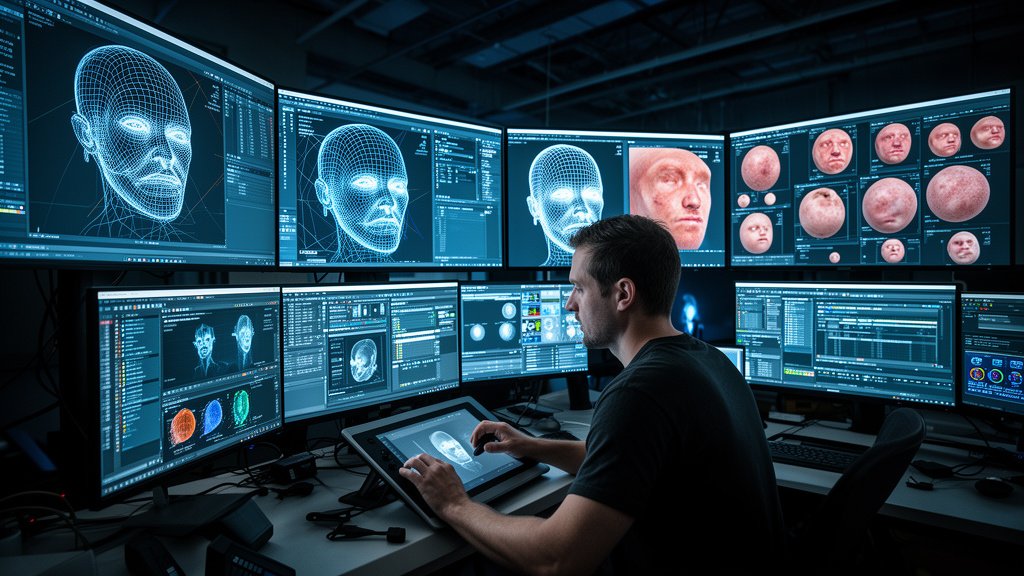
Unlike traditional CGI, which required massive teams to rotoscope and keyframe every individual movement, modern AI-driven actors like Norwood rely on complex neural rendering and large-scale model training. This shift creates a demand for a new caste of industry professionals. According to the project’s architect, the production pipeline for a project featuring an AI actor requires ‘Digital Human Architects’ who manage the nuance of synthetic facial expressions, ‘AI Ethicists’ who monitor data usage and algorithmic fairness, and ‘Prompt Directors’ who facilitate the bridge between directorial vision and model output.
The New Job Economy: Beyond the Physical Set
Critics of AI integration in Hollywood often point to the potential loss of background acting work and stand-in roles. However, the creator of Tilly Norwood offers a counter-perspective rooted in economic scaling. By reducing the logistical cost of physical production—travel, accommodation, and on-site crew requirements for standard actors in specific shots—productions can theoretically redirect capital toward more complex, VFX-heavy narratives that were previously financially impossible.
This argument posits that the job market is not shrinking; it is merely migrating. We are seeing a move from on-set logistical roles toward studio-based computational roles. For instance, the demand for motion capture (MoCap) cleanup technicians has skyrocketed. Furthermore, the role of the ‘Digital Stylist’ has emerged as a distinct profession. These individuals do not apply physical makeup; they curate the digital appearance, skin texture, and aesthetic data inputs that allow a character like Tilly Norwood to maintain consistent visual fidelity across varying lighting conditions and environments. This evolution effectively creates a high-tech layer of Hollywood employment that did not exist five years ago.
Integrating Entities: The Technology Behind the Performance
To understand the viability of these claims, one must look at the entities facilitating this change. Projects involving AI actors like Norwood rely heavily on proprietary Neural Rendering engines. These engines interface with industry-standard software like Unreal Engine 5, which has already become the backbone of virtual production. By integrating these systems, the creator argues that they are building a bridge to the future, not a wall. The semantic web of this technology includes not just the AI model itself, but the data labeling teams, the cloud compute infrastructure providers, and the cybersecurity firms tasked with preventing ‘digital identity theft’—a burgeoning sector of Hollywood legal and security work.
The Human Element in a Synthetic World
One of the most persistent concerns is the ‘uncanny valley’—the dip in audience acceptance when artificial characters appear almost, but not quite, human. The creator of Tilly Norwood notes that overcoming this requires intense labor from human artists. The process of achieving ‘photorealism’ is not automated; it is intensely manual. It involves teams of artists meticulously tweaking hair simulations, eye-movement micro-expressions, and sub-surface scattering on skin textures. Far from replacing the human touch, this technology requires a greater concentration of artistic human labor per second of screen time than traditional cinematography. The irony, the creator suggests, is that to make a digital actor seem more ‘human,’ you actually need more humans working in the background to refine the output.
Challenges to Adoption and Ethical Considerations
Despite the optimistic outlook, the path forward is not frictionless. The creator acknowledges the validity of the concerns raised by guilds like SAG-AFTRA, which are rightfully protective of their members’ likeness rights. There is a delicate balance to strike between leveraging AI as a creative tool and ensuring that it does not serve as a mechanism to erode the leverage of working actors. The argument being made is that regulation should focus on ‘informed consent’ and ‘economic participation’ rather than total prohibition. If digital actors like Norwood are treated as ‘force multipliers’ for the actors who license their likeness, they could theoretically become a new revenue stream for talent, rather than a replacement. This is the crux of the creator’s defense: the technology is a tool of empowerment if managed within a collaborative framework.
FAQ: People Also Ask
Is Tilly Norwood a real person or entirely computer-generated?
Tilly Norwood is an entirely AI-powered digital actor. While the likeness may be modeled after biological data, the character itself does not exist physically and is rendered through synthetic neural systems.
How does an AI actor create jobs instead of destroying them?
The creator argues that the production pipeline shifts from physical logistics to high-tech digital design. This creates demand for specialized roles such as AI prompt engineers, digital riggers, synthetic lighting artists, and data ethical compliance officers.
What are the main ethical concerns regarding digital actors?
The primary concerns involve the unauthorized use of an actor’s likeness, the displacement of entry-level acting roles, and the potential for ‘deepfake’ style misuse, all of which require new legal frameworks and union-led contracts to manage.
Will AI actors like Tilly Norwood completely replace human actors?
Industry experts largely view AI actors as complementary tools. The consensus among creators is that while AI will handle specialized, repeatable, or physically dangerous performance tasks, the unique emotional depth and spontaneity of human actors remain an irreplaceable asset for major narrative roles.
How are industry unions responding to these technologies?
Organizations like SAG-AFTRA have been proactively negotiating contracts that include specific clauses regarding the use of AI, digital replicas, and the consent of performers, aiming to balance innovation with labor protection.
More Stories
Sweet Magnolias Creator Bids Emotional Farewell After Cancellation
Presley Gerber, Model and Son of Cindy Crawford, Dies at 27
Lady Gaga Welcomes Daughter Rose Bean Polansky