











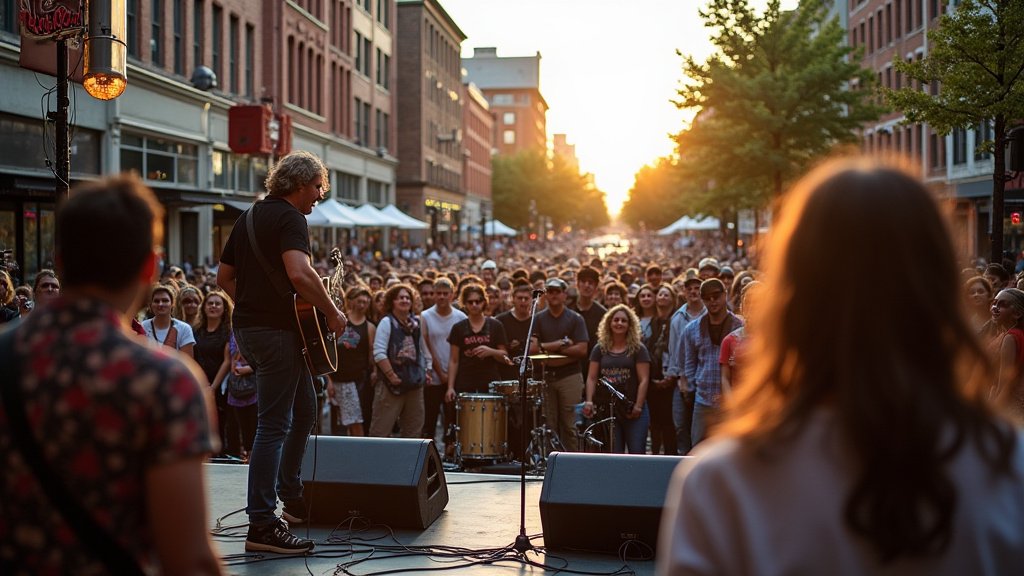
On September 20, 2026, the streets of Syracuse vibrated with a unique frequency as the BareRoots Music Festival transformed the city into an open-air amphitheater. More than just a concert series, the event functioned as a deliberate, resonant love letter to the region, proving that Central New York (CNY) has a cultural identity that is both distinct and deep-seated. By prioritizing exclusively local musicians, the festival organizers made a bold declaration about the sustainability of the local arts ecosystem.
The Heartbeat of CNY Talent
At the core of the BareRoots Music Festival was a commitment to the ‘local first’ philosophy. While many regional festivals rely on touring acts to drive ticket sales, BareRoots banked on the deep well of talent already residing within the CNY area. This strategy paid off, as attendees were treated to a diverse array of genres—from acoustic folk that mirrored the region’s landscape to high-energy indie rock that challenged the industrial history of the city. The organizers focused on storytelling through song, selecting artists whose lyrics and melodies often draw inspiration from the grit and beauty of upstate New York. By highlighting these voices, the festival did not just entertain; it validated the creative work happening in basements, small clubs, and local studios throughout the county.
Historical Context: The Evolution of the Syracuse Sound
To understand the significance of this event, one must look at the long-standing musical heritage of Syracuse. Historically, the city has acted as a nexus for various musical movements, benefiting from its central geographic location between major metropolitan centers. However, for decades, local talent often felt the pressure to ‘export’ their sound to succeed. BareRoots represents a paradigm shift. By creating a dedicated platform for CNY artists, the festival is reclaiming that narrative. It suggests that Syracuse does not need to look outward for validation; it has developed a cohesive sonic identity that is both authentic and market-ready. The festival serves as a modern iteration of the city’s artistic resilience, echoing the legacy of historical local venues that championed original performance art.
Economic Impact: Tourism Meets Localism
The economic implications of such a localized event are profound. Traditional tourism models often focus on bringing in outside dollars via major, traveling acts. BareRoots, conversely, demonstrated a ‘circular economic’ approach to cultural tourism. By showcasing local talent, the festival encouraged visitors from across the state to engage specifically with the Syracuse brand. This creates a sticky economic environment where attendees are more likely to support local restaurants, stay in regional hotels, and purchase merchandise from vendors who are also part of the community. Initial reports suggest that the foot traffic generated on September 20 provided a significant revenue bump to downtown establishments, proving that arts-led urban revitalization is a viable strategy for long-term growth.
Future Predictions: The BareRoots Legacy
Looking ahead, the success of the 2026 edition positions BareRoots to become a staple on the annual calendar. The challenge moving forward will be maintaining the ‘roots’ focus while scaling the production. If the organizers can continue to balance the intimacy of a local gathering with the infrastructure required to handle larger crowds, the festival could set a new benchmark for regional music events. We anticipate that this model will inspire similar initiatives across the Rust Belt, where the ‘love letter’ approach—celebrating local identity rather than importing global content—is increasingly seen as a differentiator in a saturated market. The future of the CNY music scene appears bright, provided it continues to nurture the talent that makes it unique.
FAQ: People Also Ask
Why was the BareRoots Music Festival considered a ‘love letter’ to Syracuse?
The term ‘love letter’ reflects the festival’s intentional curation of exclusively Central New York artists. It was a dedicated effort to celebrate the local culture, history, and community spirit of Syracuse rather than relying on touring acts from larger national markets.
What is the significance of the September 20, 2026, date?
This date marked the festival’s pivot into a premier regional event, capitalizing on the late-summer weather in Syracuse, which provided an ideal atmosphere for an outdoor urban music showcase. It has established a benchmark for subsequent years.
How does prioritizing local talent impact the local economy?
By keeping the performance roster local, the festival creates a circular economic effect. Revenue generated from vendors, ticket sales, and hospitality services tends to stay within the region, rather than being siphoned off by national agencies or touring management companies, directly benefiting the Syracuse arts ecosystem.
More Stories
iHeartRadio Music Festival 2026 Ignites Las Vegas
Hyde Park Jazz Fest at 20: A Sonic Milestone for Chicago
Americanafest 2026: Nashville Readies for Global Roots Music Milestone