








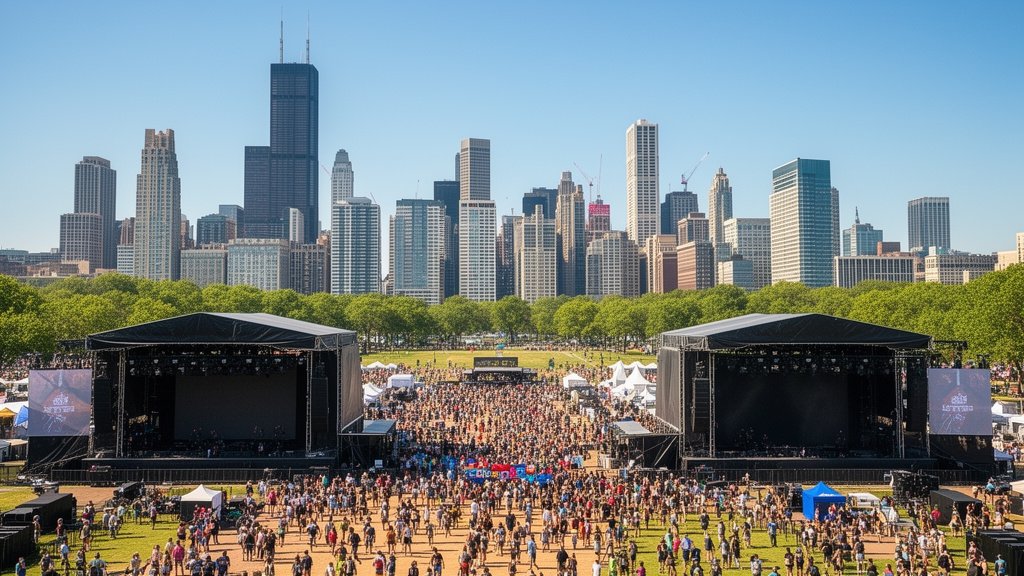
The pulse of downtown Chicago quickens today as Lollapalooza 2026 officially begins its four-day residency at the historic Grant Park, drawing global music fans from July 30 through August 2. What began as a touring festival founded by Perry Farrell has cemented its status as a permanent fixture in the heart of the Windy City, transforming 319 acres of public parkland into the epicenter of the music industry. As gates open, the skyline serves as a breathtaking backdrop for a meticulously curated experience that blends legacy acts with rising digital-native talent, marking a pivotal moment in the 2026 summer concert season.
Key Highlights
- Festival Schedule: The event runs continuously from July 30 through August 2, 2026, offering multi-genre performances across eight stages.
- Venue Legacy: Hosted exclusively at Chicago’s Grant Park, maintaining the festival’s long-standing urban identity.
- Economic Engine: The event continues to be a primary driver for Chicago’s tourism, hospitality, and retail sectors.
- Logistical Evolution: Enhanced crowd management and sustainability protocols are in full effect for this year’s iteration.
The Anatomy of a Modern Music Metropolis
The transformation of Grant Park into a temporary music metropolis is no small feat. Orchestrated by C3 Presents, the logistical planning for Lollapalooza 2026 began long before the first speaker was hoisted. The festival footprint, which spans from Michigan Avenue to the shores of Lake Michigan, requires a delicate balance of infrastructure and preservation. This year, organizers have optimized the layout to improve attendee flow, particularly around the high-traffic areas near the main stages, utilizing real-time sensor data to manage density and ensure safety. The integration of “smart-festival” technology has shifted the experience from a traditional concert to a fully connected digital ecosystem, where schedules, vendor payments, and emergency alerts are streamlined through the festival’s official mobile platform.
The Curation Strategy: Bridging Generations
Lollapalooza has always succeeded by bridging the gap between legacy rock dominance and the fast-paced world of digital-native genres. In 2026, the programming strategy is reflective of a highly fragmented music consumption landscape. By balancing high-production stadium headliners with niche, sub-genre-specific acts, the festival maintains its cultural relevance. This year’s lineup is a deliberate mix, designed to draw both the Gen Z demographic and the veteran festival-goer who has attended for decades. The curation team at C3 Presents prioritizes cross-genre synergy, encouraging attendees to cross-pollinate their musical tastes, a philosophy that has defined the Lollapalooza brand for years.
The Economic Impact on the Windy City
Beyond the melodies, the economic ramifications for Chicago are profound. Lollapalooza remains one of the largest single-event drivers of tax revenue for the city. Local hotels, transit authorities, and small businesses rely on the influx of hundreds of thousands of out-of-town visitors during this four-day window. The “Lollapalooza Effect”—the surge in local spending—is a vital metric for the Chicago Department of Cultural Affairs and Special Events (DCASE). As the city navigates the post-pandemic economic landscape, the reliable injection of capital from the festival serves as a critical booster for downtown real estate and hospitality businesses, which see occupancy rates spike to near-capacity during the event dates.
Sustainability and the Future of Urban Festivals
One of the most notable aspects of the 2026 iteration is the intensified focus on environmental sustainability. Large-scale outdoor events inherently create significant waste, and this year’s festival has implemented a robust “Leave No Trace” protocol. From aggressive composting initiatives to a massive push for reusable beverage containers, the goal is to set a new standard for urban concert production. This aligns with a broader shift in the music industry, where fans are increasingly holding event organizers accountable for their carbon footprint. The success of these sustainability initiatives in Grant Park will likely serve as a blueprint for other major international festivals in the coming years.
Navigating the 2026 Experience
For the attendees navigating the park this weekend, the experience is designed to be immersive. The festival has moved beyond mere sound and vision; it incorporates interactive art installations and localized food courts that highlight Chicago’s diverse culinary scene. The “Chow Town” concept has been expanded to include more sustainable, locally-sourced options, effectively making the festival a microcosm of the city’s broader culture. As the four-day event progresses, the convergence of music, food, and urban landscape cements Lollapalooza’s position not just as a concert series, but as a defining cultural milestone for the American Midwest.
FAQ: People Also Ask
What are the official dates for Lollapalooza 2026?
Lollapalooza 2026 runs from Thursday, July 30, through Sunday, August 2, 2026.
Where is the festival located?
The festival is held entirely within Grant Park in Chicago, Illinois. Access is restricted to the specific event grounds, with major entry points located along Michigan Avenue.
How does the festival handle crowd safety?
Organizers employ a multi-layered security approach, including high-tech crowd monitoring, clear signage, dedicated medical and cooling stations throughout the park, and close coordination with local law enforcement and first responders.
Are there sustainability initiatives in place for 2026?
Yes, the 2026 festival emphasizes aggressive waste reduction, including mandatory recycling/composting policies for vendors, the banning of single-use plastics, and partnerships with local green energy initiatives to power key infrastructure.
More Stories
HARD Summer 2026: LA Return with Kali Uchis, Zedd & DJ Snake
Shannon Shaw Headlines 2026 Athens Arts & Music Fest
Hardly Strictly Bluegrass 2026: First Wave of Legends Announced