











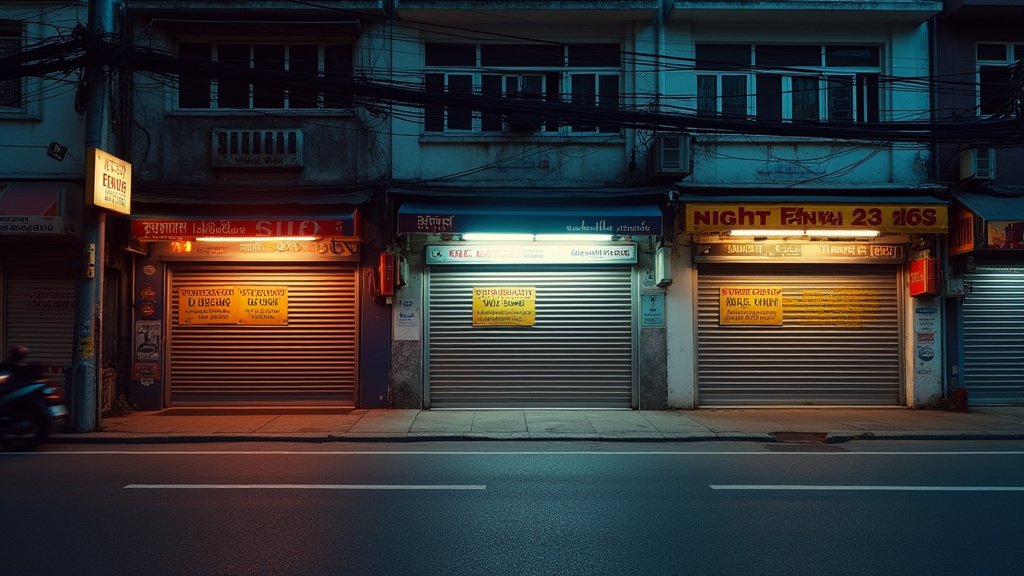
The vibrant nightlife pulse of Thailand’s capital has faced a sobering reality check this week. Following the catastrophic fire on July 13 that resulted in 35 fatalities, the Bangkok Metropolitan Administration (BMA) and local law enforcement have mobilized an exhaustive safety sweep of the city’s entertainment industry. This regulatory blitz has resulted in 79 entertainment venues being ordered to cease operations immediately due to critical license violations and dangerous safety deficiencies, with an additional 19 establishments specifically barred from continuing live music performances.
The Anatomy of the Inspection Campaign
The initiative, triggered by national outcry and a mandate for immediate reform, saw municipal inspectors conduct deep-dive safety audits of 865 premises throughout the metropolitan area. This was not a cursory walkthrough; officials examined structural integrity, the availability and functionality of emergency exits, the presence of fire suppression systems, and the legality of the venues’ operating licenses under the Entertainment Venue Act.
The objective was clear: to prevent a repeat of the tragedy that shook the nation. The findings of the 865 inspections were concerning, revealing widespread negligence. Of the total venues audited, 79 were found to be operating in direct violation of safety protocols so severe that immediate closure was the only legal recourse. These venues were cited for issues ranging from locked or obstructed fire exits to the use of flammable, non-fire-retardant building materials in high-density areas. In many cases, these physical hazards were exacerbated by a total lack of installed fire alarms or functioning sprinkler systems.
Crackdown on Live Entertainment
Beyond the total closures, the inspection teams identified 19 venues that, while not immediately shuttered, were flagged for severe soundproofing and stage safety failures. These venues have been issued an order to suspend all live music performances. This specific restriction targets a high-risk factor in the hospitality sector: the tendency to convert small, enclosed spaces into packed performance venues without sufficient acoustic treatment or ventilation, which can act as a catalyst for rapid fire spread.
For these 19 establishments, the mandate is clear: they cannot resume live entertainment until they submit and receive approval for significant structural renovations. This includes installing sound-dampening materials that meet non-combustibility standards and providing clear, unobstructed egress paths that allow for rapid evacuation during a capacity event.
The Regulatory Shift: Compliance as the New Norm
The BMA’s recent actions signal a long-term pivot toward a zero-tolerance policy for safety negligence. For years, the rapid growth of Bangkok’s nightlife sector often outpaced the city’s ability to enforce building codes. The current crackdown is an attempt to reverse this trend. Officials have indicated that the inspections will become a permanent fixture of business licensing moving forward.
This shift imposes significant operational costs on venue owners, who must now invest in fire-rated doors, industrial-grade smoke extraction systems, and redundant electrical wiring to satisfy the new safety benchmarks. While some operators argue that these requirements place an undue financial burden on small businesses still recovering from pandemic-era losses, the authorities remain firm. The consensus from the Royal Thai Police and the BMA is that the economic cost of compliance is negligible when compared to the human cost of a preventable disaster.
Future Implications and Public Confidence
For the average consumer and tourist, this crackdown is likely to reshape the landscape of Bangkok nightlife. In the short term, the city may see fewer pop-up venues and an increase in regulated, larger-scale establishments. The long-term success of this initiative will depend on consistent monitoring. Historically, enforcement campaigns in the capital have often waned as public attention shifted. However, with 35 lives lost in the July 13 incident, there is sustained political and social pressure to ensure that these safety audits remain a standard operating procedure rather than a temporary reactionary measure.
As these 79 venues undergo the process of potential remediation or permanent liquidation, the hospitality sector must adapt to a new regulatory climate. The message from the municipal government is simple: entertainment license renewals will no longer be a formality. They will be earned through verified, ongoing adherence to safety standards that prioritize human life over occupancy capacity.
FAQ: People Also Ask
Why were these specific 79 venues targeted for closure?
These venues were identified during a sweeping audit of 865 premises as having the most egregious violations of the Entertainment Venue Act, including blocked emergency exits, lack of fire suppression systems, and illegal building modifications that pose an immediate risk of fire and entrapment.
Can the 79 closed venues reopen in the future?
Yes, but only if they rectify all identified safety violations. This involves a rigorous re-inspection process by the BMA, which will verify that the facility meets all fire safety codes and holds a valid, up-to-date operating license.
What does the “live music ban” mean for affected venues?
Venues under this order are prohibited from hosting live bands or performances until they can demonstrate that their stage areas are structurally safe, soundproofed with fire-retardant materials, and possess the necessary ventilation to prevent smoke accumulation in the event of a fire.
How are the authorities ensuring these inspections remain consistent?
The BMA and the Royal Thai Police have integrated fire safety compliance into the annual license renewal cycle, effectively making safety audits a mandatory prerequisite for legal operation, rather than an elective or occasional check.
More Stories
Snoop Dogg to Host 2026 MTV VMAs; Nirvana Set for Vanguard Honor
6LACK Confronts Burnout in Vulnerable New Freestyle
Musical Convergence: The Massive Sept 11 Release Drop