











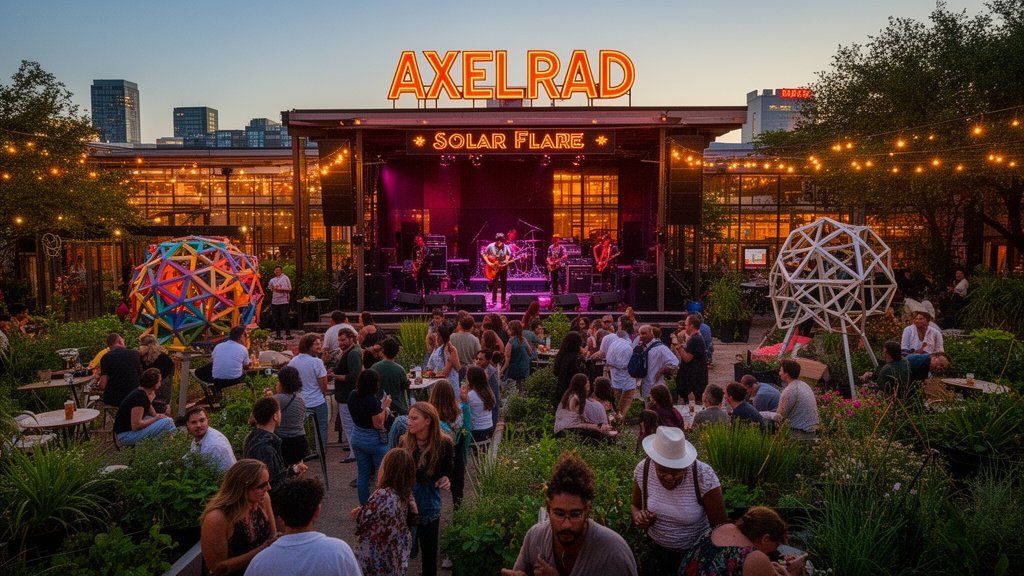
The Solar Flare music festival is officially slated to return to its spiritual home, the Axelrad beer garden in Houston, for a highly anticipated two-day run beginning August 28, 2026. This year’s edition is not merely a concert series but a full-scale cultural mobilization, featuring over 40 diverse artists performing across three distinct stages. As the festival grows, it continues to solidify its reputation as a community-centric hub that blends live independent music with interactive art installations and a robust local vendor marketplace, signaling a resilient future for Houston’s outdoor music scene.
The Evolution of Houston’s Indie Music Scene
For decades, Houston has been a crucible for unique musical sounds, ranging from the chopped-and-screwed innovations of the nineties to the thriving indie-rock and electronic scenes of the current decade. Solar Flare acts as a vital bridge between these generational sounds. By securing a space at Axelrad—a venue famous for its neon-lit aesthetic and spacious, community-oriented beer garden—the festival organizers have successfully created an atmosphere that feels less like a corporate event and more like a massive, curated neighborhood gathering.
As of August 2026, the local festival market is saturated with large-scale, ticket-heavy events, but Solar Flare distinguishes itself by doubling down on the “community-first” ethos. With over 40 artists on the bill, the organizers have prioritized diversity in both genre and geography, bringing in local Houston favorites alongside regional up-and-comers who are gaining traction on the national independent circuit. This strategy serves a dual purpose: it provides a platform for homegrown talent to reach larger audiences while simultaneously attracting the sophisticated musical palate of the Houston metropolitan area.
Curating the Solar Flare Experience: A Three-Stage Strategy
Transitioning to a three-stage layout marks a massive logistical upgrade for the festival. In previous years, the challenge for such a vibrant event was often crowd control and sound bleeding. The decision to split the programming across three distinct stages allows for a more fluid experience for attendees. It prevents the stagnation of crowds and encourages exploration throughout the venue.
1. The Main Stage: Designed to host headliners, this area will feature the heavy hitters of the lineup, utilizing high-fidelity sound systems tailored for open-air performance.
2. The Neon Garden Stage: Situated near the signature Axelrad neon sign, this stage will focus on electronic, ambient, and lo-fi acts, creating a more intimate, immersive environment that plays on the visual identity of the venue.
3. The Workshop Stage: This is the pulse of the festival’s community aspect, featuring shorter, collaborative sets, local jazz ensembles, and experimental artists, bridging the gap between the music and the interactive art installations.
The synergy between these stages is intentional. By staggering set times, organizers ensure that the festival grounds remain energetic throughout the day without overwhelming the attendees with conflicting audio inputs, a common pitfall in smaller urban music festivals.
Axelrad: More Than Just a Venue
Axelrad has long been a fixture of Houston’s Midtown, known for its eclectic mix of beer, pizza, and art. Hosting a festival of this magnitude requires a venue that is adaptable, and Axelrad’s geography allows for a unique urban experience. Unlike traditional stadium festivals where the focus is entirely on the spectacle of the stage, the Axelrad environment forces a connection between the listener and the space.
Interactive art installations will be scattered throughout the garden, inviting fans to step away from the music and engage with the environment. From digital light projections that react to sound waves to physical, modular sculptures created by local Houston artists, the integration of “interactive art” is a defining pillar of the Solar Flare identity. It is this commitment to multisensory engagement that has helped the festival grow from a niche weekend event into a significant community-focused music staple.
Economic and Cultural Impact
Beyond the auditory experience, the festival acts as an economic driver for the local Houston economy. The inclusion of local vendors—ranging from artisan crafts and vintage apparel to specialized local food purveyors—is not an afterthought. It is a calculated move to keep the currency within the local ecosystem. By prioritizing vendors who are based in Houston or within the Texas region, the festival ensures that the influx of revenue during the two-day event supports the small business owners who sustain the local cultural infrastructure throughout the rest of the year.
Furthermore, the timing of the festival—late August—is a testament to the organizers’ resilience against the famous Houston heat. By incorporating sophisticated shade structures, misting stations, and extended evening hours, the festival proves that a vibrant music culture can thrive in even the most challenging climatic conditions, provided the infrastructure is built with the local environment in mind.
Looking Toward the Future
As the festival approaches its August 28, 2026, launch, the momentum is palpable. It represents a shift in how audiences consume live music—preferring the intimate, authentic, and hyper-local over the sterile, high-cost experiences of national tours. The Solar Flare music festival is not just about the artists on stage; it is about the intersection of the city’s identity, its creative output, and its public spaces. For those attending, the festival offers a glimpse into a potential future for Houston: a city that remains a powerhouse of independent culture, vibrant arts, and community-driven celebration.
More Stories
iHeartRadio Music Festival 2026 Ignites Las Vegas
Hyde Park Jazz Fest at 20: A Sonic Milestone for Chicago
Americanafest 2026: Nashville Readies for Global Roots Music Milestone