









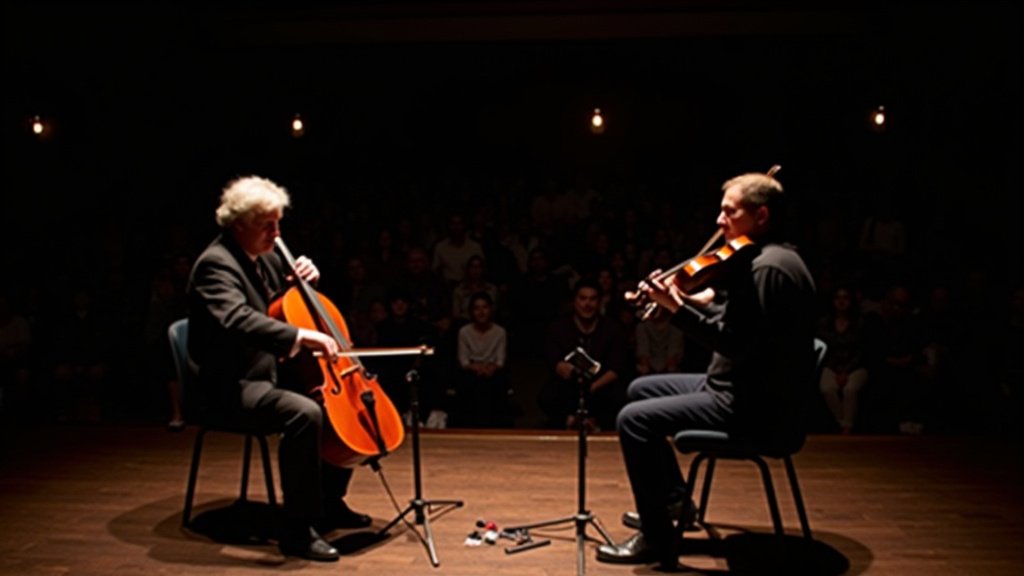
The ‘Sound Strokes’ concert at London’s Camden People’s Theatre offered an unexpected masterclass in cultural synthesis, proving that the distance between a traditional Erhu and a Scottish fiddle is far shorter than geography might suggest. This performance, which has garnered significant critical attention, transcended the standard concert format to become a therapeutic exploration of shared human emotion through sound.
Key Highlights
- Cross-Cultural Fusion: A unique musical dialogue combining the melancholic, soaring tones of Chinese string instruments with the rhythmic, grounded narratives of Scottish folk traditions.
- Therapeutic Resonance: Critics and audience members alike have highlighted the restorative, calming effect of the acoustic arrangements, positioning the show as a landmark in music-led wellness.
- Intimate Venue Dynamics: The Camden People’s Theatre provided a stark, unfiltered environment that allowed the subtle acoustic vibrations of the performance to take center stage, eschewing electronic artifice.
The Anatomy of a Sonic Union
The artistic brilliance of ‘Sound Strokes’ lies in its refusal to force a hybrid sound. Instead, the performance creates a space for two distinct musical lineages to converse. The Scottish fiddle—an instrument deeply tied to landscape, clan history, and oral storytelling—finds an unlikely but perfect partner in the Chinese Erhu. The Erhu, known for its ability to mimic the human voice and express deep, soulful longing, provides a melodic counterpoint that feels ancient yet remarkably fresh.
Historical Context: A Shared Language of Exile and Home
One of the most compelling secondary angles explored during the performance is the shared history between these two musical cultures. Both Scottish and Chinese traditions are deeply rooted in the concept of ‘home’ and ‘exile.’ Historically, both cultures have utilized music as a primary mechanism to preserve identity in the face of rapid modernization and political displacement. The performers behind ‘Sound Strokes’ masterfully tapped into this vein, curating a setlist that highlights the inherent similarities in their minor-key structures and rhythmic storytelling. This is not merely an experiment in ‘world music’; it is an anthropological investigation into how distinct cultures express the same fundamental human experiences of longing, celebration, and endurance.
The Economic and Cultural Impact of Boutique Performance
From an economic standpoint, the success of ‘Sound Strokes’ at a venue like the Camden People’s Theatre challenges the necessity of massive, commercial concert halls for high-quality cultural exchange. By utilizing a mid-sized, independent theatre, the production achieved an intimacy that a larger venue would have undoubtedly diluted. This model of ’boutique performance’ is gaining traction in London’s arts scene. It allows for higher ticket accessibility while maintaining the purity of the acoustic experience. For independent artists and experimental collectives, this event serves as a blueprint for sustainability: prioritizing depth of audience engagement over the volume of ticket sales. It is a reminder that in an increasingly noisy digital landscape, there is a substantial, underserved market for high-fidelity, analog experiences that prioritize emotional resonance over spectacle.
Future Implications for Cross-Cultural Collaboration
The success of this production begs the question: where does this fusion go next? As global music becomes increasingly homogenized, the ‘Sound Strokes’ approach—which relies on deep, respectful study of two specific traditions rather than broad, superficial mixing—could serve as a roadmap for future collaborative works. Experts in music therapy are already taking note of the show’s calming, restorative qualities. By aligning the meditative frequencies found in traditional Chinese music with the resonant, organic textures of Scottish strings, the performers have inadvertently created a sonic environment that promotes physiological relaxation. Future iterations of this project could potentially influence the field of music therapy, offering a structured, genre-bending alternative to standard ambient or classical therapeutic playlists.
FAQ: People Also Ask
Q: What instruments were featured in ‘Sound Strokes’?
A: The performance primarily featured the Chinese Erhu (a two-stringed bowed instrument) and the Scottish fiddle, supported by traditional percussion elements that helped bridge the rhythmic gap between the two styles.
Q: Why was the Camden People’s Theatre chosen for this event?
A: The venue was specifically selected for its acoustic intimacy. Unlike larger, cavernous concert halls, the Camden People’s Theatre allowed for the nuances of the Erhu and fiddle to be heard without amplification, which is critical for the therapeutic, acoustic experience intended by the performers.
Q: Is there an official album release for this concert?
A: As of the most recent data, ‘Sound Strokes’ is being performed primarily as a live, immersive concert experience. Fans are encouraged to follow the performers’ social channels or the Camden People’s Theatre listings for potential recording announcements.
Q: How does this concert differ from traditional ‘World Music’ shows?
A: Unlike generic world music fusions that often rely on electronic backings or ‘pop’ sensibilities, ‘Sound Strokes’ focuses on the preservation of traditional playing techniques, creating a dialogue based on historical and musicological similarities rather than commercial appeal.
More Stories
J Mascis: How Black Sabbath Turned Him Into a Rock Outlier
TV Week: Chad Powers Returns, Furious Finale Hits
Critical Soundscapes: Hopkins, Wilmer & Lefty Redefine Genre Boundaries