










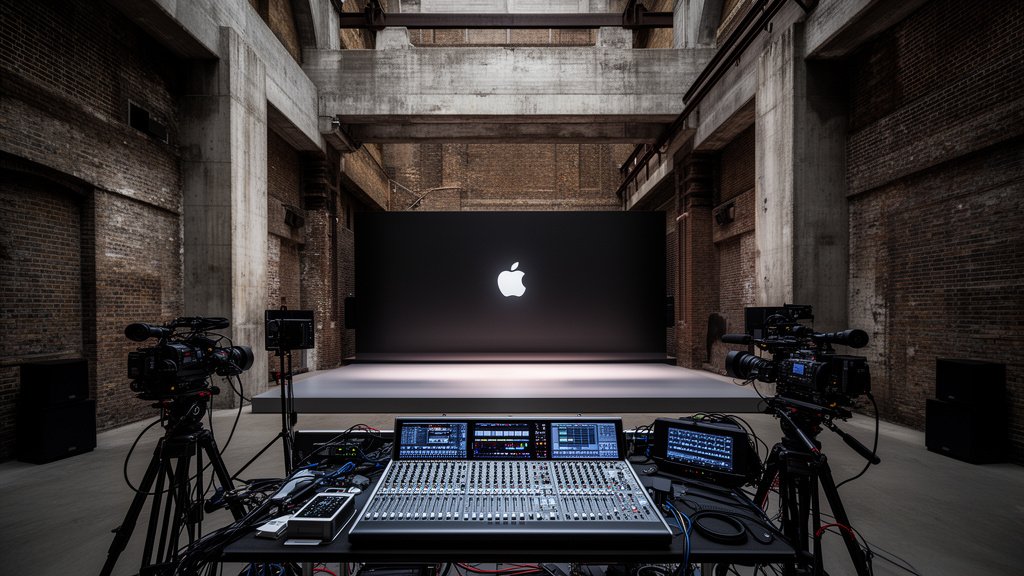
Apple has officially opened ‘Apple Music Hall,’ a new, highly anticipated live music venue situated within the revitalized Battersea Power Station in London. The space is specifically designed to function as an intimate performance hub while doubling as a professional-grade broadcasting facility. By equipping the venue with bespoke technology for high-quality audio recording and seamless multicamera video production, Apple is positioning this space not just as a concert destination, but as a central node in its creator-focused ecosystem. The launch marks a significant intersection between Apple’s hardware-software integration prowess and the storied musical heritage of the United Kingdom.
Key Highlights
- Location: The venue is housed within the iconic Battersea Power Station, blending industrial heritage with modern acoustic engineering.
- Production Suite: Integrated high-quality audio recording capabilities and multicamera video production technology, allowing for near-instant broadcast-ready content creation.
- Artist-Focused Design: Optimized for intimate performances that allow fans to experience artists in a high-fidelity environment.
- Technical Integration: The venue serves as a physical manifestation of Apple Music’s commitment to artists, providing tools that streamline the transition from live performance to high-definition release.
The Sonic Evolution of Battersea Power Station
London has long been a global epicenter for live music, but the arrival of the Apple Music Hall represents a shift in how venues are conceived. Rather than competing with the sheer capacity of the O2 Arena or the historic charm of the Royal Albert Hall, Apple has opted for a surgical approach: small-scale intimacy paired with big-scale production capabilities. This facility is less about accommodating 20,000 screaming fans and more about capturing the raw, authentic energy of a performance in a way that translates perfectly to a digital audience.
Integrating Silicon Valley Tech into the London Live Scene
The technological backbone of the Apple Music Hall is what truly distinguishes it from standard venues. Most clubs and concert halls require artists to hire external production crews for high-fidelity recording or live streaming. Apple has essentially removed this hurdle. The venue is wired with a sophisticated, integrated infrastructure that allows for multitrack audio capture and multicamera switching in real-time.
For the modern independent artist, this is a game-changer. It means a performance at the Battersea location isn’t just a fleeting moment for the attendees; it is a high-value asset that can be mastered, edited, and distributed to millions of listeners on Apple Music within hours. This aligns with the broader “Creator Economy” strategy Apple has been cultivating, ensuring that they provide the tools for artists to capture, produce, and distribute their work without leaving the Apple ecosystem.
Architectural Grandeur Meets Acoustic Precision
The choice of Battersea Power Station as the location is far from accidental. The site, which underwent a multi-billion pound regeneration effort, offers a unique aesthetic—industrial, cavernous, and historically significant. Apple’s architects have managed to work within these parameters, implementing acoustic treatments that honor the building’s brutalist concrete-and-brick origins while achieving the near-silent noise floor required for professional-grade recording.
The result is a visual and sonic paradox: the raw, imposing texture of 20th-century industry paired with the ultra-clean, pristine clarity of 21st-century digital audio. This contrast will likely become a signature element of the venue, providing a distinct look for the video content generated therein.
A Strategic Play for the Creator Ecosystem
Beyond the hardware, the Apple Music Hall serves as a brand-building strategy. By creating a physical space that bridges the gap between the “Live Session” and the “Studio Album,” Apple is deepening its relationship with the artist community. It gives them a venue that serves as a promotional tool, a recording studio, and a stage all at once.
This secondary angle is crucial for the industry’s future. As labels and artists alike look for ways to monetize live content more effectively, having a venue that is “born-digital” (designed specifically to output high-quality video and audio feeds) provides a massive competitive advantage. While other venues scramble to retrofit their spaces with 5G capabilities and fiber-optic streaming gear, Apple Music Hall is built upon this foundation by design.
Looking ahead, one can expect this venue to set a new standard for artist-in-residence programs, special EP releases, and exclusive content drops. It reinforces Apple’s dominance in the music streaming space by ensuring they own the content pipeline from the very first microphone input.
FAQ: People Also Ask
1. Is Apple Music Hall open to the general public?
Yes, the venue is open, though attendance at performances will typically be managed through ticketed events or exclusive Apple Music experiences rather than being a traditional daily concert venue.
2. Can any artist record at the venue?
Currently, the venue is focused on curated events and partnerships supported by Apple. It is not currently a general-access rental studio for the public.
3. Does the venue differ from other Apple-related facilities?
Yes. While Apple maintains various creative studios, Apple Music Hall is uniquely designed for the integration of live performance and immediate, high-fidelity capture, specifically tailored for broadcast-ready output.
4. Will performances be available on Apple Music?
Given the venue’s purpose is to facilitate high-quality audio and multicamera video production, it is highly anticipated that performances recorded here will feature prominently in Apple Music’s exclusive video and audio content library.
More Stories
Sweet Magnolias Creator Bids Emotional Farewell After Cancellation
Presley Gerber, Model and Son of Cindy Crawford, Dies at 27
Lady Gaga Welcomes Daughter Rose Bean Polansky