











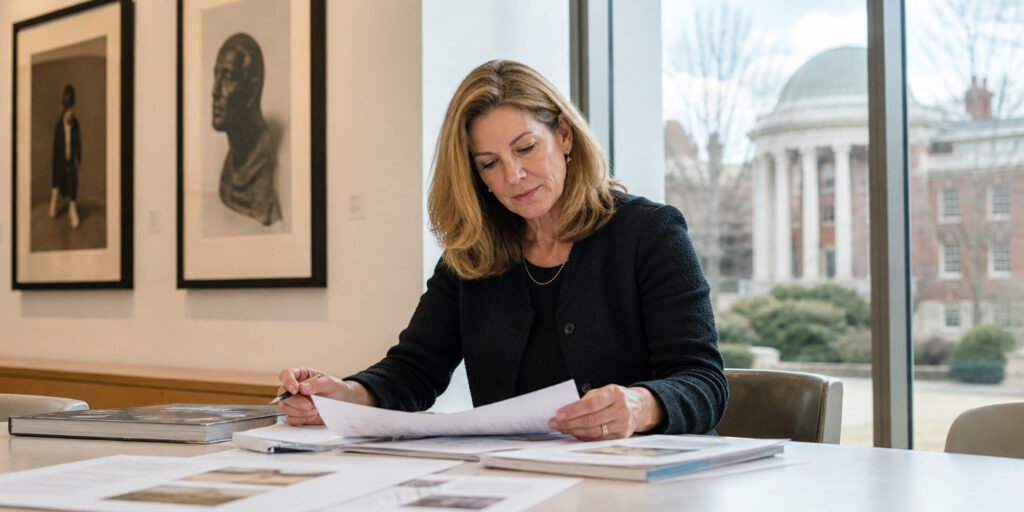
The University of North Carolina at Chapel Hill has officially embarked on a transformative path for its arts and cultural landscape, announcing a strategic reorganization that brings its disparate creative entities under a centralized administrative framework. For decades, institutions like the Ackland Art Museum and Carolina Performing Arts (CPA) have operated with a high degree of autonomy. While this allowed for specialized programming, it often resulted in fragmented outreach and missed opportunities for cross-disciplinary synergy. Under the new leadership of Elizabeth Engelhardt, who serves as the Senior Associate Dean for Fine Arts and Humanities in the College of Arts and Sciences, the university is now moving toward a more cohesive, integrated approach to its cultural footprint.
The Strategic Shift: Breaking Institutional Silos
The fundamental premise behind this restructuring is to dismantle the ‘silo’ mentality that frequently limits the potential of university-based cultural institutions. Historically, the Ackland Art Museum, renowned for its extensive collection of Asian and Western art, and Carolina Performing Arts, a cornerstone for avant-garde and traditional performance, have pursued independent strategies. By unifying these bodies under a singular administrative umbrella, UNC is signaling that its commitment to the arts is not merely a collection of peripheral activities but a core pillar of its academic and public identity.
This consolidation is not about reducing the autonomy of curators or directors; rather, it is about aligning resources, branding, and strategic goals. By centralizing management, the university aims to reduce administrative friction. This allows artistic leaders to spend less time on redundant operational logistics and more time on the visionary aspects of programming. The new structure emphasizes that the arts at UNC are a unified ecosystem, one that functions best when the visual arts, the performing arts, and the humanities communicate clearly with one another.
Leadership and the Vision of Elizabeth Engelhardt
At the helm of this organizational shift is Elizabeth Engelhardt. Her role as the Senior Associate Dean for Fine Arts and Humanities is critical to the success of this transition. Engelhardt has long championed the idea that the arts are essential to the university’s mission of research and public service. Her approach emphasizes ‘deep engagement’—a methodology that encourages students and faculty to move beyond passive consumption of art.
Under her stewardship, the university is expected to develop a more standardized approach to student engagement. This includes creating pathways for students in diverse majors to interact with the Ackland or the CPA’s upcoming seasons. By placing these institutions under a shared strategic vision, Engelhardt is essentially building a bridge between the classroom and the cultural gallery, ensuring that the ‘Carolina experience’ includes tangible, high-level artistic exposure as a matter of course rather than as an elective extracurricular activity.
Operational Synergy: From Theory to Practice
What does this mean in practical terms for the institution? The centralization is anticipated to streamline back-office operations such as ticketing systems, donor relations, and marketing infrastructures. Currently, these disparate units often maintain separate databases and promotional channels, creating redundancy and confusion for students and community members alike. By integrating these backend systems, the university expects to reach wider audiences across the state.
Moreover, the unification allows for better ‘resource cross-pollination.’ For instance, a major exhibition at the Ackland could now be more easily paired with a thematic series at the CPA, supported by lectures from the Department of Music or the Department of Dramatic Art. This holistic programming model creates a more robust narrative for the university’s arts identity, making it a stronger contender for national grants and philanthropic support. Potential donors and granting bodies often look for institutional cohesion; by demonstrating that the arts at UNC are a united front, the university enhances its competitive edge in securing external funding.
The Future of Community Engagement
One of the most significant stated goals of this reorganization is to deepen ties with the broader North Carolina community. The Ackland and CPA are not just campus resources; they are regional cultural hubs. The centralized administration will likely enable more consistent and strategic community outreach, ensuring that the university’s doors are as open to the public as they are to the student body.
By leveraging a shared communications strategy, the university can more effectively broadcast its cultural calendar to the broader public, turning regional interest into tangible attendance. This, in turn, boosts the economic impact of the arts in the Chapel Hill area, fostering a virtuous cycle of engagement that benefits both the institution and the surrounding city. As the university moves forward with this new structure, it is positioning itself to be a leader not just in higher education, but in the regional cultural economy.
FAQ: People Also Ask
1. Does this mean the Ackland Art Museum is losing its independence?
No. The reorganization is an administrative consolidation designed to share resources and strategic goals. The individual mission and curatorial independence of the Ackland Art Museum and Carolina Performing Arts remain intact.
2. Why did UNC decide to centralize its arts institutions now?
The university identified a need for a more cohesive arts strategy to maximize efficiency, boost student engagement, and improve public accessibility. By removing operational silos, the university can create a more integrated cultural narrative.
3. What is the role of Elizabeth Engelhardt in this process?
As the Senior Associate Dean for Fine Arts and Humanities, Elizabeth Engelhardt is leading the administrative transition. Her vision is to foster closer collaboration between the arts and academic units, enhancing the university’s overall pedagogical and public impact.
4. Will this affect student access to these institutions?
The shift is explicitly designed to improve student access. By centralizing management, the university aims to integrate arts and culture more deeply into the standard student experience, making it easier for students across all disciplines to engage with the Ackland, CPA, and other departments.
More Stories
Ella Langley Shatters Records with Historic 6-Award 2026 CMA Sweep
ASLA Mobilizes: The Fight to Protect Section 106
Texas Conservatives Face New Political Reality