










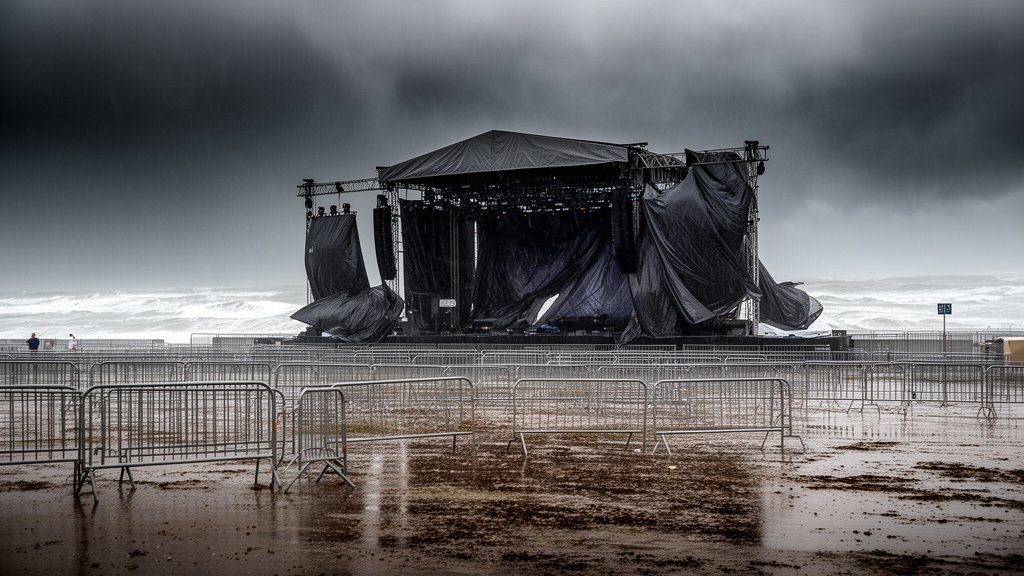
The East Coast festival circuit has ground to a sudden and dramatic halt as a massive nor’easter system tears through the Atlantic coastline, forcing the cancellation of several high-profile live entertainment events. From the sandy shores hosting Oceans Calling to the urban stages of New York City’s Global Citizen, All Things Go, and the historic CBGB Festival, organizers have been forced to pull the plug due to life-threatening weather conditions, including hurricane-force wind gusts, heavy rainfall, and severe flooding risks.
Key Highlights
- Simultaneous Cancellations: A rare convergence of cancellations has hit Oceans Calling (Maryland), Global Citizen, All Things Go, and the CBGB Festival (NYC) simultaneously.
- Safety First Protocol: Organizers cited dangerous wind speeds, potential for flash flooding, and compromised electrical and staging infrastructure as the primary drivers for cancellation.
- Economic Fallout: Local hospitality, vendor revenue, and tour logistics are facing immediate financial disruptions estimated in the millions.
- Refund & Re-entry Policies: Ticketholders are currently advised to monitor specific official festival channels for tiered refund processes and potential rescheduling windows.
The Anatomy of the Shutdown: Weathering the Crisis
The decision to cancel, while devastating for fans and organizers alike, represents the industry’s shift toward hyper-vigilance regarding weather safety. Modern large-scale event production relies on rigid safety protocols established by the Event Safety Alliance, which dictate strict thresholds for wind speeds, lightning strikes, and saturation levels on concert grounds. When a nor’easter moves along the Eastern Seaboard, it brings not just precipitation, but high-velocity gusts that can turn temporary stage structures, LED screens, and heavy sound equipment into dangerous projectiles.
For events like Oceans Calling, which is inherently tied to coastal geography, the threat was twofold: wind damage and tidal surges. In New York City, the challenges were equally daunting. For urban festivals like Global Citizen and All Things Go, the concern centers on drainage, electrical safety in saturated urban environments, and the ability of emergency services to navigate flooded streets to reach thousands of attendees in the event of an emergency. The decision to cancel was not made lightly, but it underscores the professional responsibility producers now exercise to avoid catastrophic failures.
Economic Ripples in the Entertainment Sector
The ripple effects of these simultaneous cancellations extend far beyond the ticket booth. A music festival of the scale of Oceans Calling or Global Citizen functions as a miniature city, supporting hundreds of local jobs, temporary hospitality positions, catering contracts, and transportation services. When an event is shuttered on short notice, the “sunk cost” impact is severe. Vendors who have already purchased perishable inventory, transportation companies already in transit, and local hotels facing mass booking cancellations all absorb significant losses.
Furthermore, the financial strain on the festivals themselves is immense. Most large-scale events operate on tight margins, relying on revenue from food, beverage, and merchandise to cover operating costs. Without the influx of on-site consumer spending, and with the massive logistical burden of processing refunds, the organizations behind these festivals will likely see a significant negative impact on their annual bottom lines. The reliance on event cancellation insurance—a highly specialized and expensive sector—will now be tested, as organizers submit claims for the losses incurred by the storm.
The Logistics of ‘Force Majeure’ and Risk Management
In the wake of these cancellations, the legal and contractual term ‘Force Majeure’—or ‘Act of God’—becomes the focal point of all industry discussions. This contractual clause is designed to absolve parties of liability when an unforeseeable event beyond their control (such as a severe nor’easter) renders performance impossible. However, the application of these clauses is rarely straightforward in the live event industry.
For major artists, the cancellation creates a sudden hole in touring schedules, requiring complex negotiations regarding pay-or-play contracts. While the festival organizers clearly have the right to cancel for safety, the financial fallout regarding artists’ fees and deposits depends heavily on the specific language in their booking agreements. Legal teams will spend the coming weeks analyzing these contracts to determine if the storm qualifies as a full trigger for cancellation payouts, creating a complex legal landscape for the remainder of the concert season.
Future-Proofing Live Entertainment in a Changing Climate
Perhaps the most significant secondary angle of this situation is the long-term question of climate resiliency. As weather patterns become more volatile, the traditional festival season faces an existential challenge. Historically, the autumn months offered a temperate “shoulder season” ideal for outdoor music events. However, the increasing frequency of intense coastal storms suggests that historical weather data may no longer be a reliable predictor for event planning.
Industry experts are already suggesting a shift toward more robust ‘climate-proof’ infrastructure. This includes investment in stronger staging that can withstand higher winds, enhanced drainage systems for outdoor venues, and potentially shifting event dates to avoid historically volatile months. Additionally, the adoption of advanced real-time meteorological tracking and AI-driven predictive modeling will likely become mandatory for festival organizers. The industry is being forced to adapt: events that cannot prove they can safely navigate extreme weather may soon find it impossible to secure the permits and insurance required to operate.
FAQ: People Also Ask
1. Will I get a full refund for my tickets?
Generally, yes. Most major festivals like Global Citizen and Oceans Calling provide full refunds for cancellations caused by weather. However, the processing timeline can vary. Check the official festival website and your email for specific instructions regarding your ticket vendor.
2. Is there a possibility these festivals will be rescheduled?
Rescheduling a major multi-day festival is incredibly difficult due to artist availability, venue permitting, and logistical constraints. While some events may offer a ‘make-up’ date, the majority of massive festivals simply cancel for the season once a weather event forces a closure.
3. How do I claim insurance on my travel expenses?
If you booked travel, you should immediately contact your airline and hotel. If you purchased travel insurance, check your policy’s ‘trip cancellation’ coverage. Many providers include ‘inclement weather’ as a covered reason, but you will need documentation of the official festival cancellation to process your claim.
More Stories
Florida Georgia Line Returns: 2027 ‘Anything Goes Again’ Tour
Sick New World Expands: Texas Motor Speedway Sets 2026 Date
Rolling Loud India 2026: Burna Boy, Metro Boomin Lead Lineup