











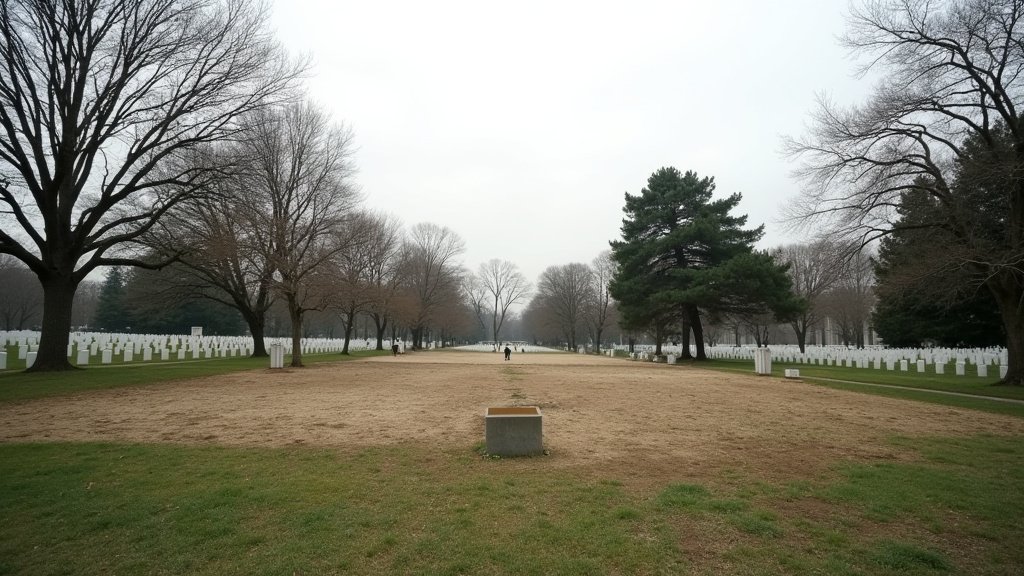
In a decisive move affecting the proposed construction of a 250-foot triumphal arch linked to the Trump administration, a federal district court has reinforced an existing injunction, effectively preventing immediate physical work at the designated site near Arlington National Cemetery. The ruling mandates that federal agencies and associated project teams must provide at least 48 hours’ notice to the court and opposing parties before conducting any site activities. This decision underscores the heightened judicial scrutiny surrounding large-scale commemorative projects on or near historic federal grounds.
Key Highlights
- Mandatory Notification: The Trump administration is now legally bound to provide a 48-hour notice period before any site activity can commence.
- Scope Limitation: All immediate site-level activities are strictly limited to non-construction tasks, such as initial artifact assessment and site surveys.
- Judicial Oversight: The federal judge has maintained strict oversight to ensure no unauthorized or irreversible physical work takes place without prior legal clearance.
- Location Sensitivity: The proximity to Arlington National Cemetery remains a central point of contention, driving the need for rigorous adherence to procedural compliance.
Navigating the Legal Standoff at the Arlington Site
The ongoing dispute over the proposed Trump arch has entered a new, more restrictive phase following the latest judicial intervention. By reinforcing the order barring immediate work, the federal court has signaled a clear intent to prioritize procedural due process over the speed of project execution. This legal development is not merely a bureaucratic hurdle; it represents a significant check on administrative actions regarding land use and monumental construction on public lands.
The 48-Hour Mandatory Notice
The requirement for a 48-hour notice is a tactical tool used by the court to maintain transparency and control. In complex litigation involving government projects, such notifications serve as a ‘pause button.’ This ensures that if the administration or contractors attempt to move equipment onto the site—whether for preliminary clearing or structural assessment—the plaintiffs and the court are alerted beforehand. This window of time allows for potential legal challenges to be filed or for the court to intervene if the activity exceeds the scope of what is currently permitted. It essentially removes the element of surprise for those overseeing the project, ensuring that every shovel in the ground is accounted for and legally sanctioned.
Defining ‘Non-Construction’ Activities
A critical component of the judge’s order is the distinction between ‘site activity’ and ‘construction.’ The court has made it clear that while certain preliminary measures are allowable, the actual development of the arch is strictly off-limits. ‘Artifact assessment’—which may involve archaeological surveys or identifying historical remains in the vicinity of the site—is often a standard requirement for federal land projects. By permitting these activities while simultaneously forbidding construction, the court is threading a needle: it allows the project to maintain a minimal level of progress without risking the integrity of the land or creating an irreversible physical footprint before the case is resolved on its merits.
The Intersection of Land Use and Executive Authority
The broader implications of this dispute touch upon the tension between executive-led monumental planning and the regulatory frameworks governing the National Park Service (NPS) and the Commission of Fine Arts. These institutions have long-standing protocols for approving structures near national landmarks. The conflict arises when project timelines prioritize rapid execution over traditional federal land use consultation. By reinforcing this order, the court is effectively asserting that even major commemorative projects must adhere to the same regulatory ‘red tape’ as any other federal construction. This serves as a test case for how administrative authority interacts with environmental and preservationist oversight, a dynamic that will likely influence future monument planning in the Washington D.C. area. Secondary to the legal battle is the question of how the administration will handle these delays—whether they will comply strictly with the court’s procedural mandates or seek expedited appeals to bypass the current site limitations.
FAQ: People Also Ask
Q: What is the primary purpose of the Trump arch project?
A: The project, as proposed, is a 250-foot triumphal arch intended to serve as a monument, though specific details regarding its dedication have been a subject of public and legal discussion.
Q: Why is Arlington National Cemetery involved in this legal case?
A: The proposed site for the structure is in close proximity to Arlington National Cemetery. Concerns have been raised regarding the impact of such a large-scale construction on the solemnity, traffic, and historical preservation of the area.
Q: Can any work proceed at the site right now?
A: Yes, but only ‘non-construction’ activities are permitted, such as artifact assessment and site surveys, and these must be preceded by a mandatory 48-hour notification to the court.
Q: What happens if the administration violates the 48-hour notice rule?
A: A violation would likely result in an immediate contempt of court hearing, which could lead to further sanctions, more stringent monitoring, or an absolute freeze on all activities at the site.
More Stories
U.S. Repatriates 64 Cultural Relics and Fossils to China
Betting on Viral Fame: Novig’s Strategic Use of Sydney Sweeney
DHS Scrubs Optimus Prime Posts After AI Misuse Backlash