










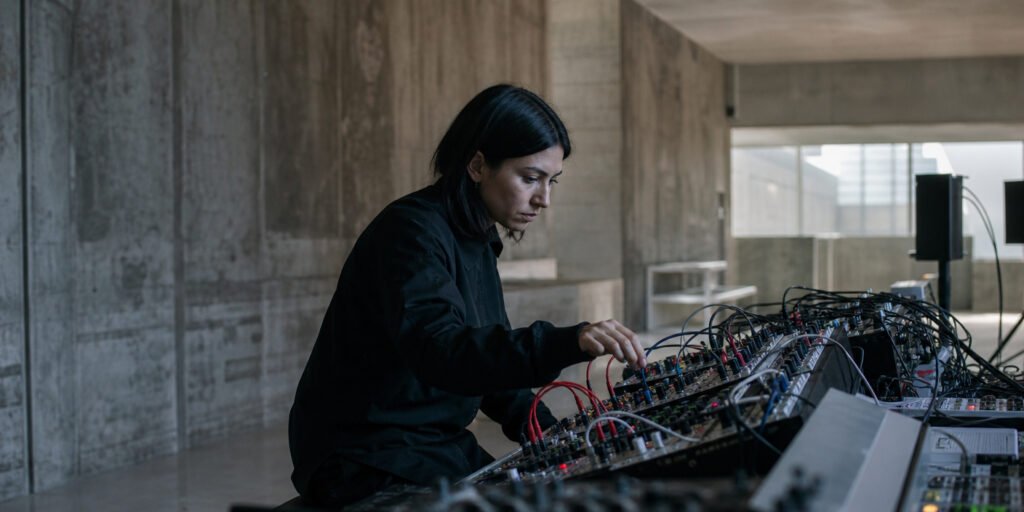
The 70th International Festival of Contemporary Music in Venice is set to transcend traditional concert venues this October, introducing a profound, site-specific initiative titled “Musica Libera.” Scheduled for October 18 and 24, 2026, these two special events will take place within the unique, often inaccessible acoustic environment of the women’s penitentiary. Under the artistic direction of acclaimed composer and modular synthesis expert Caterina Barbieri, this project represents a daring expansion of the festival’s mandate, shifting the focus from the prestigious Biennale stages to the complex, resonant spaces of a correctional facility, where collaborative sound installations will offer a new form of communication for participants and audiences alike.
Key Highlights
- Event Schedule: Two distinct sessions are locked for October 18 and October 24, 2026.
- Unique Venue: The performances occur within the Venice women’s penitentiary, chosen for its distinct architectural acoustics and social significance.
- Artistic Vision: Directed by world-renowned electronic musician Caterina Barbieri, emphasizing the transformative power of sound.
- Collaborative Format: The work is a joint effort between workshop participants residing in the facility and dedicated mentors from the Biennale College Musica.
The Architecture of Resonance: Breaking Institutional Boundaries
The decision to host “Musica Libera” within the confines of the Venice women’s penitentiary is not merely a logistical choice; it is a profound artistic statement regarding the nature of containment and expression. In traditional contemporary music settings—such as the sterile, acoustic-perfect halls of the Venice Biennale—sound is curated for an audience seeking aesthetic perfection. In this penitentiary setting, the acoustics are unpredictable, defined by concrete, iron, and the echoes of daily life. Caterina Barbieri, whose work is defined by its repetitive, hypnotic, and emotionally resonant patterns, has long explored how technology can bridge the gap between internal psyche and external reality. By bringing her expertise into the penitentiary, she is forcing a collision between the structured world of avant-garde music and the rigid structure of incarceration.
The Biennale College Musica Connection
The initiative is heavily supported by the Biennale College Musica, an incubator for young talent. The mentors involved in “Musica Libera” are not just teaching composition; they are facilitating a dialogue. The project aims to utilize sound installations as a surrogate language. For the workshop participants—the inmates engaged in the program—this offers a rare opportunity to engage with modular synthesis, field recording, and spatial audio techniques that might otherwise remain inaccessible. The mentors from the Biennale College serve as technical guides, helping to translate the lived experiences and emotions of the participants into tangible sonic textures. This synthesis of professional mentorship and participant experience is designed to create a “soundscape of liberation,” where the physical bars are rendered secondary to the reach of the audio installations.
Technical Challenges and Artistic Intent
Sound art in a non-traditional space poses significant technical hurdles. Unlike a studio or a concert hall, the penitentiary is filled with non-absorbent surfaces—tile, concrete, and metal—which can introduce unwanted reverb and chaotic echo. However, Barbieri and her team are embracing these acoustic limitations as part of the composition. The installations rely on low-frequency emitters and directional speakers that cut through the natural noise floor of the facility. The goal is to craft a sonic environment that feels immersive rather than intrusive. Participants have spent months working with the mentors to capture the “rhythms of the facility,” sampling the distinct clangs, whispers, and ambient environmental noises that comprise their daily existence, manipulating these elements into larger, ambient compositions that will be played back during the October 18 and 24 sessions.
The Sociology of Sound: Why This Matters
The intersection of avant-garde music and correctional facilities is not entirely new, but the involvement of a major institution like the 70th International Festival of Contemporary Music elevates it to a new tier of public discourse. This initiative explores the concept of the “auditory commons”—the idea that the right to create and hear complex, meaningful art should not be a privilege of the free, but a basic human experience. By integrating the Biennale College Musica, the festival is essentially creating a laboratory for social impact art. The secondary angle here is the long-term potential for music therapy integration. While the festival frames this as a performance, the pedagogical implications are clear. Music, specifically the creation of electronic music, requires a high level of patience, pattern recognition, and emotional regulation. For the participants, these workshops are more than just art; they are a cognitive and social exercise.
Future Implications for Institutional Art
Looking forward, the success of “Musica Libera” could serve as a blueprint for other international arts organizations. We are seeing a distinct trend where the “White Cube” gallery model is being challenged, and institutions are increasingly pressured to demonstrate their relevance to communities that exist outside the cultural elite. If Barbieri’s project proves successful, it validates the idea that art is not a luxury good but a necessary, fundamental structure for communities, especially those in transition or isolation. The festival’s ability to coordinate security, artistic access, and technical setup within a penitentiary is a logistical achievement that sets a new bar for arts administration. This experiment may very well pave the way for a permanent residency program, where Biennale mentors continue to work within the penitentiary long after the festival concludes, potentially creating a lasting digital archive of the works produced within these sessions.
FAQ: People Also Ask
Q: Who is allowed to attend the “Musica Libera” events?
A: Due to the high-security nature of the venue (the women’s penitentiary), attendance is strictly limited to authorized personnel, specific festival delegates, and approved media. Unlike open-access concerts, these events are private to ensure the security and privacy of the participants.
Q: How did Caterina Barbieri prepare for this?
A: Barbieri worked closely with the Biennale College Musica mentors to develop a curriculum that focuses on modular synthesis and field recording, tailored for participants who may not have a background in music theory but possess a strong need for creative expression.
Q: What is the main goal of this initiative?
A: The primary objective is to facilitate a creative collaboration that bridges the gap between contemporary sound art and institutional environments, providing the participants with a platform for expression while exploring the acoustics of confinement.
Q: Will the music be released to the public?
A: While the performances are localized to the penitentiary, there are ongoing discussions regarding the documentation of these installations to be featured in the Festival’s post-event digital archives or a future documentary exhibition.
Q: How does this relate to the 70th Festival theme?
A: The 70th International Festival of Contemporary Music focuses on the expansion of musical boundaries—both physical and conceptual. “Musica Libera” directly addresses this by literally moving the festival into a space that is defined by its physical boundaries.
More Stories
Florida Georgia Line Returns: 2027 ‘Anything Goes Again’ Tour
Sick New World Expands: Texas Motor Speedway Sets 2026 Date
Rolling Loud India 2026: Burna Boy, Metro Boomin Lead Lineup