











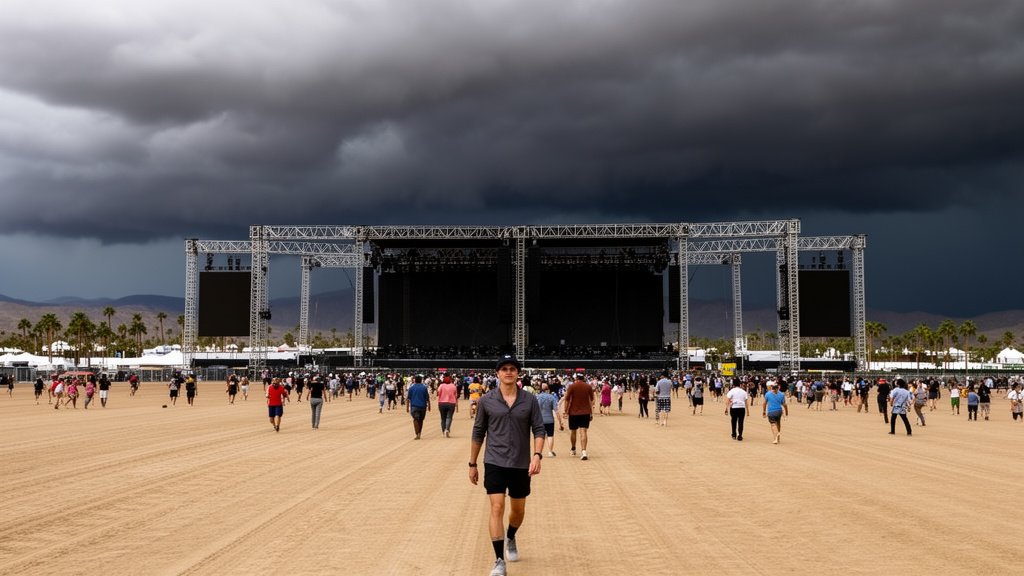
The inaugural Head Trip electronic music festival was brought to a sudden, atmospheric end on October 11, 2026, as organizers at the Empire Polo Club in Indio, California, were forced to suspend operations and evacuate attendees due to a severe weather event and lightning alert. The emergency measure, enacted in the late afternoon, halted performances across all stages as local authorities and event security teams prioritized public safety over the scheduled programming of the debut electronic dance music gathering.
Key Highlights
- Event Suspension: The inaugural Head Trip festival was officially suspended on October 11, 2026, following a severe weather event.
- Safety Protocol: Organizers and the Indio Police Department coordinated a rapid, orderly evacuation of the Empire Polo Club grounds following a lightning alert.
- Operational Impact: All remaining sets, including the anticipated headlining acts, were cancelled to ensure the safety of thousands of festival-goers.
- Weather Context: The Coachella Valley, while typically dry, experienced a sudden atmospheric instability that triggered mandatory safety protocols for large-scale outdoor gatherings.
Unforeseen Deluge: The Night the Music Stopped
The Empire Polo Club is internationally renowned for hosting some of the world’s most prestigious music events, but even the most seasoned production teams are at the mercy of the elements. On the afternoon of October 11, 2026, the debut of Head Trip—a highly anticipated electronic music festival—was interrupted by an unpredictable weather pattern that swept through the Coachella Valley. What began as a high-energy day of bass, synth, and desert heat quickly shifted as meteorological services issued an urgent lightning alert for the Indio area.
The Mechanics of an Emergency Evacuation
Large-scale festivals operate under strict ‘Force Majeure’ and public safety protocols, which dictate that in the event of lightning within a specific radius of the venue, all outdoor stages must be cleared. At approximately 4:30 PM, the festival’s production command alerted staff to begin the emergency procedure. Attendees were directed to egress via pre-established shuttle routes and private vehicle corridors. According to onsite safety officers, the evacuation proceeded without major incident, though the sudden disruption left many attendees seeking shelter in nearby Indio hotels and transport staging areas.
Desert Weather and Modern Festival Risks
While the Indio region is famous for its arid climate, the Coachella Valley is susceptible to localized monsoon-like conditions and heat bursts that can manifest rapidly. This event highlights the increasing challenge for festival organizers to balance the desire for open-air, high-production spectacles with the unpredictable nature of climate volatility. Industry analysts often point to these scenarios as a reminder that for every massive sound rig and LED wall erected in the desert, there is a comprehensive, often invisible, safety apparatus working in the background to monitor atmospheric data.
Financial and Industry Fallout
The cancellation of the Head Trip festival on its opening day poses significant economic and logistical questions. As the event was in its inaugural year, the financial repercussions regarding insurance claims, ticket refunds, and vendor contracts will be substantial. Typically, in the entertainment industry, insurance policies for ‘event cancellation due to extreme weather’ act as a buffer for the organizers. Attendees are currently awaiting formal statements regarding partial refunds or potential rescheduling, a process that is often legally complex for festivals that suffer a total mid-event shut down.
FAQ: People Also Ask
Will Head Trip offer refunds for the cancelled event?
While official refund policies are typically outlined in the terms and conditions provided at the point of sale, festivals forced to cancel mid-event due to force majeure usually trigger specific refund protocols. Attendees should monitor their email and the official Head Trip festival website for updates from the event’s ticketing partner.
Why was the festival evacuated for lightning?
Lightning poses a critical risk to outdoor festivals that utilize tall metal truss structures, rigging, and electrical equipment. Even when the storm appears distant, the danger of ground currents and atmospheric discharge forces organizers to adhere to strict safety regulations established by local fire and police departments to prevent electrocution or structural collapse.
Does this affect future events at the Empire Polo Club?
No. The Empire Polo Club has decades of experience hosting massive events and maintains robust contingency plans. This incident was a localized response to an immediate, specific weather threat rather than a failure of the venue’s infrastructure.
What are the standard protocols for festival evacuations?
Standard protocols include the immediate cessation of sound, clearing of outdoor stages, deployment of security staff to designated emergency exits, and communication through on-site PA systems, social media channels, and festival apps to ensure a coordinated exit of the crowd.
More Stories
Florida Georgia Line Returns: 2027 ‘Anything Goes Again’ Tour
Sick New World Expands: Texas Motor Speedway Sets 2026 Date
Rolling Loud India 2026: Burna Boy, Metro Boomin Lead Lineup