











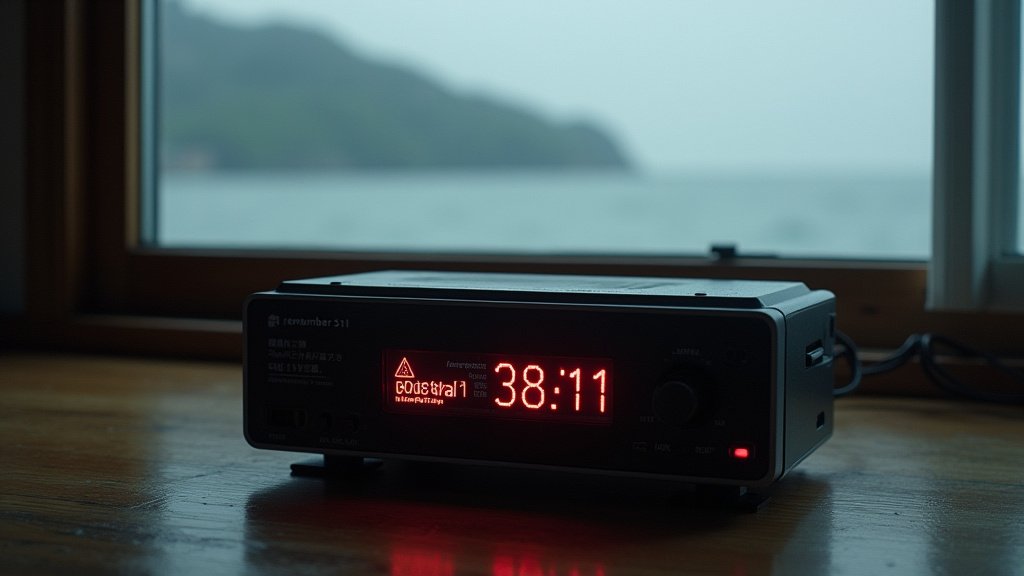
A powerful 7.5 magnitude earthquake struck off the coast of Japan’s Sanriku region on the afternoon of April 20, 2026, triggering an urgent tsunami warning and mass evacuation orders across the nation’s northern Pacific coast. The Japan Meteorological Agency (JMA) issued the alert at approximately 4:53 p.m. local time, citing significant seismic activity that sent tremors as far as Tokyo, hundreds of kilometers away. While initial reports indicate no major casualties, the event has reignited deep-seated national anxiety regarding seismic safety in a region historically scarred by the 2011 Great East Japan Earthquake.
Key Highlights
- Seismic Event: A 7.5 magnitude earthquake occurred 10 kilometers beneath the ocean floor off the Sanriku coast, near Iwate Prefecture.
- Immediate Tsunami Threat: The JMA issued warnings for waves up to 3 meters (10 feet) for coastal areas of Iwate, Aomori, and Hokkaido.
- Evacuation Status: Local authorities have initiated non-binding, urgent evacuation advisories for over 128,000 residents in the path of potential waves.
- Current Damage Report: Official assessments from the Nuclear Regulation Authority confirm all nuclear power plants remain intact with no operational abnormalities detected.
- Regional Precaution: Secondary ports, including Kuji and Hachinohe, recorded early tsunami waves ranging from 30 to 80 centimeters, signaling the onset of the event.
Seismic Reality and the Shadow of History
The immediate activation of the JMA’s emergency broadcast system served as a stark reminder of Japan’s precarious geographical positioning along the Pacific Ring of Fire. As the alert blared across television networks, the collective response from citizens reflected a seasoned, albeit anxious, familiarity with disaster protocols. The command for residents to “remember 3/11” appeared on news tickers—a psychological anchor intended to bypass complacency and force immediate action.
The Science of the Sanriku Trough
Geologically, the Sanriku coast sits above a complex subduction zone where the Pacific Plate slides beneath the Okhotsk Plate. The stress accumulated at this interface is immense. Today’s event at a depth of 10 kilometers—a relatively shallow depth—allowed the energy to propagate efficiently, resulting in strong ground shaking. The JMA’s rapid assessment technology, which integrates data from the Seafloor Observation Network for Earthquakes and Tsunamis (S-net), enabled the agency to calculate the magnitude and potential tsunami impact within minutes, providing a crucial window for evacuation.
Psychological and Economic Resilience
Beyond the immediate physical danger, the economic impact of such events is profound. In previous instances, particularly the 2024 Nankai Trough advisories, regional tourism and supply chains suffered due to precautionary cancellations. Prime Minister Sanae Takaichi, addressing the public from the emergency task force center in Tokyo, emphasized that while no damage was reported, the government remains in a state of high alert. The delicate balance between maintaining daily life and ensuring the safety of the populace remains the government’s greatest challenge during these high-stakes, 48-hour windows of uncertainty.
Infrastructure and Nuclear Safety
Japan’s post-Fukushima infrastructure overhaul is being tested in real-time. Since the 2011 disaster, the nation has invested billions in seawalls, elevated evacuation routes, and redundant power systems for nuclear facilities. Today’s confirmation that the region’s nuclear power plants—critical points of failure in the past—remain stable provides a tentative sense of relief. However, engineering experts note that the effectiveness of modern concrete seawalls will only be fully tested as the tsunami waves recede and physical inspections begin along the coastline.
FAQ: People Also Ask
Q: Is it safe to return to the coastline after the first tsunami wave?
A: Absolutely not. Tsunami waves arrive in a series, often with later waves being significantly larger and more destructive than the first. You should remain on high ground until local authorities explicitly declare the event over.
Q: Why was the evacuation order labeled ‘non-binding’?
A: In Japan, ‘non-binding’ advisories allow for local flexibility. While they are not legally enforceable, they are treated with the highest degree of urgency by the public. Ignoring them in the face of a high-magnitude event is strongly discouraged by disaster management agencies.
Q: How does the JMA determine the tsunami risk so quickly?
A: The agency utilizes a sophisticated network of sensors placed on the seafloor (S-net and DONET). These sensors detect the pressure changes caused by the vertical displacement of the ocean surface in real-time, allowing them to provide alerts sometimes before the ground shaking is fully felt in inland cities.
Q: What is the risk of a ‘megaquake’ following this event?
A: While the current alert focuses on the immediate tsunami threat, the JMA frequently monitors for an increased risk of aftershocks or secondary, larger quakes. Residents are advised to keep emergency kits packed and maintain an ‘earthquake-ready’ status for the next 48 to 72 hours.
More Stories
Costco Goes Nationwide on Uber Eats: A New Era for Bulk Delivery
Elena Rybakina Wins US Open, Ascends to World No. 1
Rubio Seals Security Pacts; Vance Drives Policy Agenda