










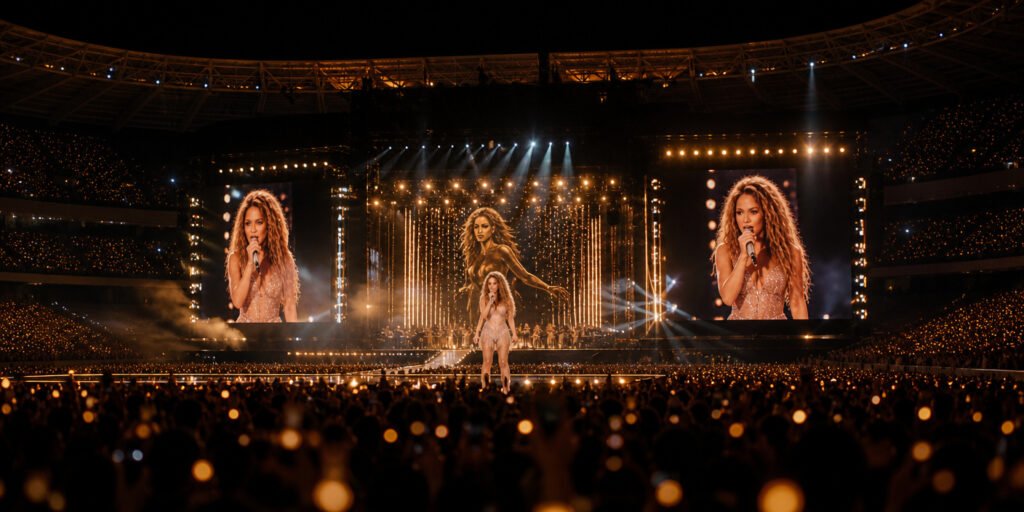
Shakira has officially concluded her massive 13-show European residency in Madrid, marking a historic chapter in her career and a significant milestone for live music economics. The residency, which dominated the city’s cultural calendar, did more than just provide entertainment; it became a financial juggernaut, drawing an incredible 700,000 fans and injecting more than $200 million into the local economy. With surprise guest appearances from global superstars Dua Lipa and Maluma, the event redefined the expectations for pop star residencies in major European hubs.
Key Highlights
- Massive Attendance: A total of 700,000 fans attended the 13-show series, cementing the residency as one of the most successful cultural events of the year.
- Economic Boom: The influx of international and domestic visitors resulted in a $200 million injection into the Madrid economy, covering hospitality, retail, and tourism sectors.
- Star-Studded Collaborations: The residency featured unforgettable surprise guest appearances from global music icons Dua Lipa and Maluma, heightening global media buzz.
- Logistical Success: The 13-show format proved highly effective, streamlining production logistics while maximizing local fan engagement in a single, major European capital.
The Economic and Cultural Impact of Shakira’s Madrid Residency
When we analyze the success of the Shakira European residency, the numbers tell a story that goes far beyond the music industry. The $200 million economic impact observed in Madrid serves as a case study for the “event tourism” phenomenon. By choosing a residency model over a traditional multi-city tour, the production team localized the spending power of 700,000 fans, creating a concentrated surge in demand for hotels, restaurants, transportation, and local retail outlets. This economic phenomenon underscores the changing landscape of how A-list performers engage with their global audience.
Analyzing the $200 Million Surge
To understand how a single residency can generate $200 million, one must look at the ripple effect of large-scale tourism. Madrid, already a top-tier European tourist destination, experienced an unusual peak season during the event dates. Hospitality analytics suggest that occupancy rates for hotels within a five-mile radius of the venue reached near-capacity for the duration of the residency. Furthermore, the average spend per attendee—when accounting for travel, lodging, dining, and merchandise—positioned this event as a critical stimulus for the local economy. It was not merely a concert series; it was an economic engine that sustained thousands of jobs in the Madrid hospitality and service sectors over the residency period.
The Strategic Pivot: Residency vs. Global Tour
For decades, the standard for global superstars was the grueling world tour, defined by travel exhaustion and logistical complexity. Shakira’s decision to move toward a residency model in Madrid highlights a strategic pivot. By establishing a fixed location for 13 shows, the production could maintain a consistent, high-fidelity setup that might be watered down by the constant teardowns and rebuilds of a typical tour. This model allowed for enhanced production values, more intricate stage designs, and arguably, a more sustainable schedule for the artist. As global travel costs rise and environmental concerns around touring become more prominent, this residency format may prove to be a blueprint for future entertainment ventures.
The Power of Guest Synergy
Social media virality is the modern currency of live performance, and Shakira maximized this through strategic guest curation. Bringing Dua Lipa and Maluma on stage was not just a treat for fans; it was a masterclass in cross-genre and cross-generational appeal. Each guest appearance generated an immediate, massive spike in social media engagement, effectively extending the reach of the Madrid residency to hundreds of millions of people who were not in the stadium. This synergy creates a “must-watch” status for the residency, transforming local concerts into global cultural moments. By leveraging the fanbases of other top-tier artists, Shakira ensured that the conversation surrounding her residency remained dominant across all digital platforms for the duration of the run.
FAQ: People Also Ask
Q: How many shows were included in Shakira’s European residency?
A: The residency consisted of 13 high-capacity shows held in Madrid, serving as the focal point of her recent European schedule.
Q: What was the total economic impact of the residency on Madrid?
A: The residency injected more than $200 million into the local Madrid economy, driven by tourism, hospitality, and concert-related spending.
Q: Which artists made surprise appearances during the residency?
A: The residency featured surprise guest appearances from global stars including Dua Lipa and Maluma, which significantly amplified the event’s cultural impact and media coverage.
Q: Why is a residency model significant compared to a traditional tour?
A: A residency model allows for higher production value, reduced travel-related emissions, and a more concentrated economic impact in a single host city, as demonstrated by the record-breaking success in Madrid.
More Stories
New Music Friday: Legacy Rocks October 23, 2026
Mötley Crüe Ignites Las Vegas: 2027 ‘Carnival of Sins’ Residency
Zach Bryan Announces 19-Stadium ‘Young Manhood’ Tour