









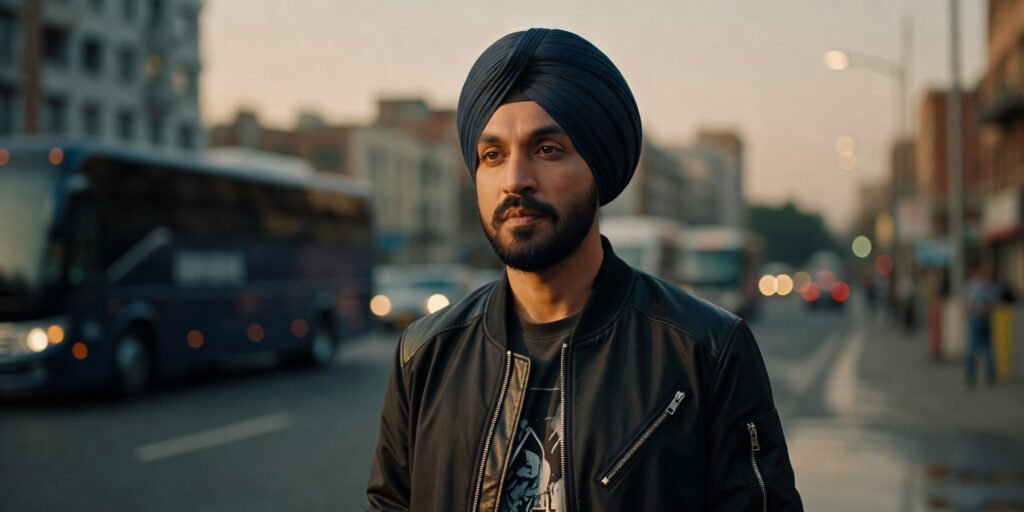
On April 23, 2026, the Vancouver stop of Diljit Dosanjh’s highly anticipated ‘Aura-2026’ World Tour was marred by a brief but significant security incident. Mid-performance, a group of individuals attempted to disrupt the proceedings, unfurling flags associated with the Khalistan movement and chanting slogans before being swiftly neutralized by venue security. The event, which has since drawn international attention, highlights the volatile intersection of global geopolitical tensions and the high-stakes world of international concert touring. As Dosanjh continues his tour across North America, the incident has prompted renewed conversations regarding the safety of South Asian artists performing abroad and the weaponization of cultural platforms by separatist factions.
Key Highlights
- Concert Disruption: Pro-Khalistan demonstrators briefly halted the Vancouver ‘Aura-2026’ show, chanting slogans and waving banners before being escorted out by event security.
- Identified Actors: Sources have identified two individuals, Pawandeep Singh Bassi and Mandeep Singh Ravi, as being involved; both are allegedly linked to the banned organization Sikhs for Justice (SFJ).
- Security & Safety: Following the disruption, SFJ leader Gurpatwant Singh Pannun claimed responsibility and suggested further actions at subsequent tour dates, raising security concerns for promoters and local authorities.
- Artist Context: Diljit Dosanjh, a global ambassador for Punjabi culture, has previously been targeted by similar groups, creating a complex security environment for his ongoing international tour.
The Geopolitics of Entertainment: Analyzing the Vancouver Disruption
The incident in Vancouver was not merely a disturbance of a public performance; it was a calculated maneuver intended to capture the global spotlight. Diljit Dosanjh, arguably the most prominent figure in modern Punjabi music, has become a focal point for the complex political grievances within the diaspora. The protesters, who were swiftly removed by security teams, reportedly labeled the singer an ‘agent’ of the Indian government—a refrain used by separatist factions to delegitimize public figures who do not actively align with their cause.
The Anatomy of the Security Breach
When the protestors disrupted the ‘Aura-2026’ concert, the immediate operational challenge was ensuring the safety of the thousands of fans in attendance. Concert security at major venues typically focuses on crowd control, medical emergencies, and unauthorized entry. However, this event underscores a shift in threat profiles. When ideological groups move from political protests to physical disruption of private, ticketed entertainment events, the burden of security protocols shifts from routine monitoring to specialized threat assessment.
Security personnel at the Vancouver venue acted according to standard de-escalation protocols. By isolating the agitators and removing them from the premises, the staff ensured that the concert could proceed, minimizing the impact on the majority of the audience. However, the presence of these individuals—and their ability to access the interior of the venue with protest materials—will undoubtedly lead to a tightening of security, including stricter vetting and possibly increased law enforcement presence at upcoming dates in the United States and Canada.
The Role of Sikhs for Justice (SFJ)
To understand the broader implications of this event, one must look at the organization cited in reports: Sikhs for Justice (SFJ). This entity has been a vocal proponent of the Khalistan movement, a separatist campaign aiming to create an independent Sikh state in the Punjab region of India. The SFJ has previously engaged in contentious campaigns targeting Indian diplomats and government officials. Targeting an entertainer like Diljit Dosanjh signals a tactical pivot: moving from direct political confrontation to cultural and social disruption. By threatening a globally recognized icon who represents Punjabi success on the world stage, these groups seek to create a binary landscape where silence is interpreted as opposition.
The ‘Cultural Ambassador’ Dilemma
Diljit Dosanjh occupies a unique, yet precarious, position. His rise to global fame—ranging from sold-out stadium shows to appearances on American late-night television—has done more to popularize Punjabi language and culture than almost any other contemporary figure. This international visibility is exactly what makes him a target. For groups like the SFJ, Dosanjh’s integration into mainstream global media represents a ‘normalization’ of relations with the Indian establishment, which they oppose.
However, Dosanjh has largely focused his platform on music, fashion, and cinema, avoiding direct participation in political discourse. This neutrality, while intended to unify his fan base, often draws ire from polarized groups who demand public, explicit political allegiance. The challenge for artists in the current climate is determining how to navigate these pressures without sacrificing their safety or their artistic freedom. The Vancouver incident serves as a stark reminder that even the most culturally unifying figures can be dragged into the center of geopolitical struggles.
Security Implications for the ‘Aura-2026’ Tour
The direct threats issued by leadership within the SFJ following the Vancouver event cannot be taken lightly. As the tour moves into other cities, venue managers, event promoters, and local law enforcement must recalibrate. This is no longer just about controlling unruly concert-goers; it is about managing a potential ‘political theater’ environment. Expect to see enhanced security screenings, increased surveillance, and potentially a more aggressive ‘zero-tolerance’ policy toward any disruption at future shows.
Moreover, the economic impact of such threats can be significant. Increased security costs, insurance premiums, and the potential for cancellations due to safety concerns put a strain on the tour’s profitability. Furthermore, the psychological strain on the artist and their team cannot be discounted. Performing while under the specter of political threats is a hurdle that few major musical acts ever have to face, yet it has become an unfortunate reality for many artists of Indian descent touring in the current global climate.
FAQ: People Also Ask
Q: Was anyone injured during the disruption at the Vancouver concert?
A: While there were reports of heated altercations between the protesters and security staff during the removal process, there have been no confirmed reports of significant injuries to the artist, staff, or attendees. Security successfully contained the incident.
Q: Has Diljit Dosanjh released a statement regarding the incident?
A: As of the time of reporting, Diljit Dosanjh has not issued a formal public statement regarding the specific incident in Vancouver. He has historically preferred to maintain a professional distance from political controversy, focusing instead on his performances and artistic career.
Q: Will the remaining dates of the ‘Aura-2026’ tour be canceled?
A: There has been no announcement regarding the cancellation of the remaining tour dates. Promoters and security teams are expected to implement heightened security measures at upcoming venues to ensure the safety of the performer and the audience.
Q: Why is the Khalistan movement targeting Diljit Dosanjh?
A: The protesters have alleged that Dosanjh is an ‘agent’ of the Indian government, specifically the BJP and RSS, accusing him of using his popularity to bridge the gap between the Sikh diaspora and the Indian state. This is a common narrative used by some separatist factions to criticize public figures who do not support their political agenda.
More Stories
Lady Gaga Welcomes Daughter Rose Bean Polansky
Ranbir & Alia Launch Major 20-School Mumbai Makeover
Kevin Hart Confirmed to Host the 99th Academy Awards