











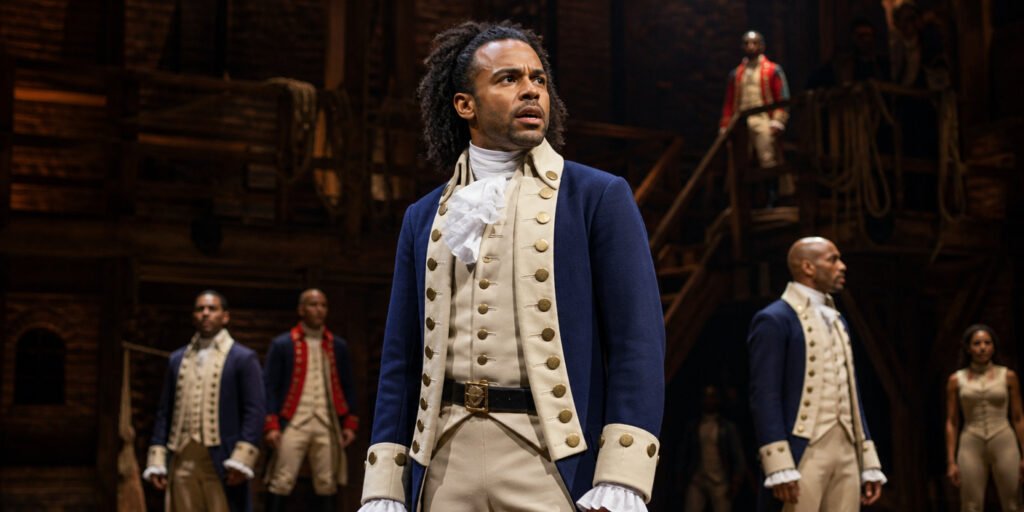
As the theater world marks August 1, 2026, on the calendar, the marquee at the Richard Rodgers Theatre signals a definitive changing of the guard. Marcus John, a name that has been whispered in casting rooms and regional theaters for years, officially steps into the titular role of Alexander Hamilton. This debut is more than just a casting update; it is a cultural bellwether for the longevity and evolution of the modern American musical. As reported in today’s Wake Up With BroadwayWorld, the industry is buzzing not only about this high-profile transition but also about the robust slate of concert highlights and critical interviews that define the start of this month.
Key Highlights
The Headline Debut: Marcus John makes his highly anticipated Broadway debut as the lead in Hamilton*, signaling a fresh energy for the long-running production.
- The BroadwayWorld Pulse: The August 1st report highlights a significant uptick in cross-industry engagement, blending major musical news with exclusive concert recaps.
- Strategic Casting: The selection of John reflects the industry’s continued pivot toward versatile, triple-threat performers who can maintain the rigorous standards of established, iconic roles.
- Beyond the Stage: The report also tracks recent concert highlights, underscoring a summer season that has seen theater stars branching out into solo concert arenas, bridged by deep-dive industry interviews.
The New Face of the Revolution
The arrival of Marcus John at the Richard Rodgers Theatre is a moment of calculated significance. For any performer, the role of Alexander Hamilton is a gauntlet—a 160-minute, rapid-fire endurance test that requires a mastery of hip-hop cadence, R&B phrasing, and classical theatrical stamina. Since Lin-Manuel Miranda first premiered the work in 2015, the role has served as a crucible, testing the mettle of every actor who has donned the revolutionary coat. John’s ascent to this position is not merely a casting choice; it is a validation of his career trajectory, which has been steadily built on a foundation of diverse regional work and a reputation for technical precision.
The Anatomy of a Broadway Debut
In the theater industry, a “Debut of the Month” designation from a platform as authoritative as BroadwayWorld carries significant weight. It validates the artist’s path through the notoriously difficult “audition-to-contract” pipeline. John’s journey reflects the modern evolution of the theater pipeline: training, smaller regional contracts, off-Broadway endurance tests, and finally, the Broadway residency. For the production team at Hamilton, casting a lead is about striking a balance between honoring the iconic source material and allowing an artist to imprint their own psychological complexity onto the character. Reports indicate that John has been deep in rehearsals for the past six weeks, focusing heavily on the intricate interplay between his performance and the show’s ensemble—a hallmark of the production’s success.
Hamilton’s Endurance as an Economic Engine
One cannot discuss a major casting change in Hamilton without analyzing the broader economic implications for Broadway. Despite being over a decade into its run, the show remains a cornerstone of the Theater District’s revenue model. Casting choices like John serve as a “soft reboot,” drawing in repeat viewers who are curious to see how a new actor interprets the nuances of the Founding Father. This strategy of rotating talent has allowed Hamilton to transcend its status as a mere “hit show” and become a permanent fixture of New York City, akin to the longevity of The Phantom of the Opera or Chicago. The industry is watching closely to see if John’s debut triggers a surge in ticket sales for the Q3 and Q4 season, a metric that will likely influence future casting strategies for other long-running blockbusters.
The Wider Theatrical Ecosystem: Concerts and Conversations
The BroadwayWorld update for August 1, 2026, provides much-needed context to the broader theatrical landscape, reminding us that Broadway does not exist in a vacuum. The report features extensive coverage of recent concert highlights, noting a trend where Broadway stars are increasingly pivoting toward solo concert residencies. This transition from ensemble cast member to solo headliner is indicative of the current market value of “theater personalities.” Furthermore, the industry interviews featured in today’s dispatch highlight the ongoing conversation surrounding the balance between digital accessibility and the “in-person” theater experience. As we move through August, these interviews serve as a crucial barometer for how theater professionals view the intersection of technology and performance art.
Three Secondary Angles to Watch
As Marcus John’s debut settles into the public consciousness, we are tracking three distinct secondary angles that will define the theater discourse this season:
1. The ‘Hamilton’ Effect on New Talent: Does this debut create a new pipeline for performers to jump directly into marquee roles from regional markets, or does it signal a return to more traditional, established casting archetypes?
2. The Economic Resilience of Long-Running Hits: How do casting announcements in 2026 compare to the pre-2020 era in terms of ticket price volatility and “star-power” reliance?
3. The Rise of the ‘Hybrid’ Performer: An analysis of how concert work and Broadway performance are merging, blurring the lines between a traditional actor and a pop-touring musician in the eyes of the consumer.
FAQ: People Also Ask
Q: What makes Marcus John’s debut particularly notable?
A: Marcus John’s debut is significant due to the prestige of the role of Alexander Hamilton, which is widely considered one of the most demanding and coveted positions in modern musical theater, requiring a unique blend of hip-hop vocal mastery and intense dramatic acting.
Q: Where can I see the full breakdown of the August 1st BroadwayWorld report?
A: You can find the full comprehensive updates, including the industry interviews and concert highlights mentioned, on the official BroadwayWorld platform, which continues to act as the primary industry aggregator for theatrical news.
Q: How does this change the ‘Hamilton’ performance landscape?
A: It introduces a new interpretive layer to the character. Each lead brings a different cadence and emotional weight to the role, which often influences the rest of the cast’s performance, creating a “ripple effect” that changes the show’s dynamic for the duration of their contract.
Q: Will this debut influence the longevity of the Broadway production?
A: Yes. Successful transitions to new lead actors are vital for the continued financial success of long-running shows, as they provide a fresh incentive for returning audiences and tourists alike to experience the production again.
More Stories
Lady Gaga Welcomes Daughter Rose Bean Polansky
Ranbir & Alia Launch Major 20-School Mumbai Makeover
Kevin Hart Confirmed to Host the 99th Academy Awards