










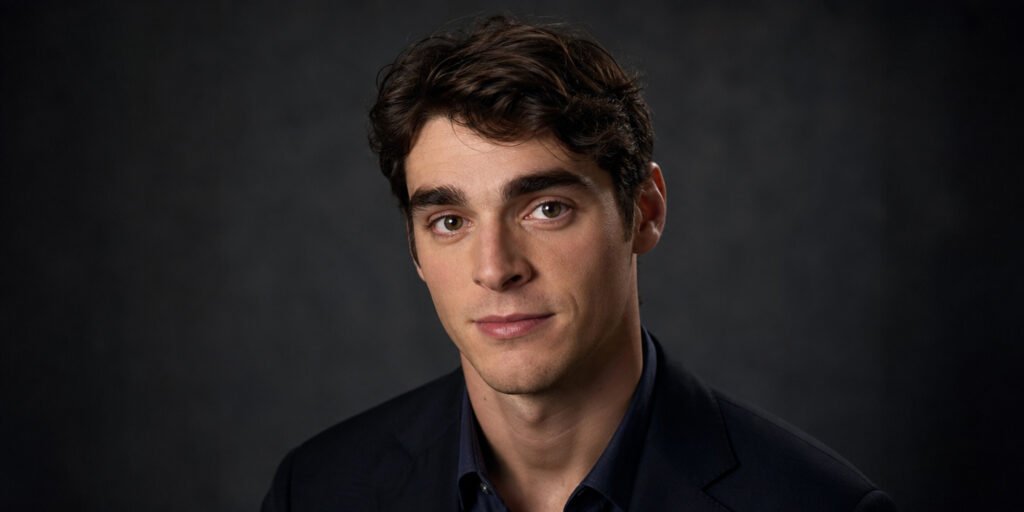
RJ Mitte, the acclaimed actor and disability advocate best known for his portrayal of Walter White Jr. on the hit television drama “Breaking Bad,” has died at the age of 34. His passing marks the loss of a pivotal figure in modern television who utilized his platform to bring visibility and nuanced representation to the role of a character living with cerebral palsy, mirroring his own personal life experience.
- RJ Mitte, widely recognized for portraying Walter White Jr. on ‘Breaking Bad,’ has died at 34.
- Mitte’s performance was notable for bringing personal experience to the role of a character living with cerebral palsy.
- His career served as a landmark for authentic representation of individuals with disabilities in mainstream media.
- Fans and entertainment industry figures are expressing widespread grief over the loss of a rising talent.
A Legacy of Authentic Representation
Breaking Barriers in Prime Time
When “Breaking Bad” premiered on AMC, it was initially viewed through the lens of a dark, morality-driven crime thriller. However, as the series evolved, so did the depth of its supporting characters. RJ Mitte’s portrayal of Walter White Jr.—often affectionately known to fans as Flynn—provided the emotional heartbeat of the series. While his on-screen father, played by Bryan Cranston, descended into the moral vacuum of the meth trade, Mitte’s character remained a consistent, grounded presence.
Crucially, Mitte did not merely act the part; he brought his own lived experience as someone with cerebral palsy to the performance. At the time of his casting, opportunities for actors with disabilities in major cable dramas were remarkably slim. Mitte’s success was not just a win for his own career; it was a watershed moment for the industry. He proved that audiences connected more deeply with characters when actors were afforded the agency to bring their authentic physical realities to the screen. His performance was never a gimmick; it was a masterclass in subtlety and vulnerability, creating a bridge between the show’s intense criminal narrative and the grounded, domestic reality of the White family.
The Impact Beyond the Screen
Beyond the scripts and the awards, Mitte was a vocal advocate for the Cerebral Palsy Foundation and a persistent voice in the movement to increase representation for people with disabilities in film and television. His influence reached far beyond Albuquerque—the show’s setting. He frequently utilized his public platform to discuss the systemic challenges faced by actors with disabilities, particularly regarding the industry’s penchant for casting able-bodied actors in disabled roles.
His advocacy wasn’t confined to panel discussions; it was baked into his daily professional life. By consistently taking on roles that challenged stereotypes, Mitte helped shift the narrative from “inspiration porn” to genuine, multifaceted human stories. This legacy of advocacy is perhaps the most significant part of his career trajectory, serving as a blueprint for the next generation of performers who are pushing for more inclusive casting practices in Hollywood. His death at such a young age is being felt as a significant blow to the momentum of this essential cultural shift.
The Professional Journey: From Louisiana to Albuquerque
Born in Louisiana, Mitte’s path to the iconic halls of the White family residence was marked by persistence. Before breaking out on “Breaking Bad,” he navigated the realities of the casting circuit, often facing the same barriers that he would eventually spend his career fighting against. His casting in the role of Flynn was widely cited as one of the best decisions made by the show’s producers, as it added an layer of authenticity that the show’s creator, Vince Gilligan, famously noted was vital to the show’s success.
Mitte’s performance remained consistent across all five seasons of the show, earning him and the rest of the cast immense critical acclaim. After the series concluded, he didn’t rest on the laurels of his breakout hit. He moved into a variety of roles across television and film, continuing to refine his craft and prove his range as an actor capable of carrying diverse narrative weight. Whether in independent films or guest-starring spots on network television, Mitte brought a professional work ethic and a distinct charisma that made him a favorite among peers and crew members alike.
Historical Context: Disability Representation in Media
To understand the magnitude of RJ Mitte’s contribution, one must look at the landscape of disability representation in the decades preceding “Breaking Bad.” Historically, characters with cerebral palsy or other physical disabilities were often relegated to secondary roles defined solely by their condition, or worse, used as vehicles for pity. Mitte fundamentally challenged this dynamic. His performance was not defined by his condition, even while his condition was a part of his character’s life. This distinction was revolutionary. He normalized the presence of disabled bodies in complex, high-stakes narratives. His career trajectory aligns with a broader push in the industry towards inclusivity, acting as a catalyst for studios to begin considering authenticity as a mandatory requirement rather than an optional add-on.
Economic and Cultural Influence
While the commercial impact of a show like “Breaking Bad” is often measured in viewership numbers and Emmys, the cultural capital generated by characters like Walter White Jr. is immense. Mitte’s presence in the show elevated the emotional stakes of the series, contributing to its status as one of the most successful cable dramas in history. Economically, this success proved that inclusive casting does not dilute a story; in fact, it enhances it. The “Breaking Bad” effect, as some industry analysts called it, showed that audiences were eager for nuanced, real-world representation. Mitte’s subsequent work also maintained this standard, ensuring that production houses that prioritized his talent were often rewarded with critically lauded performances that resonated with a broad, diverse demographic.
Future Predictions for Industry Standards
In the wake of his passing, many are wondering what the future of disability representation will look like without one of its most prominent leaders. The challenge remains for Hollywood to move beyond tokenism. The industry is currently at an inflection point where studios are being held to stricter diversity and inclusion standards. Many pundits suggest that the legacy of actors like Mitte will be the acceleration of this process—that casting directors will be more emboldened to look for authentic talent rather than defaulting to traditional archetypes. His passing is likely to serve as a rallying cry for organizations that continue to fight for equal opportunities, potentially leading to new initiatives or grants in his name to support aspiring actors with disabilities.
FAQ: People Also Ask
1. How did RJ Mitte bring his personal experience to the role of Walter White Jr.?
RJ Mitte was diagnosed with mild cerebral palsy at a young age. By bringing his real-life understanding of the condition to the set of ‘Breaking Bad,’ he allowed the writers to shape the character of Walter White Jr. in a way that felt grounded and authentic, moving away from stereotypes.
2. What was RJ Mitte’s primary focus outside of acting?
Outside of his acting career, Mitte was a dedicated advocate for the disability community. He collaborated extensively with the Cerebral Palsy Foundation and spoke frequently at events regarding the necessity of accurate and inclusive representation in the entertainment industry.
3. Is RJ Mitte survived by any family?
Details regarding the immediate family of RJ Mitte have not been released at this time, with representatives asking for privacy for his loved ones during this period of mourning.
4. Will there be memorial services for RJ Mitte?
Public details regarding memorial services or tributes are expected to be announced by his management team or family in the coming weeks.
More Stories
Chris Brown Faces Sentencing in London Assault Case
Derrick Harriott, Reggae Legend and Crystal Records Pioneer, Dies at 87
Remembering Michael Gray: The ‘Shazam!’ and ‘Brady Bunch’ Icon Dies at 75