











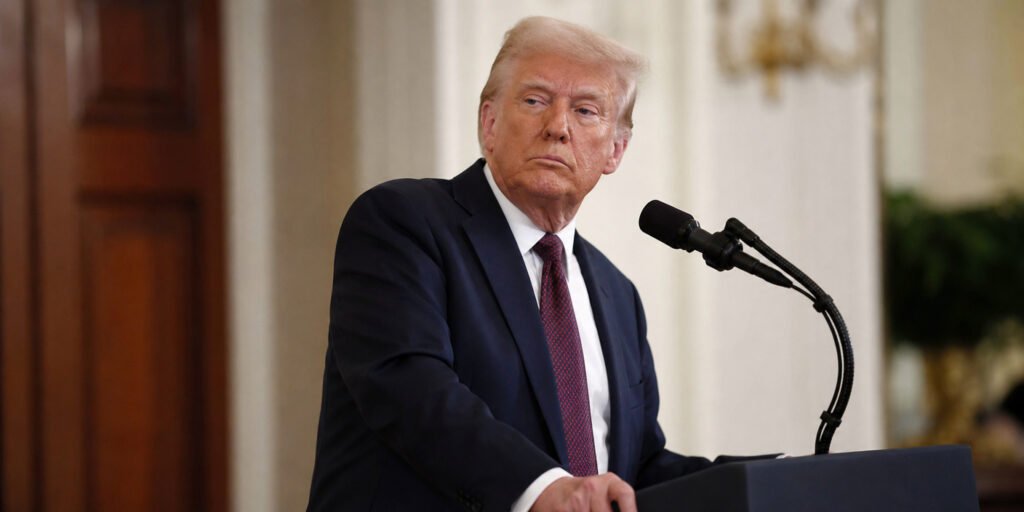
The Middle East stands on a precipice of renewed instability as President Trump signals a potential return to major combat operations in response to a escalating cycle of tit-for-tat airstrikes involving U.S. forces and Iranian-backed actors. The recent flare-up has transcended traditional proxy friction, reaching critical infrastructure and strategic outposts across several nations. Following a series of explosive incidents near Erbil airport, the conflict has widened, with reported retaliatory strikes targeting U.S. installations in Bahrain, Kuwait, and Jordan. The administration’s firm rhetoric suggests a shift from containment to a more aggressive posture, raising concerns about the potential for a large-scale regional conflagration.
The Strategic Flashpoints: Erbil to the Persian Gulf
The most immediate concerns center on the security of U.S. personnel and assets across the region. The explosions reported near Erbil airport represent a significant escalation, given the airport’s status as a dual-use facility crucial to the logistics of the Kurdistan Region of Iraq. Historically, Erbil has served as a center for U.S. diplomatic and military coordination. Any disruption here is not merely a tactical nuisance but a strategic challenge to the U.S. presence in the northern corridor of the Middle East.
Simultaneously, the strikes extending into Bahrain, Kuwait, and Jordan signal a coordinated effort to challenge U.S. military footprint across the Gulf and the Levant. Bahrain hosts the U.S. Fifth Fleet, a cornerstone of maritime security in the region, while Kuwait serves as a vital staging ground for U.S. logistics. Jordan’s inclusion as a target highlights the reach of the current campaign, bringing a stable U.S. ally directly into the line of fire. These strikes, characterized as retaliatory, represent a fundamental shift in the regional security architecture, forcing the U.S. to re-evaluate the vulnerabilities of its static basing strategy.
The Doctrine of Escalation: Trump’s Response
President Trump’s recent statements have underscored a refusal to accept the current status quo of perpetual skirmishing. By threatening a restart of “major combat operations,” the President is effectively signaling a return to a more kinetic policy approach reminiscent of previous strategies aimed at eroding Iran’s regional leverage. This rhetoric serves a dual purpose: it acts as a deterrent to further Iranian-backed activity and prepares the U.S. military apparatus for a potential surge in deployment.
Analysts suggest this stance marks a departure from limited retaliatory strikes toward a more comprehensive engagement strategy. The “major combat” rhetoric implies that the U.S. is prepared to move beyond surgical strikes and toward the systematic neutralization of threats, a move that carries both significant military risk and immense political weight. The administration’s willingness to escalate is predicated on the belief that limited engagement has failed to halt the tit-for-tat cycle, and that only a credible threat of overwhelming force will restore regional deterrence.
Geopolitical Alliances and the Ripple Effect
The unfolding crisis has placed regional allies in an uncomfortable position. Nations like Jordan and Kuwait, which prioritize regional stability and long-term security partnerships with the West, now face the immediate consequences of being caught in the crossfire. The expansion of these strikes forces these nations to navigate the delicate balance of hosting U.S. military assets while attempting to maintain diplomatic channels with Tehran to avoid domestic fallout.
Furthermore, the conflict threatens to exacerbate existing internal fissures within the region. The perception of a tightening “Axis of Resistance” versus a U.S.-led coalition is creating a binary environment that leaves little room for middle-ground diplomacy. Regional powers that have sought to diversify their security portfolios are now finding that the reality of geopolitical alignment is increasingly binary, potentially forcing uncomfortable choices that could reshape the Middle East’s diplomatic map for the next decade.
Economic Volatility: The Energy Market Response
Beyond the military and diplomatic implications, the escalation carries immediate risks for global energy markets. The region, particularly the Persian Gulf, is the carotid artery of the global energy supply. Any threat to shipping lanes, port operations, or regional oil infrastructure in Bahrain or Kuwait inevitably ripples through global oil and gas prices. Investors are closely monitoring the situation, fearing that a full-scale conflict could lead to the closure of critical transit points, such as the Strait of Hormuz.
The historical memory of oil shocks associated with Middle Eastern conflict continues to influence market sentiment. Energy security is once again moving to the forefront of the global agenda, as importing nations realize that the instability of the past decade is not a closed chapter. Even without a direct hit to oil facilities, the ‘war premium’ on energy prices is likely to rise, adding inflationary pressure to an already fragile global economy.
Future Outlook: Toward Escalation or De-escalation?
The immediate future depends on whether the current cycle of strikes reaches a saturation point that forces a diplomatic off-ramp or leads to an uncontrolled escalation. If President Trump follows through on the threat of major combat operations, the theater of conflict will likely expand significantly, demanding more robust U.S. military commitments and potentially involving a wider coalition of regional partners. Conversely, if the current retaliatory cycle concludes without further provocation, there remains a narrow window for de-escalation mediated by third-party actors.
However, the pattern of these latest strikes—targeting disparate locations from Iraq to the Levant—suggests a level of coordination that makes simple de-escalation unlikely. The region is entering a phase defined by high-intensity volatility, where the threshold for error is nonexistent. Both U.S. planners and regional actors are now operating in a environment where the next move in this chess game could fundamentally alter the balance of power in the Middle East for the foreseeable future.
More Stories
Costco Goes Nationwide on Uber Eats: A New Era for Bulk Delivery
Elena Rybakina Wins US Open, Ascends to World No. 1
Rubio Seals Security Pacts; Vance Drives Policy Agenda