











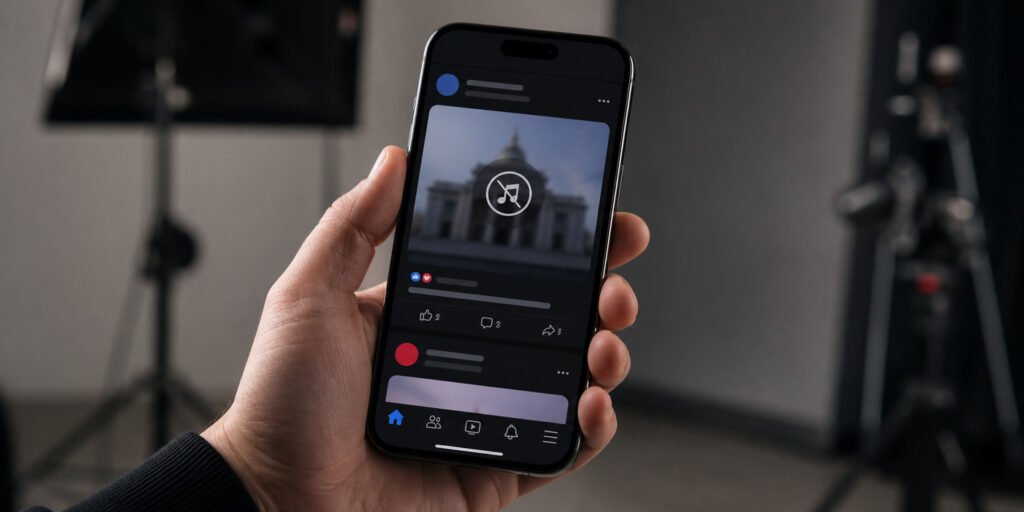
Taylor Swift has officially restricted the usage of her music catalog on Donald Trump’s verified TikTok accounts, a decisive move following the campaign’s unauthorized inclusion of her track ‘August’ in a recent promotional video. This restriction, which differentiates between commercial political entities and personal user accounts, highlights the deepening friction between intellectual property rights and the digital strategy of modern political campaigning.
The Anatomy of the TikTok Restriction
The incident centers on a video posted to the former president’s official TikTok account, which utilized the bridge of Swift’s ‘August’—a track from her Grammy-winning 2020 album ‘Folklore.’ While the platform’s music library is generally accessible to millions of users for content creation, the specific licensing agreements governing political accounts are markedly different. Swift’s management and legal team acted swiftly to ensure that while the global fanbase of ‘Swifties’ can continue to pair her music with their personal content, the specific account associated with the Trump administration is now blocked from accessing her copyrighted material.
This is not merely a digital grievance; it is a assertion of creative agency. By selectively blocking the campaign, Swift is drawing a firm boundary between her artistic output and political branding. This move underscores the complexities of social media platform regulations, where ‘viral’ trends often intersect with the contentious world of campaign advertising.
Intellectual Property and Political Branding
The intersection of music and politics has long been a legal battleground. Historically, political candidates have frequently faced cease-and-desist orders from artists ranging from Neil Young to The Rolling Stones for using songs at rallies without explicit permission. However, the TikTok environment introduces a new layer of complexity. Unlike physical rallies, where public performance licenses can be managed through entities like ASCAP or BMI, social media platforms operate under their own terms of service regarding ‘commercial’ versus ‘personal’ use.
When a candidate’s account uses a popular audio track to boost engagement, they are effectively leveraging the artist’s brand to enhance their own political message. For an artist of Swift’s stature, whose brand is meticulously curated and often aligned with specific cultural movements, the ‘August’ usage was viewed not as a benign social media post, but as a potential co-opting of her intellectual property. This specific restriction forces campaigns to rely on original content rather than piggybacking on the cultural capital of high-profile artists.
The ‘August’ Phenomenon and Cultural Resonance
It is worth noting why the campaign targeted ‘August’ in the first place. The song has become a cultural touchstone, often associated with nostalgia and the transition from summer to autumn. In the algorithm-driven world of TikTok, using a trending audio track is a primary tactic for ‘hacking’ engagement—a method of ensuring a video reaches the ‘For You’ page of a broader demographic. By utilizing a song that was already trending, the campaign was attempting to tap into an existing cultural rhythm.
However, this strategy backfired. Instead of generating organic reach, the move prompted a sharp reaction from the artist’s camp. The subsequent removal of the audio from the Trump account serves as a reminder that even in the digital age, copyright holders retain the authority to police the context in which their work is consumed. For political campaigns, this incident serves as a cautionary tale: the algorithm may be indifferent to ownership, but the artists themselves are not.
The Broader Digital Ecosystem
This event also shines a light on the unique relationship between TikTok and the music industry. Earlier in 2024, the dispute between Universal Music Group (UMG)—which distributes much of Swift’s catalog—and TikTok over royalty payments and AI usage led to the temporary removal of vast swaths of music from the platform. While that dispute was global and systemic, the current Trump-Swift friction is specific and tactical. It signals a move toward a more fragmented digital landscape, where artists may increasingly employ ‘geofencing’ or ‘account-fencing’ technologies to protect their work from being used by political figures with whom they do not align.
As the 2024 election cycle accelerates, we can expect this trend to intensify. Campaigns are inherently ‘content-hungry,’ constantly needing new ways to capture attention. Artists, conversely, are becoming more protective of their digital footprint. The collision of these two forces—political desperation for viral engagement and artist control—will likely redefine how campaign social media strategy operates in the months ahead.
FAQ: People Also Ask
Can Donald Trump still use Taylor Swift’s music on his personal TikTok account?
No, the restriction specifically targets political accounts associated with the administration. Personal user accounts are not currently restricted from using her music, meaning standard users can still create videos with her songs, provided they adhere to TikTok’s general copyright policies.
Why was the song ‘August’ specifically chosen by the campaign?
‘August’ is a high-performing, trending audio on TikTok. Campaigns often use trending audio to bypass the algorithm’s barriers, hoping to increase the visibility of their content by appearing in feeds where that song is currently popular.
Does this set a precedent for other artists?
Yes, it reinforces the capability of artists to control the digital context of their work. High-profile musicians are increasingly using their legal teams to enforce boundaries on social media platforms, preventing their art from being utilized in contexts—political or otherwise—that they find objectionable.
Is this the first time a politician has had issues using music?
No. This is part of a long history of political figures facing pushback from artists. From the 1980s with Bruce Springsteen and Ronald Reagan, to more recent instances involving artists like Pharrell Williams and Adele, there is a consistent pattern of campaigns using music without proper clearance, leading to public disputes and litigation.
More Stories
Lowriding’s Rise: SF Celebrates Cruising Culture
U.S. Repatriates 64 Cultural Relics and Fossils to China
Betting on Viral Fame: Novig’s Strategic Use of Sydney Sweeney