











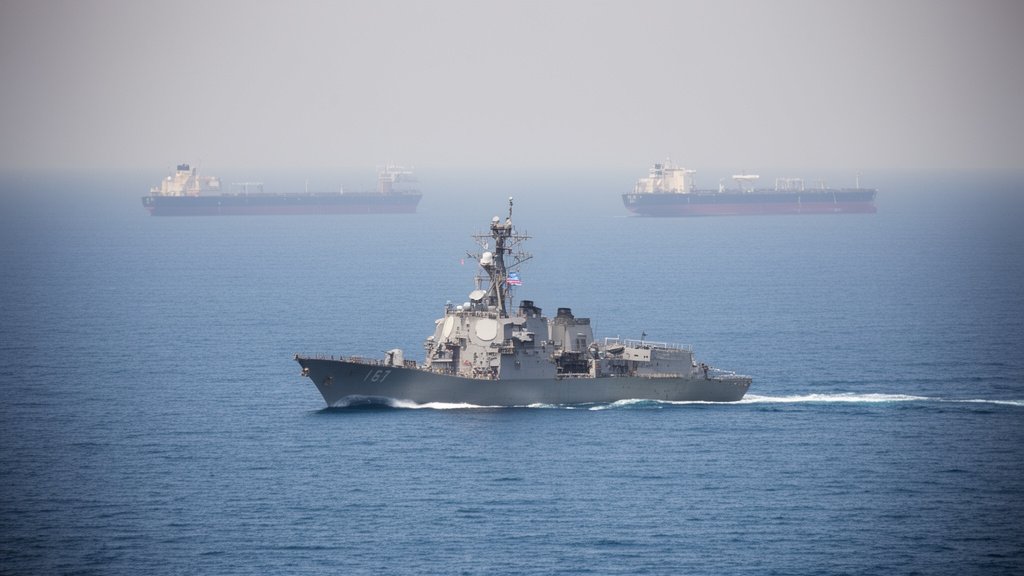
Tensions in the Middle East have reached a critical inflection point as U.S. officials acknowledge the development of contingency plans to utilize the GBU-43/B, the ‘Mother of All Bombs’ (MOAB), against Iranian nuclear and energy infrastructure. This strategic shift follows confirmed reports of two commercial vessels sinking near the Strait of Hormuz, a critical chokepoint responsible for approximately 20% of global oil consumption. The move signals a transition from diplomatic and economic posturing to a preparation for significant kinetic military action.
Key Highlights
- MOAB Deployment Consideration: Military planners are evaluating the GBU-43/B Massive Ordnance Air Blast (MOAB) to target deeply buried or reinforced Iranian facilities.
- Strait of Hormuz Instability: Two commercial vessels have been confirmed sunk in the immediate vicinity of the Strait of Hormuz, triggering a massive spike in regional security concerns.
- Strategic Targeting: Contingency plans focus on neutralizing Iran’s critical energy and nuclear infrastructure to curtail regional power projection.
- Global Market Impact: The escalation threatens to disrupt global crude oil supply chains, with analysts predicting immediate volatility in energy markets.
The Strategic Pivot: Operation GBU-43/B
The GBU-43/B, famously dubbed the ‘Mother of All Bombs’ (MOAB), is a 21,600-pound, GPS-guided weapon that ranks as the most powerful non-nuclear weapon in the U.S. arsenal. Unlike conventional munitions, the MOAB utilizes a massive blast overpressure wave to create a vacuum effect, designed specifically to collapse underground tunnels, bunker systems, and reinforced structures without the radioactive fallout of a tactical nuclear strike.
U.S. Central Command (CENTCOM) analysts suggest that the deployment of such a weapon—should it be authorized—would serve as a ‘shock and awe’ signal to the Islamic Revolutionary Guard Corps (IRGC), intended to instantly degrade hardened Iranian nuclear facilities. The shift indicates that Washington believes traditional surgical strikes may no longer be sufficient to neutralize the threat posed by Iran’s advanced, subterranean defense grid.
The Strait of Hormuz Crisis
The confirmed sinking of two commercial vessels near the Strait of Hormuz has served as the catalyst for this escalation. While the identities of the ships remain under investigation, their loss has effectively paralyzed shipping lanes in one of the world’s most vital maritime corridors. The Strait is a narrow passage where the majority of oil and liquefied natural gas (LNG) from the Persian Gulf reaches the Indian Ocean and the rest of the world.
For the global economy, the closure or partial blockage of the Strait is catastrophic. Shipping companies are already rerouting, a process that adds significant time and insurance costs to global logistics. The sinking of the ships creates not only a military problem for the U.S. Navy but an immediate economic one. Insurance premiums for vessels passing through the region have reached historic highs, and energy traders are pricing in a ‘risk premium’ that could see oil prices surge past $120 per barrel if the situation remains unresolved.
Targeting Iran’s Energy and Nuclear Grid
Military planners are reportedly focusing on the intersection of Iran’s energy and nuclear sectors. By targeting the facilities that support the nuclear enrichment program alongside key energy infrastructure, the U.S. aims to cripple Iran’s ability to fund regional proxies while simultaneously halting its nuclear advancements.
This strategy is not without controversy. Critics argue that utilizing the MOAB on infrastructure, rather than purely military targets, risks civilian collateral damage and long-term humanitarian instability. However, proponents within the Pentagon maintain that ‘maximum pressure’ necessitates the use of overwhelming conventional force to ensure the security of the Persian Gulf shipping lanes and to enforce international maritime law.
Secondary Angles: Examining the Fallout
1. The Logistical Reality of Modern Conflict: The focus on the MOAB highlights a critical shift in military doctrine: the return to massive, overwhelming conventional fire. This suggests that modern, precision-guided missile warfare is being supplemented by brute-force capabilities to overcome the ‘hardened defense’ strategy adopted by Iran over the last decade.
2. Economic Contagion: Beyond the immediate oil market impact, the shipping crisis in the Strait of Hormuz is creating an ‘economic contagion.’ Logistics firms are warning that sustained tension will lead to supply chain fractures similar to those seen during the COVID-19 pandemic, affecting manufacturing globally.
3. The Diplomatic Tightrope: The U.S. is currently engaged in an intensive diplomatic effort to rally regional allies, including Saudi Arabia and the UAE, to secure the Strait. However, these nations are wary of being directly implicated in a conflict that could result in retaliatory strikes on their own soil.
FAQ: People Also Ask
Q: What is the primary purpose of the GBU-43/B MOAB?
A: The MOAB is designed for the destruction of large, dispersed targets, such as tunnel complexes and underground bunkers, using a massive blast wave to neutralize targets without nuclear yields.
Q: How does the Strait of Hormuz sinking impact global oil prices?
A: The Strait of Hormuz accounts for roughly 20% of the world’s petroleum consumption. Blockages or threats of war cause immediate fear, spiking crude oil futures due to concerns over supply chain interruptions.
Q: Are these contingency plans a declaration of war?
A: No. Contingency plans are routine military preparations used to provide policymakers with options. While they indicate serious escalation, they are not an order to commence hostilities.
Q: What is the role of the IRGC in this conflict?
A: The Islamic Revolutionary Guard Corps (IRGC) is the primary branch of the Iranian Armed Forces responsible for regional power projection and, according to U.S. intelligence, the likely instigator of the maritime incidents near the Strait.
More Stories
Global Election Tensions: Legal Battles in CA, High Stakes in Brazil
US Envoy Witkoff Labels Putin ‘Humanitarian’ in Peace Push
Toledo Hazmat Crisis: Mass Evacuations Ordered for North Side