







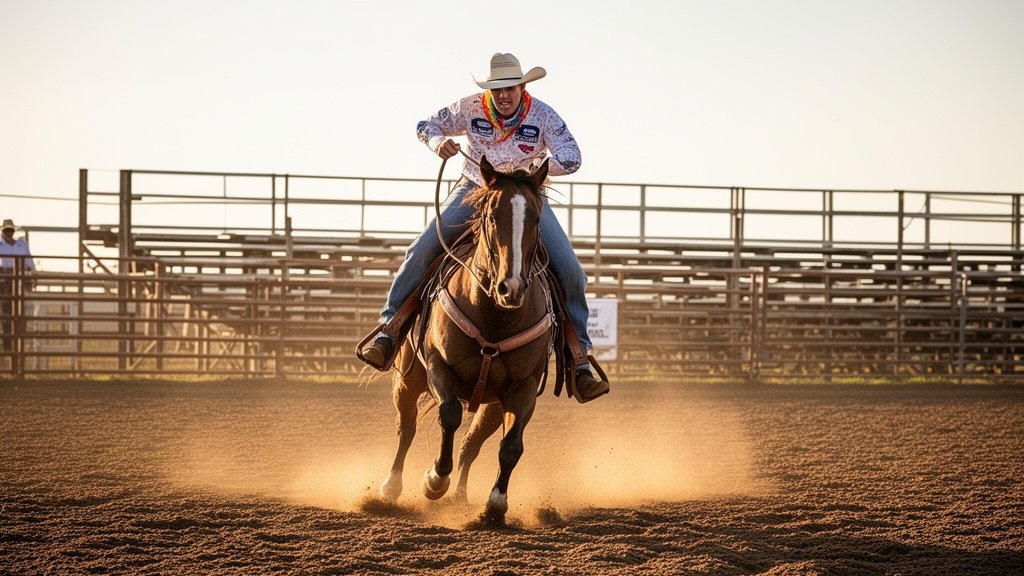
The American West has long been defined by a singular, rigid archetype: the rugged, solitary cowboy. For decades, this cultural totem felt inaccessible—if not diametrically opposed—to the LGBTQ+ community. However, beneath the dust of rural arenas across the United States, a quiet revolution has been taking place for nearly 50 years. The rise of the gay rodeo movement has not only provided a space for competition and camaraderie but has fundamentally challenged the monolithic view of rural American identity, proving that the spirit of the West is inclusive of all who seek it.
Key Highlights
- Foundational Origins: What began as a small charity event in Reno, Nevada, in 1976 has grown into a highly regulated circuit overseen by the International Gay Rodeo Association (IGRA).
- Philanthropic Powerhouse: Since its inception, gay rodeo circuits have raised millions of dollars for local and national charities, including crucial support during the height of the AIDS crisis in the 1980s and 1990s.
- Cultural Synthesis: These events serve as a critical nexus where traditional Western agrarian culture intersects with queer identity, fostering visibility in regions where LGBTQ+ populations have historically been isolated.
- Regulated Sport: Moving beyond simple novelty, the IGRA enforces rigorous safety and competition standards, mirroring the professionalization seen in mainstream rodeo organizations.
The Roots of Resistance: Defining the Gay Rodeo Movement
In 1976, a group of LGBTQ+ individuals in Reno, Nevada, organized what would become a seminal moment in queer history: the first gay rodeo. At the time, the event was primarily designed as a small-scale fundraiser. However, the cultural reception was seismic. It tapped into a long-held, but largely ignored, desire within the gay community to engage with the Western heritage that many had grown up with but felt excluded from due to the heteronormative exclusivity of mainstream organizations.
By 1985, the formalization of this movement occurred with the founding of the International Gay Rodeo Association (IGRA). This was not merely a club; it was an organizational shift that brought structure to what had been a decentralized phenomenon. The IGRA standardized rules, implemented rigorous animal welfare policies, and created a circuit that spanned the country, from Phoenix to Oklahoma City. This professionalization was essential. It transformed the event from a “novelty” into a legitimate athletic pursuit, demanding the respect and recognition of traditional rodeo organizations.
The Philanthropic Engine of the Arena
While the spectacle of bull riding and barrel racing captures the attention, the heartbeat of the gay rodeo movement is, and has always been, philanthropy. During the 1980s and 1990s, as the AIDS epidemic ravaged queer communities across the United States, the IGRA circuits became vital lifelines. Rodeo associations donated gate proceeds, entry fees, and corporate sponsorships directly to AIDS service organizations and research groups.
This charitable focus served a dual purpose. It provided essential financial support to marginalized communities during their darkest hours, and it helped integrate rodeo associations into the fabric of local towns. By “giving back” to the host cities, these organizations shifted the public perception of the participants from “outsiders” to active, valued community members. This economic contribution—often generating significant tourism dollars for mid-sized cities—created a form of soft power that has helped protect the longevity of these events in conservative regions.
Reclaiming the Cowboy Archetype
The most profound impact of the gay rodeo is perhaps sociological: the deconstruction of the “Cowboy” myth. The hyper-masculine archetype of the American West has historically been used to exclude non-conforming identities. By entering the arena, participants in the IGRA reclaimed this identity, stripping away the necessity of traditional masculinity to define who can belong on the ranch.
This reclamation has been particularly vital for rural LGBTQ+ populations. For an individual living in a sparsely populated county in states like Montana or Oklahoma, the isolation of being “the only one” can be paralyzing. The gay rodeo offers a sanctuary—a weekend-long “reunion” where cultural heritage and personal identity are not in conflict but are synthesized. This creates a specific brand of solidarity: a shared understanding of navigating rural landscapes that are often hostile to queer existence. The rodeo circuit functions as a mobile community center, providing a space where the “outlaw” spirit of the West is repurposed as a symbol of queer resilience.
The Modern Landscape and Future Outlook
As the world becomes more digitized, the physical necessity of these gatherings remains as potent as ever. While the internet allows for virtual community-building, the tactile, physical nature of the rodeo—the dirt, the livestock, the shared risk of the arena—creates a bond that online forums cannot replicate. Today, the IGRA continues to navigate a changing political climate. Balancing the preservation of traditional Western “purity” with the progressive values of the LGBTQ+ community is a constant negotiation, yet it is one that the rodeo circuit has proven adept at managing.
Furthermore, the diversity of the participants continues to evolve. The modern gay rodeo is not just about “gay” men; it is an increasingly intersectional space that highlights the presence of lesbian, transgender, and non-binary participants, each contributing to the multifaceted, evolving story of the American frontier. The future of the movement lies in this continued expansion—proving that the “open range” is truly open to everyone.
FAQ: People Also Ask
Q: What is the primary difference between a mainstream rodeo and a gay rodeo?
A: While the athletic events (such as bull riding, steer riding, and barrel racing) are largely identical to mainstream rodeos, gay rodeos often incorporate “camp” events—such as goat dressing or steer decorating—that add a layer of humor and entertainment, alongside a heightened focus on inclusive, charity-driven community building.
Q: Is the International Gay Rodeo Association still active?
A: Yes. The IGRA continues to oversee the circuit, sanctioning rodeos across various states. It maintains strict standards for both human and animal welfare, ensuring the events remain competitive and professional.
Q: Why is philanthropy such a big part of the gay rodeo?
A: Philanthropy was a survival mechanism born out of the 1980s AIDS crisis. Rodeo organizers realized that by pouring money into local charities, they could not only help those in need but also demonstrate their value and commitment to the cities that hosted them, thereby reducing friction and increasing local acceptance.
Q: Do you need to be a professional rider to participate?
A: No. While there are competitive divisions for seasoned riders, the gay rodeo circuit is known for being welcoming to amateurs. Many events offer training and encourage participation at various skill levels, emphasizing the community experience over elite-level competition.
More Stories
Lowriding’s Rise: SF Celebrates Cruising Culture
U.S. Repatriates 64 Cultural Relics and Fossils to China
Betting on Viral Fame: Novig’s Strategic Use of Sydney Sweeney