











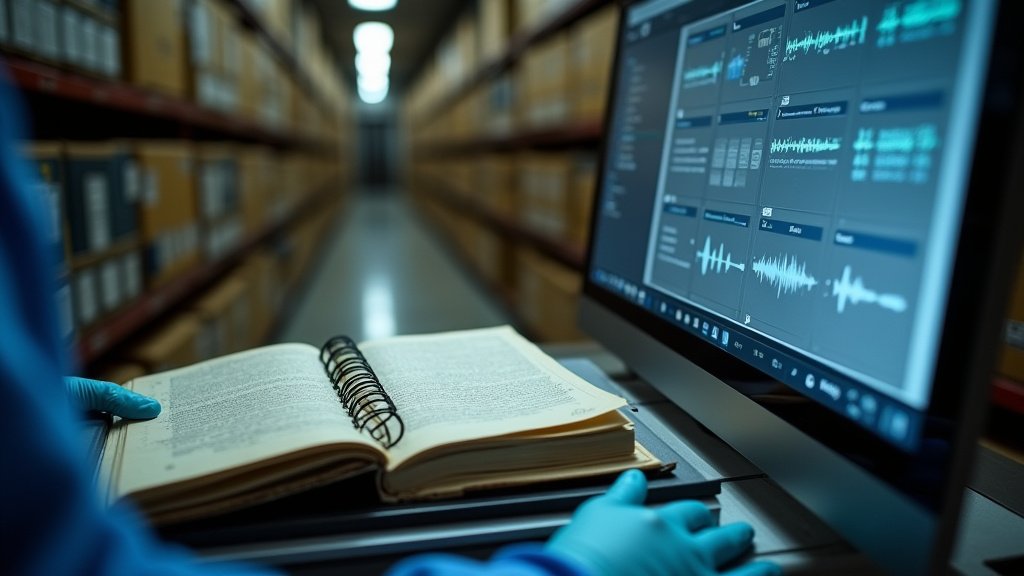
As the United States accelerates toward its 250th anniversary—the semiquincentennial—the National Archives and Records Administration (NARA) has officially launched ‘Voices of the 250th.’ This groundbreaking digital archive is designed to act as a cultural repository for the next century, prioritizing the collection, digitization, and accessibility of oral histories, personal correspondence, and community narratives that have historically remained outside the traditional federal record. By blending rigorous archival standards with modern digital accessibility, the agency aims to curate a more nuanced and inclusive portrait of the American identity, ensuring that the milestone celebration is not just a look back at the past, but an active preservation of the present.
Key Highlights
- Broadening the Narrative: The initiative intentionally targets underrepresented communities to ensure the ‘Voices of the 250th’ collection reflects the demographic and geographic diversity of the United States.
- Oral History Focus: The project prioritizes oral history interviews, giving citizens a platform to contribute primary source material directly to the national record.
- Digital-First Methodology: Utilizing cutting-edge cloud infrastructure, the archive is built for public access, allowing researchers and students to query data in real-time.
- Semiquincentennial Milestone: This launch serves as a lead-up to the 2026 America250 celebration, aiming to have a robust, interactive collection ready for the anniversary.
Chronicling the American Tapestry: The Architecture of Memory
The launch of ‘Voices of the 250th’ represents a paradigm shift in how the federal government approaches historiography. Historically, the National Archives has functioned as the keeper of formal, state-sanctioned documents—legislative acts, treaties, and official correspondence. However, this new initiative acknowledges that the ‘real’ American story is often found in the ephemeral: the diaries of immigrants, the oral accounts of civil rights activists, and the personal journals of everyday citizens. By creating a dedicated digital infrastructure, NARA is formalizing the inclusion of these lived experiences into the permanent record.
The Semiquincentennial Mandate
The United States Semiquincentennial Commission, often referred to as America250, has challenged federal institutions to move beyond static, monolithic historical narratives. ‘Voices of the 250th’ is the Archives’ strategic response to this mandate. It is not merely a collection of data; it is an active outreach project. NARA has partnered with local libraries, historical societies, and community organizations to solicit donations of personal records. This decentralized approach to collection management ensures that the archive captures regional nuances—from the industrial history of the Rust Belt to the agricultural shifts in the Great Plains and the cultural evolution of the Pacific coast.
Preserving the ‘Living’ History
One of the most innovative components of this project is its heavy reliance on oral history. Traditional archival processes often struggle with the ‘silence’ of marginalized groups in written records. By proactively recording interviews with a diverse cross-section of Americans—spanning age, socioeconomic status, and ethnic backgrounds—NARA is effectively creating a living document. These audio and video files are transcribed using AI-assisted tools to ensure they are searchable, transforming raw conversation into indexed data that future generations can analyze to understand the cultural anxieties and aspirations of the mid-2020s.
Democratizing Access Through Digital Infrastructure
For decades, accessing NARA holdings required physical travel or specialized knowledge of archival research methods. The ‘Voices of the 250th’ platform flips this script. Built with a user-centric UI, the digital hub allows for keyword searching that links related documents across different mediums. For instance, a user researching the mid-20th-century labor movement can pull up official federal reports alongside personal union pamphlets and audio testimonies from workers of that era. This connectivity provides a 360-degree view of history that physical archives could never replicate.
Secondary Angles: Future Implications
1. The Evolution of the Archivist’s Role: With this project, the role of the archivist is transitioning from ‘gatekeeper’ to ‘facilitator.’ Archivists are now actively working to solicit and verify community-contributed materials, requiring new skills in community engagement and digital literacy, alongside traditional cataloging.
2. Technological Longevity and the ‘Digital Dark Age’: A major concern for this project is the obsolescence of file formats. The Archives is employing best practices for long-term digital preservation, ensuring that these files remain readable for centuries. This initiative serves as a litmus test for whether government institutions can successfully store massive, multi-format datasets permanently.
3. Economic Impact on Heritage Tourism: By curating localized histories, the project is expected to boost heritage tourism and educational programming nationwide. Local museums and sites associated with these newly preserved stories may see increased interest as the 250th anniversary approaches, creating a multiplier effect for local economies.
FAQ: People Also Ask
Q: How can citizens contribute their own personal records to the ‘Voices of the 250th’ archive?
A: The National Archives has set up a dedicated portal on the America250 official page. Contributions are vetted for historical significance, and the agency provides guidelines on the types of documents, oral histories, and photographs that are currently being prioritized for the collection.
Q: Is this archive intended to replace existing historical records?
A: No. ‘Voices of the 250th’ is intended to complement, not replace, traditional records. It serves as an additive layer, providing context and texture to official government documentation already housed at NARA.
Q: How is the security of personal sensitive data handled within this digital archive?
A: NARA applies rigorous de-identification standards to all donated materials. Any personal documents containing sensitive PII (Personally Identifiable Information) are either redacted or embargoed in accordance with privacy laws and the Privacy Act of 1974.
Q: When will the digital archive be fully accessible to the public?
A: The hub has launched with an initial data set, but it is an iterative project. New materials are being processed and uploaded on a rolling basis, with major feature updates scheduled to align with the countdown to July 4, 2026.
More Stories
Lowriding’s Rise: SF Celebrates Cruising Culture
U.S. Repatriates 64 Cultural Relics and Fossils to China
Betting on Viral Fame: Novig’s Strategic Use of Sydney Sweeney