











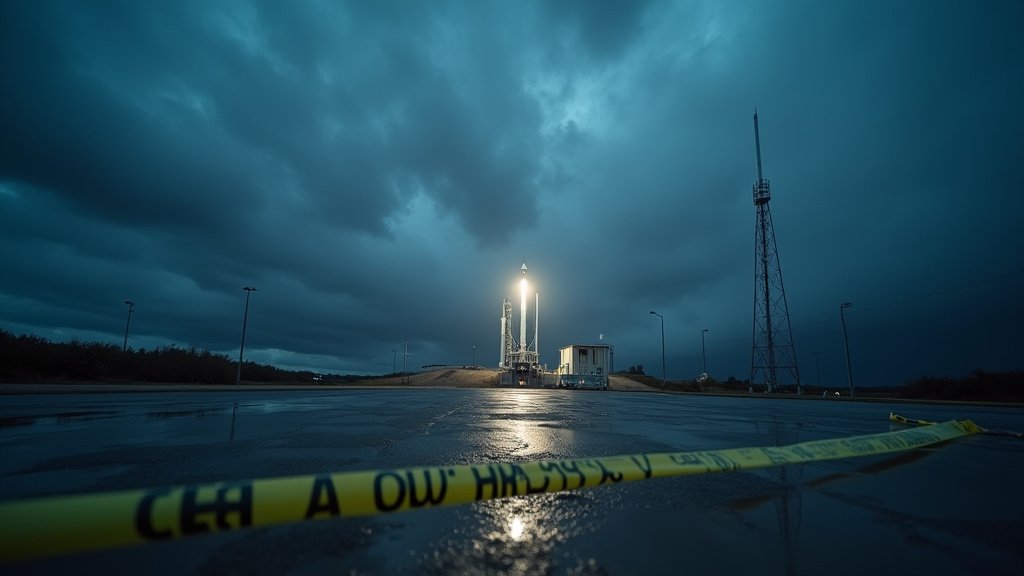
SpaceX’s Starship program faces a significant setback as the Federal Aviation Administration (FAA) has initiated an investigation into the recent test flight. This grounding order means no further Starship or Super Heavy launches can proceed until the FAA completes its inquiry, raising questions about the future pace of the ambitious lunar and Martian ambitions of Elon Musk’s space venture.
Key Highlights:
- The FAA has launched an investigation into the recent Starship test flight, leading to a launch moratorium.
- SpaceX’s future Starship and Super Heavy launches are on hold pending the investigation’s outcome.
- The incident raises concerns about the timeline for SpaceX’s ambitious plans for lunar and Mars missions.
- This marks another regulatory hurdle for the rapidly developing Starship program.
FAA Investigation Halts Starship Operations
The Federal Aviation Administration (FAA) has officially grounded SpaceX’s Starship program following a recent, yet-to-be-fully-detailed, test flight incident. This regulatory action, a common occurrence in the volatile aerospace industry, places an immediate moratorium on all future launches of both the Starship upper stage and its Super Heavy booster. The FAA’s investigation will meticulously examine the events leading up to, during, and immediately after the test flight to determine the root cause of any anomalies and to ensure that corrective actions are implemented before operations can resume.
Regulatory Scrutiny and SpaceX’s History
SpaceX, led by billionaire entrepreneur Elon Musk, has a history of rapid development and iterative testing, often pushing the boundaries of established regulatory frameworks. While this approach has yielded remarkable progress, it has also led to increased scrutiny from agencies like the FAA, which are tasked with ensuring public safety and the responsible use of airspace. This latest investigation is not unprecedented; previous SpaceX launches, particularly those involving new rocket designs, have faced similar reviews. However, the grounding of the entire Starship program underscores the significance of this particular incident.
The Starship Program’s Ambitious Goals
The Starship program represents SpaceX’s ultimate vision for interplanetary travel. Designed as a fully reusable super heavy-lift launch vehicle, Starship is intended to carry both crew and cargo to Earth orbit, the Moon, Mars, and beyond. Its successful development is critical to SpaceX’s long-term objectives, including the establishment of a self-sustaining city on Mars and providing a more affordable pathway to space access. The current grounding casts a shadow over these ambitious timelines, potentially delaying crucial milestones in the program’s roadmap.
Potential Impact on Lunar and Mars Missions
The implications of this FAA investigation extend beyond mere launch delays. SpaceX has been a key partner in NASA’s Artemis program, with Starship selected as the Human Landing System (HLS) for future lunar missions. A prolonged grounding could jeopardize NASA’s schedule for returning astronauts to the Moon. Similarly, the viability of Mars colonization efforts, a core tenet of SpaceX’s mission, relies heavily on the timely and successful deployment of Starship.
Entities in Focus
SpaceX: The aerospace manufacturer founded by Elon Musk, renowned for its innovative rocket technology and ambitious space exploration goals.
Federal Aviation Administration (FAA): The U.S. government agency responsible for regulating civil aviation, including the safety of rocket launches.
Elon Musk: CEO of SpaceX and a pivotal figure in the development of Starship and the broader space industry.
Artemis Program: NASA’s initiative to return humans to the Moon and establish a sustainable lunar presence, with SpaceX’s Starship playing a crucial role.
FAQ: People Also Ask
What is the FAA’s role in SpaceX launches?
The FAA is responsible for regulating and overseeing all commercial space launches in the United States to ensure public safety and protect national airspace. This includes approving launch licenses and investigating any incidents that occur during test flights.
Why was Starship grounded?
Starship has been grounded because the FAA has initiated an investigation into a recent test flight. The specifics of the incident that triggered the investigation have not yet been fully disclosed, but it is standard procedure for the FAA to ground operations pending the outcome of such inquiries.
How long could the investigation last?
The duration of an FAA investigation can vary significantly depending on the complexity of the incident. Some investigations can be resolved in a matter of weeks, while others, particularly those involving significant anomalies or potential safety concerns, can take several months.
What are the long-term goals of the Starship program?
The primary long-term goal of the Starship program is to enable human colonization of Mars and to provide a cost-effective means of space transportation for both cargo and crew to any destination in the solar system.
Will this affect NASA’s Artemis missions?
Potentially, yes. SpaceX’s Starship is contracted to serve as the lunar lander for NASA’s Artemis program. Any significant delays in Starship’s development and testing due to the FAA investigation could impact the timeline for future Artemis missions to the Moon.
More Stories
Costco Goes Nationwide on Uber Eats: A New Era for Bulk Delivery
Elena Rybakina Wins US Open, Ascends to World No. 1
Rubio Seals Security Pacts; Vance Drives Policy Agenda