

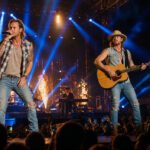




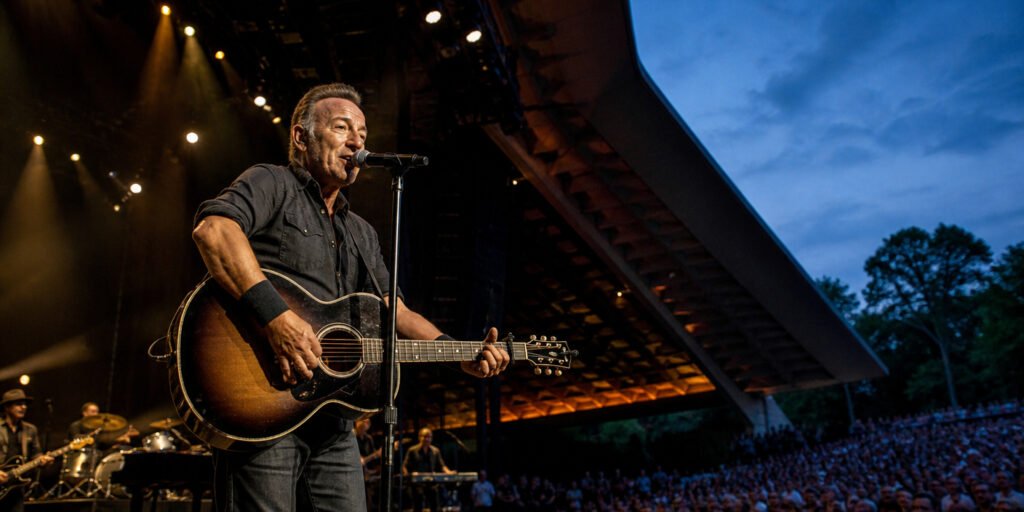
The inaugural “Power to the People” festival, a monumental convergence of art and advocacy, descended upon the Merriweather Post Pavilion on October 3, 2026. Headlined by rock icon Bruce Springsteen, the event transcended the traditional concert format, functioning as a high-profile platform for social consciousness. Curated by Rage Against the Machine guitarist Tom Morello, the day-long gathering drew thousands to Columbia, Maryland, creating a potent synergy between legacy musicianship and contemporary activism focused on themes of justice, peace, and solidarity.
Key Highlights
- The Headliner: Bruce Springsteen anchored the main stage, delivering an acoustic-heavy setlist aimed at highlighting American resilience and the pursuit of equality.
- The Visionary: Organized by Tom Morello, the event was explicitly designed to bridge the gap between high-production musical entertainment and grassroots sociopolitical protest.
- The Location: Merriweather Post Pavilion served as the nexus for this assembly, drawing a diverse demographic from across the Mid-Atlantic region to the historic venue.
- The Core Message: The festival platformed non-partisan calls for justice and social cohesion, utilizing the medium of rock and roll as a vehicle for public discourse.
A Symphony of Dissent: The Art of Activism
The “Power to the People” festival is not merely a musical event; it is a declaration of intent. For decades, both Springsteen and Morello have operated at the intersection of popular culture and political commentary. By selecting the Merriweather Post Pavilion—a venue with a rich history of hosting culturally significant performances—the organizers aimed to ground the event in a space that balances outdoor natural beauty with acoustic precision.
From the moment the gates opened on October 3, 2026, the atmosphere was markedly different from standard commercial festivals. There was an absence of corporate branding that usually litters major concert productions, replaced instead by information booths from grassroots advocacy groups. This curated aesthetic choice forced the audience to engage with the “why” of the festival rather than the commercial “what.” The setlist, spanning decades of protest-adjacent material, underscored the persistent relevancy of the songs. When Springsteen stepped on stage, he didn’t just perform; he articulated the event’s thesis: that music serves as the most effective medium for societal reflection.
The Morello-Springsteen Dynamic
Tom Morello’s involvement was the critical catalyst that transformed this from a standard concert into an organized movement. Morello, known for his ability to fuse hard rock with radical activism, curated a lineup that felt cohesive despite the diverse musical backgrounds of the performers. The synergy between Springsteen’s blue-collar American storytelling and Morello’s aggressive, message-driven guitar work provided a duality that resonated with the multi-generational crowd. The two artists have collaborated previously, but their coordination here felt distinctively focused on the 2026 political landscape.
Economic and Community Impact
Hosting a festival of this magnitude in Columbia, Maryland, presents unique logistical and economic challenges. Local officials reported a significant influx of visitors, straining local infrastructure but providing a substantial boost to the regional hospitality sector. For the local community, the festival wasn’t just a concert; it was an influx of discourse. Discussions regarding the economic impact of such events often center on ticket sales, but the “Power to the People” festival introduced a secondary economic factor: the stimulation of local civic engagement. The challenge for organizers was managing the sheer volume of attendees while maintaining the security and intimacy required for a protest-themed event. By all accounts, the Merriweather Post Pavilion operations team, in conjunction with Morello’s production crew, managed the logistics without major incident, setting a high bar for future protest-centric festivals.
The Evolution of Protest Music
Historically, protest music in America has vacillated between the folk simplicity of the 1960s and the aggressive rebellion of the 1990s. This festival represented a synthesis of those eras. By utilizing an artist like Bruce Springsteen—a figure who commands respect across the political spectrum—the organizers successfully de-radicalized the concept of “protest” for a mainstream audience. It wasn’t about polarization; it was about the fundamental concepts of justice and solidarity. This approach ensures the festival’s longevity. If the 2026 inaugural event serves as a blueprint, future iterations could easily scale, potentially turning this Maryland gathering into a perennial fixture on the national activist calendar.
FAQ: People Also Ask
Q: What was the primary goal of the ‘Power to the People’ festival?
A: The festival, spearheaded by Tom Morello, aimed to promote peace, justice, and solidarity through the medium of live music, utilizing the platform to amplify discourse on social issues.
Q: Why was Bruce Springsteen chosen as the headliner?
A: Springsteen was selected for his long-standing career focus on the American experience, working-class values, and social narrative, which aligns with the festival’s themes of solidarity and justice.
Q: Where was the event held and why that location?
A: The festival was held at the Merriweather Post Pavilion in Columbia, Maryland, chosen for its acoustic capabilities and its storied history of hosting culturally significant and politically active musical events.
Q: Will the ‘Power to the People’ festival return next year?
A: While official dates for 2027 have not been announced, the successful execution of the 2026 event and the positive reception suggest that the organizers are positioned to continue the festival as an annual or biennial occurrence.
More Stories
Chris Brown Faces Sentencing in London Assault Case
Derrick Harriott, Reggae Legend and Crystal Records Pioneer, Dies at 87
Remembering Michael Gray: The ‘Shazam!’ and ‘Brady Bunch’ Icon Dies at 75