











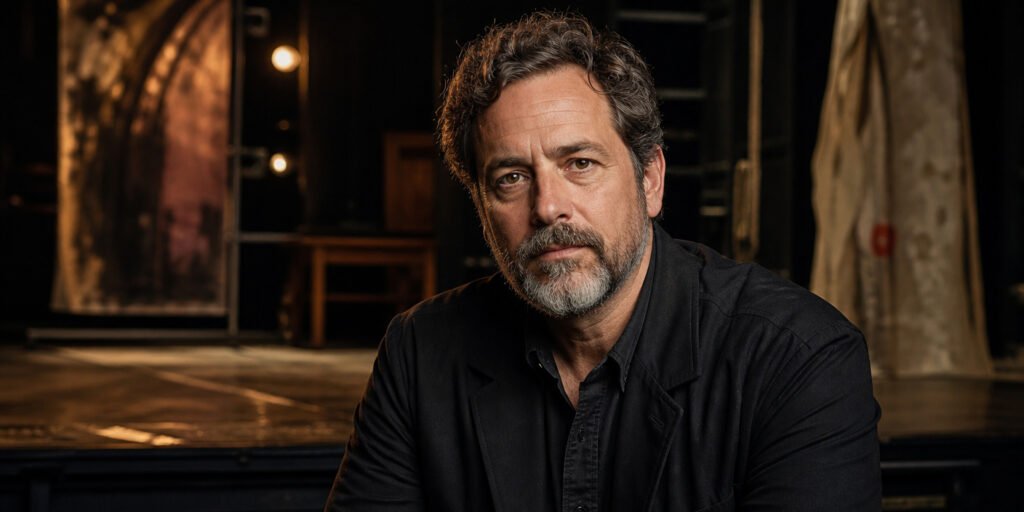
The Dallas arts community is mourning the loss of a singular creative spirit. Matthew Posey, the founder and artistic director of the Ochre House Theater, has died at the age of 68. His passing on October 5 marks the end of an era for the Deep Ellum performance district, a neighborhood that served as the canvas for his decades of avant-garde experimentation and uncompromising artistic vision. Posey, known for his relentless dedication to original work, did not just run a theater; he curated an experience that challenged, unsettled, and profoundly moved audiences.
The Birth of the Ochre House
In 2008, when Matthew Posey established the Ochre House Theater, the landscape of independent theater in Dallas was vastly different. Posey, a seasoned actor, director, and playwright, envisioned a space that operated outside the conventional boundaries of commercial performance. Located in the historic Deep Ellum district, the theater was physically and philosophically distinct from the polished, large-scale productions often found in the Dallas Arts District. The Ochre House became a sanctuary for the weird, the experimental, and the deeply human.
From the outset, Posey’s mission was clear: to foster a collaborative environment where writers, actors, and visual artists could converge. He was not interested in reviving classics or catering to mainstream trends. Instead, he wanted to build a laboratory for the imagination. The theater’s history is peppered with original plays that tackled complex themes—existential dread, historical re-examinations, and the absurdities of daily life—all framed within a style that Posey meticulously cultivated.
Defining ‘Suavant-Garde’
Perhaps the most enduring legacy Posey leaves behind is the artistic movement he branded as ‘Suavant-Garde.’ While the term plays on the traditional ‘avant-garde,’ for Posey, it was a deeply personal nomenclature. It represented a synthesis of fine art and performance, where the visual aesthetic of the stage was as critical as the dialogue spoken by the actors.
In a ‘Suavant-Garde’ production, lighting was not merely functional; it was narrative. The set design was rarely minimal; it was transformative, often featuring intricate props and textures that felt pulled from a surrealist painting. Posey believed that theater was a total art form. He challenged his cast and crew to transcend traditional acting, pushing them to embody their roles with a visceral, almost raw intensity. Audiences often described the experience of attending an Ochre House show as entering a different reality—one that was chaotic yet tightly controlled by Posey’s directorial hand.
Impact on the Deep Ellum Arts District
To understand the magnitude of Posey’s death, one must understand his role in the cultural ecosystem of Deep Ellum. As the district faced waves of gentrification and commercial development, the Ochre House remained a defiant outpost of artistic authenticity. Posey was a stalwart believer that art should be accessible but never watered down. He cultivated a local following that appreciated the gritty, non-conformist nature of his work.
By mentoring dozens of actors, musicians, and set designers, Posey acted as an incubator for Dallas talent. Many artists who passed through the Ochre House found their voice under his tutelage. He did not simply hire performers; he built a community. This sense of continuity—the idea that the theater was a living, breathing organism rather than a static venue—was Posey’s greatest contribution to the local arts economy. He proved that independent theater could be sustainable, not through massive grants or corporate sponsorship, but through sheer grit and a loyal, grassroots audience base.
A Career Beyond the Stage
Before founding the Ochre House, Posey’s career was already expansive. As an actor, he brought a specific, grounded presence to the screen and stage, often gravitating toward roles that allowed him to explore the complexities of the human condition. His work as a visual artist also informed his theater productions; he treated each stage set as a canvas. This interdisciplinary approach was the hallmark of his career.
He was known for a work ethic that bordered on obsessive, often spending weeks in the theater perfecting a single scene transition or color palette. Colleagues remember him as a mentor who demanded excellence but gave as much as he took. He was not a distant director; he was present in every aspect of the production, from the hammering of set nails to the final lighting cue. This, according to those who knew him best, was the secret to the Ochre House’s longevity: it was built on the back of his personal, hands-on sacrifice.
The Future of the Ochre House
As the theater community processes this loss, the question of the Ochre House’s future naturally arises. The theater has not yet announced specific succession plans, but the collective consensus among local critics and collaborators is that Posey has left behind a roadmap. His ‘Suavant-Garde’ philosophy was institutionalized in the theater’s operations—a dedication to the new, the daring, and the original.
Whether or not the theater can maintain its specific frequency without his direct guidance remains to be seen. However, the seeds of his methodology have been planted in hundreds of artists across North Texas. The Ochre House, in many ways, is no longer just a building or a company; it is a movement that Posey ignited. In his passing, the theater’s role has shifted from being a laboratory of his current experiments to a steward of his historical vision. For the Dallas arts scene, the challenge moving forward will be to keep that fire burning, ensuring that the ‘Suavant-Garde’ spirit continues to find a home in the heart of Deep Ellum.
More Stories
Chris Brown Faces Sentencing in London Assault Case
Derrick Harriott, Reggae Legend and Crystal Records Pioneer, Dies at 87
Remembering Michael Gray: The ‘Shazam!’ and ‘Brady Bunch’ Icon Dies at 75