











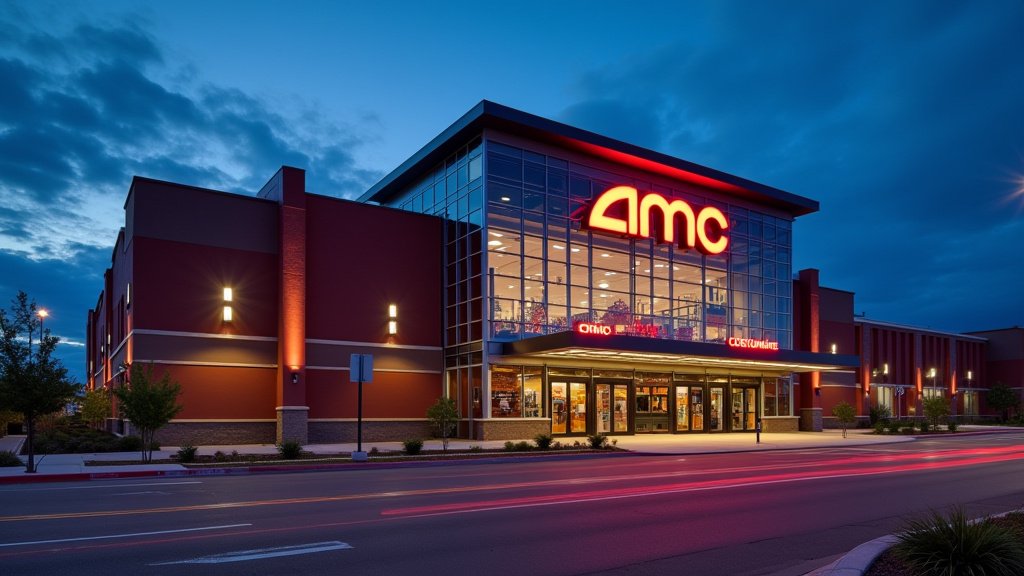
AMC Entertainment has officially secured its financial future by finalizing a massive $3.97 billion debt refinancing package on October 5, 2026. This critical maneuver effectively recalibrates the cinema giant’s maturity structure, most notably introducing $2 billion in First Lien Notes due 2031, providing the breathing room necessary to navigate the evolving post-pandemic theatrical landscape.
Key Highlights
- Total Refinancing Amount: $3.97 billion in total debt restructuring.
- Strategic Milestone: Successful issuance of $2 billion in First Lien Notes maturing in 2031.
- Debt Maturity Alignment: Significant extension of debt timelines to reduce near-term pressure.
- Market Sentiment: Reflects renewed creditor confidence in the theatrical exhibition recovery trajectory.
The Strategic Reshaping of AMC’s Balance Sheet
The completion of this $3.97 billion refinancing effort marks a definitive pivot point for AMC Entertainment Holdings, Inc. For years, the theater chain has been synonymous with the volatility of the retail trading era and the existential questions surrounding the post-streaming box office. By finalizing this complex restructuring on October 5, 2026, the company has effectively swapped impending, high-pressure maturity dates for a longer runway, signaling a maturation of its capital structure.
At the core of this deal is the $2 billion in First Lien Notes due 2031. For institutional investors and creditors, these notes represent a tangible asset backed by the company’s core operations. By securing these notes, AMC has not only reduced its immediate liquidity risk but has also signaled to the wider financial markets that the company’s cash flow projections remain robust enough to support long-term obligations. This is not merely a survival tactic; it is an infrastructure rebuild.
Why the 2031 Horizon Matters
In the world of corporate finance, maturity dates are the ultimate test of viability. By extending a significant portion of its debt load into the next decade, AMC is acknowledging that the transition of the film exhibition industry—from a legacy model to a diversified experience model—requires time. The 2031 maturity horizon allows AMC to execute on strategic initiatives that were previously sidelined by the urgent need to address short-term interest payments. This includes potential investments in premium large format (PLF) auditoriums, advanced laser projection technologies, and the expansion of high-margin concessions and ancillary revenue streams.
Navigating the Post-Pandemic Box Office
Theatrical exhibition has faced a turbulent five-year period. Following the massive industry disruptions of 2020 and 2021, the entire sector had to prove that the ‘communal movie-going experience’ was not just resilient, but growth-oriented. AMC’s ability to refinance nearly $4 billion in debt proves that lenders have shifted their perspective from viewing the company as a distressed asset to viewing it as a long-term commercial operator. The deal structure implies that the syndicate of banks and private credit providers involved in this transaction believe in the durability of the studio-to-theater pipeline.
Investor Implications and Corporate Governance
For the retail and institutional investor base, this refinancing is a stabilizing event. Volatility is often fueled by the specter of bankruptcy or insolvency. By clearing the near-term debt hurdle, AMC reduces the ‘liquidity panic’ factor that has historically contributed to wild price swings. The market now has a clearer, cleaner view of the company’s balance sheet, which should theoretically allow the stock price to trade on fundamental performance metrics—such as box office ticket sales, concession spend-per-patron, and operational efficiencies—rather than fear of default.
Historical Context: From Meme Stock to Managed Entity
It is impossible to discuss AMC without referencing its unique position in market history. During the peak of the ‘meme stock’ phenomenon, AMC was a lightning rod for retail sentiment. However, the company has spent the intervening years quietly transforming its capital structure. This refinancing is the culmination of that evolution. It represents a shift away from the era of hyper-speculative finance toward the era of traditional, institutional-grade debt management. The company has moved from managing its survival to managing its long-term corporate growth.
Future Predictions: What Comes Next?
With the debt cloud partially cleared, the focus will now shift to operational leverage. The industry is watching to see how AMC utilizes this flexibility. Will we see aggressive acquisition strategies to consolidate smaller regional chains? Or perhaps a deeper dive into content distribution and direct-to-consumer partnerships? The 2031 notes provide the financial foundation for these strategic pivots. The next 18 to 24 months will be crucial as the company demonstrates how it intends to maximize the revenue potential of its newly secured balance sheet.
FAQ: People Also Ask
Q: What are First Lien Notes?
A: First Lien Notes are debt securities that have a senior claim on the company’s assets. In the event of a default, holders of these notes are paid before other creditors, making them a safer, albeit typically lower-yield, investment.
Q: Does this refinancing prevent bankruptcy?
A: While bankruptcy is a complex process with many variables, this refinancing significantly reduces the near-term risk of insolvency by pushing maturity dates out to 2031, giving the company years of breathing room.
Q: Why did AMC need to refinance $3.97 billion?
A: Like many large corporations, AMC utilized debt to survive the pandemic era. Refinancing allows the company to replace older, potentially more expensive or near-term debt with new debt terms that match their current cash flow projections.
Q: How does this affect AMC shareholders?
A: For shareholders, this is generally viewed as a positive signal. It removes the immediate threat of liquidity crises, stabilizes the financial outlook, and allows management to focus on growth rather than debt servicing.
Q: Who was involved in the refinancing?
A: While specific institutional participants are often private in syndicated debt deals, the transaction involved a consortium of lenders providing the $3.97 billion capital injection, reflecting broad institutional backing.
More Stories
Chris Brown Faces Sentencing in London Assault Case
Derrick Harriott, Reggae Legend and Crystal Records Pioneer, Dies at 87
Remembering Michael Gray: The ‘Shazam!’ and ‘Brady Bunch’ Icon Dies at 75