











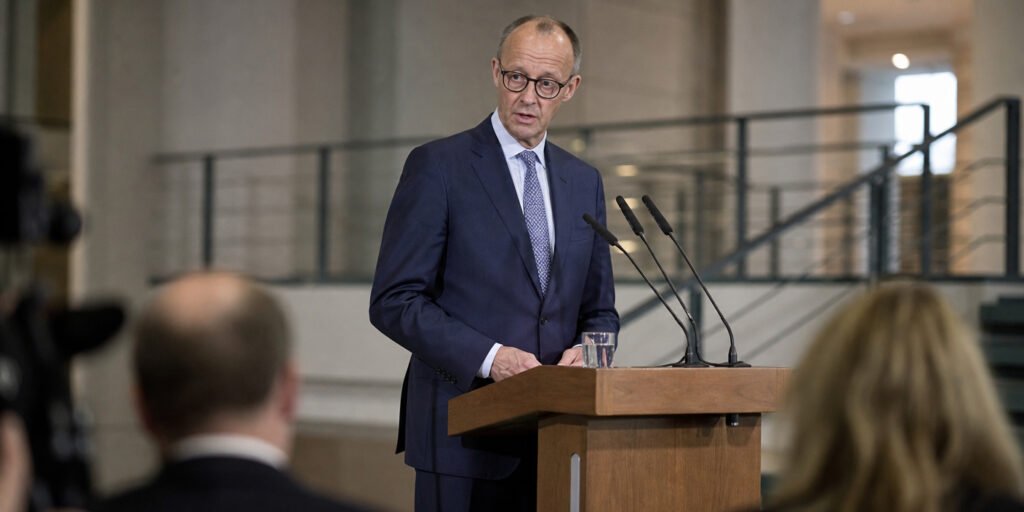
In the wake of crushing electoral losses in Berlin and Mecklenburg-Western Pomerania, German Chancellor Friedrich Merz has signaled a firm refusal to deviate from his current policy trajectory. Despite mounting pressure from party internal critics and coalition partners, the Chancellor has doubled down on his administration’s core agenda, framing the results as a temporary setback rather than a structural failure. The outcomes in these two key states have sent shockwaves through the German political establishment, underscoring a turbulent shift in the nation’s electorate, with the Alternative for Germany (AfD) party capitalizing on voter dissatisfaction to secure significant gains.
Key Highlights
- Historic Defeats: The Christian Democratic Union (CDU) suffered substantial electoral losses in both Mecklenburg-Western Pomerania and Berlin, signaling a decline in traditional party strongholds.
- AfD Surge: The far-right Alternative for Germany (AfD) party achieved significant polling gains, effectively positioning themselves as the primary beneficiary of voter frustration with the current administration.
- Merz’s Defiance: Chancellor Friedrich Merz has publicly vowed to maintain his current governing strategy, rejecting calls for a radical pivot in response to the electoral outcome.
- Systemic Implications: These results place renewed strain on the federal coalition, raising questions about the stability of the Chancellery’s long-term legislative goals.
The Anatomy of the Electoral Collapse
The recent state elections have acted as a stress test for the leadership of Chancellor Friedrich Merz. The results in Mecklenburg-Western Pomerania and Berlin—two starkly different political landscapes—reveal a converging trend of disillusionment. In the former, a region with historically distinct rural economic pressures, the CDU’s traditional message of stability failed to resonate against the populist, anti-establishment rhetoric of the AfD. In Berlin, the dynamic was one of urban disillusionment, where specific municipal issues were subsumed by a broader federal referendum on the CDU’s stewardship.
This collapse is not merely a quantitative decline; it is a qualitative rejection. Voter turnout patterns and exit polling data suggest that the Chancellor’s party is bleeding support across demographics, losing both the traditional center-right base and the aspirational working-class voters who previously formed the backbone of the CDU coalition. For Merz, this necessitates a critical examination of whether his administration’s communication strategy is fundamentally disconnected from the everyday economic realities facing German citizens.
The AfD Variable: Shifting the Overton Window
The most significant takeaway from these elections is the consolidation of the AfD as a political powerhouse capable of disrupting the established duopoly. By tapping into deep-seated anxieties regarding economic stability, energy policy, and perceived failures in administrative competence, the AfD has effectively shifted the Overton Window. They are no longer a fringe protest movement; they have become a viable electoral alternative for a significant minority of the German electorate.
Chancellor Merz faces a difficult paradox: by staying the course, he risks appearing detached from the voters who feel unheard. However, by shifting further right to capture the AfD’s base, he risks alienating the moderate centrist voters who keep his coalition stable. This ‘pincer movement’ represents the greatest threat to his Chancellery since he took office.
Merz’s Doctrine: Resilience or Denial?
The Chancellor’s immediate post-election strategy has been one of stoic resilience. During a press conference following the certification of the results, Merz emphasized that structural change takes time and that the electoral results, while disappointing, do not invalidate the long-term economic reforms currently under implementation. This ‘stay the course’ doctrine is a high-stakes gamble. It suggests a belief that the German public will eventually recognize the benefits of the current policy cycle and return to the party fold.
Critics, however, argue that this stance borders on denial. The political landscape of modern Germany is becoming increasingly fluid, and the patience of the electorate is thinning. The challenge for the Chancellor is no longer just about policy efficacy—it is about political survival. If the trend observed in these state elections translates to federal polling, Merz may find his legislative agenda completely gridlocked before his term even reaches the midpoint.
The Path Forward: Can the Chancellery Recover?
The months ahead will be critical. The Chancellor must navigate a delicate balance: addressing the legitimate grievances raised by the electoral losses without abandoning the foundational principles of his party. This will likely involve a cabinet reshuffle or a recalibration of key policy portfolios, particularly those involving economic stimulus and infrastructure development in the affected regions. The internal unity of the CDU will be the primary metric of success. If party heavyweights remain loyal to the Chancellor’s vision, there is a path to recovery. If, however, they begin to position themselves as alternatives in the wake of these losses, the Chancellery may face a period of unprecedented instability.
FAQ: People Also Ask
1. Why were the Mecklenburg-Western Pomerania and Berlin elections so significant?
These elections served as a referendum on the national government’s performance. The losses signify a broader trend of dissatisfaction with the CDU’s national policies, potentially foreshadowing a wider electoral shift.
2. How has the AfD managed to gain so much traction?
The AfD has successfully capitalized on voter frustration regarding economic insecurity and the perceived disconnect between the political elite in Berlin and the concerns of the broader populace, particularly in states like Mecklenburg-Western Pomerania.
3. Will Chancellor Friedrich Merz step down following these losses?
As of now, the Chancellor has explicitly stated his intention to remain in office and continue with his current policy agenda, dismissing calls for his resignation.
4. What does this mean for the future of the CDU?
The CDU now faces an identity crisis. The party must decide whether to reinforce its traditional center-right values or adapt its platform to recapture voters who have defected to the AfD.
More Stories
Costco Goes Nationwide on Uber Eats: A New Era for Bulk Delivery
Elena Rybakina Wins US Open, Ascends to World No. 1
Rubio Seals Security Pacts; Vance Drives Policy Agenda