










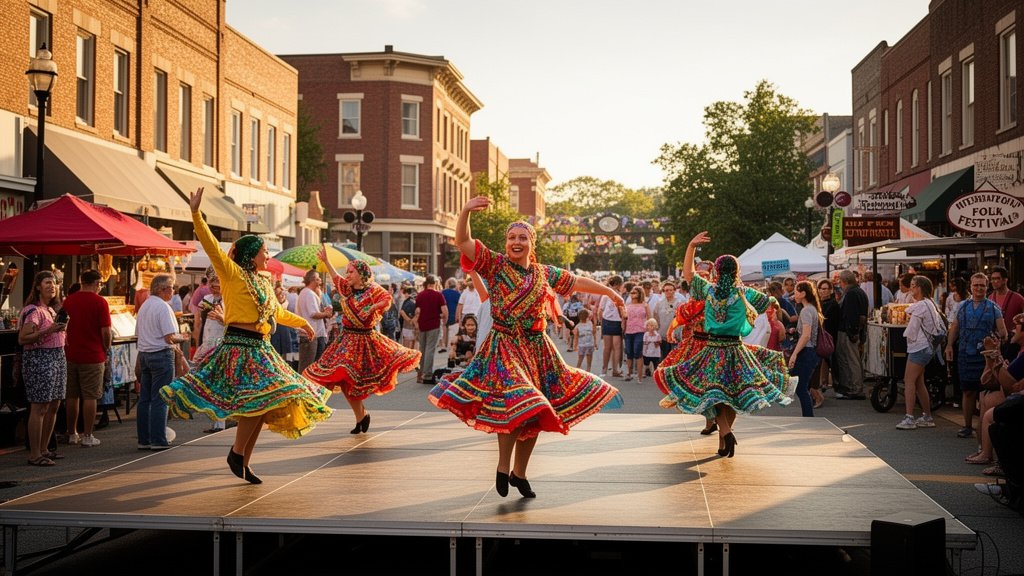
The streets of downtown Fayetteville are set to transform into a tapestry of global cultures this year as the International Folk Festival cements its reputation as the region’s preeminent cultural staple. With organizers projecting an attendance exceeding 30,000 people, the event has transcended its origins as a local gathering to become a major tourism driver for the Cape Fear region. By curating a multi-day experience that blends international performance arts, local culinary traditions, and street-level community engagement, the festival has effectively utilized the historic backdrop of Hay Street to foster a unique sense of place that defines the modern identity of Fayetteville.
The Anatomy of a City Staple
To understand why the International Folk Festival is considered a ‘staple’ of Fayetteville, one must look at the consistency of its execution and the scale of its reach. For decades, the Arts Council of Fayetteville/Cumberland County has managed this complex logistical feat, coordinating dozens of performance groups and hundreds of vendors. The event’s stability serves as a reliable anchor in the downtown calendar, providing local businesses with a predictable surge in foot traffic that often marks the highest revenue weekend of the quarter. This is not merely a party; it is a meticulously managed economic ecosystem. The festival’s ability to draw 30,000 attendees—a figure that represents a significant percentage of the city’s population—demonstrates that it is a key piece of Fayetteville’s broader revitalization strategy.
Historical Context: From Small Roots to Regional Anchor
Since its inception in 1979, the festival has mirrored the evolution of Fayetteville itself. Initially conceived as a modest celebration of local heritage, it has gradually expanded its scope to mirror the demographic shifts and the increasing global awareness of the city. Historical data indicates that the shift toward an international focus was a deliberate pivot by the Arts Council to position Fayetteville not just as a military-adjacent town, but as a diverse, welcoming hub for the arts. By integrating international dance troupes, global musicians, and diverse culinary offerings, the festival provides a platform for cultural exchange that is rare for a city of this size. This longitudinal growth is a testament to the community’s buy-in; without the sustained support of local sponsors and the willingness of downtown business owners to surrender street access for the event, the festival would have stalled decades ago.
Economic Impact and Urban Vibrancy
The economic footprint of the International Folk Festival extends far beyond the ticket sales or vendor fees. It is a catalyst for ‘destination marketing.’ When 30,000 visitors descend upon downtown, they are also engaging with the permanent retail infrastructure of the city. The ‘multiplier effect’ is undeniable: visitors travel to Fayetteville for the festival, dine in downtown restaurants, park in city-managed facilities, and stay in local hotels. This influx provides a vital injection of capital into the local economy during a time of year that might otherwise see a slump. Furthermore, the festival provides a low-barrier entry point for smaller, independent artisans and food trucks to reach a massive audience, essentially serving as a business incubator for three days.
Exploring the Future of the Festival
Looking ahead, the organizers face a unique challenge: managing success without losing the intimacy that makes the event a ‘staple’ in the first place. As attendance numbers continue to climb toward the 30,000 mark and beyond, the structural limitations of the downtown district come into play. Future iterations will likely rely more heavily on digital integration—mobile apps for schedule management, contactless payment systems for vendors, and augmented reality (AR) wayfinding to help navigate the packed streets of Hay Street. Moreover, there is an ongoing discussion about expanding the footprint of the festival into the nearby Festival Park or utilizing the broader historic district to alleviate overcrowding. The goal for the next decade will be to balance the scale of the event with the experience of the attendee, ensuring that the festival remains a hallmark of Fayetteville’s cultural calendar rather than a victim of its own success.
Strategic Challenges and Community Integration
The integration of the festival into the downtown area is not without its complexities. Managing traffic flow, noise ordinances, and public safety for a crowd of 30,000 requires intense coordination between the Arts Council of Fayetteville/Cumberland County and the city’s municipal government. This cooperation is perhaps the most impressive aspect of the event’s success. It represents a ‘public-private partnership’ that works effectively year after year. The ability to shut down major thoroughfares, coordinate security, and maintain the aesthetic integrity of the historic downtown district requires a level of bureaucratic fluidity that many cities fail to achieve. The festival, therefore, serves as a proof-of-concept for how the city manages large-scale public initiatives, setting a gold standard for other local events to follow.
The Human Element: Why Diversity Matters
Ultimately, the ‘staple’ status of the International Folk Festival is derived from its emotional resonance. In an increasingly polarized landscape, the festival remains a neutral, joyful space where community members can experience different cultures side-by-side. By prioritizing performers from diverse backgrounds, the Arts Council has created a space that feels essential. It is not just about the numbers—the 30,000 people or the revenue—it is about the symbolic function the festival plays in Fayetteville. It says that this city is a place where global ideas are welcome and where the community finds strength in its differences. That cultural cohesion is the true ROI of the festival, providing a social value that far outweighs the immediate economic benefits.
More Stories
Lowriding’s Rise: SF Celebrates Cruising Culture
U.S. Repatriates 64 Cultural Relics and Fossils to China
Betting on Viral Fame: Novig’s Strategic Use of Sydney Sweeney