











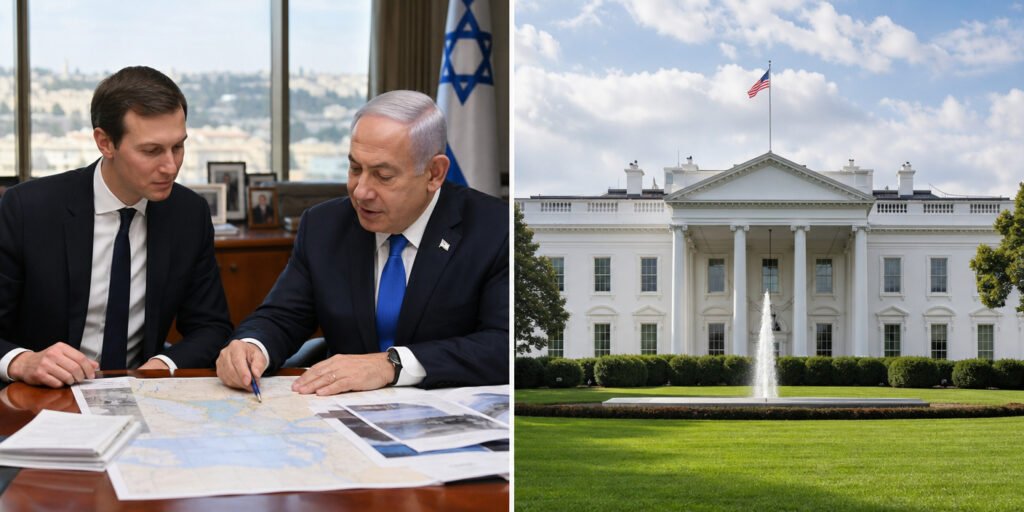
President Trump officially confirmed on Tuesday morning, August 18, 2026, a significant reduction in the scope and frequency of joint military exercises with South Korea. Citing mounting cost concerns and a desire to pivot toward a more flexible diplomatic strategy, the administration aims to reallocate national resources while maintaining the structural integrity of the ROK-US alliance. Simultaneously, in the Middle East, Jared Kushner has continued his high-stakes shuttle diplomacy, meeting with Prime Minister Benjamin Netanyahu in Jerusalem to finalize framework discussions regarding the post-conflict administration and reconstruction of the Gaza Strip.
Key Highlights
- Strategic Drawdown: The White House announced a specific reduction in US-South Korea military exercises to streamline operational budgets and prioritize a transactional diplomatic approach.
- Kushner’s Mandate: Jared Kushner is engaged in intensive, direct negotiations with Prime Minister Netanyahu, focusing on security architecture and future governance models for Gaza.
- Policy Realignment: The dual announcements represent a shift toward “America First” geopolitical positioning, balancing Indo-Pacific deterrence with Middle Eastern stability.
- Economic Rationalization: Trump’s focus on the fiscal impact of overseas military commitments highlights a growing trend of prioritizing domestic economic strength over traditional, permanent forward-deployed military posture.
The Strategic Realignment: Trump’s Global Policy Pivot
The dual-track announcement on August 18, 2026, marks one of the most significant foreign policy shifts of the Trump administration’s second term. By simultaneously reducing military commitments in the Pacific and doubling down on complex diplomatic brokering in the Middle East, the White House is signaling an era of “precision engagement.” This strategy suggests that the United States is moving away from the era of static, multi-front military preparedness in favor of a more agile, cost-conscious, and interest-driven framework.
The Korea Pivot: Cost-Efficiency in Defense
The reduction in joint military exercises with South Korea, a cornerstone of the US-ROK alliance since the armistice, has sent ripples through the defense establishment. While Pentagon officials emphasize that the alliance remains ironclad, the administration’s focus on the fiscal burden of these drills—which have historically involved tens of thousands of troops, carrier strike groups, and long-range bomber flights—points to a clear strategic pivot.
Critics argue that scaling back these exercises could embolden regional adversaries, particularly in an era of heightened geopolitical competition. However, supporters within the administration argue that the “cost-benefit” analysis is undeniable. By replacing expensive, large-scale field exercises with high-fidelity simulations and smaller, specialized joint operations, the US seeks to achieve the same deterrence goals at a fraction of the cost. This shift is not merely about austerity; it is about liberating diplomatic capital. The resources saved from these military reductions are intended to support a broader initiative of economic investment and bilateral negotiation in Southeast Asia, aimed at counterbalancing competitor influence without the friction of a continuous, high-intensity military presence.
Kushner’s Middle East Mission: Charting the Future of Gaza
While the Indo-Pacific strategy trends toward consolidation, the Middle East mission led by Jared Kushner is characterized by intense, hands-on negotiation. Meeting with Prime Minister Benjamin Netanyahu in Jerusalem, Kushner has been tasked with bridging the significant divide regarding the future of the Gaza Strip. The discussions are reportedly centered on creating a sustainable governance framework that satisfies Israel’s security requirements while addressing the humanitarian and developmental needs of the Gaza population.
Kushner’s approach, which draws heavily on the methodologies that birthed the Abraham Accords, prioritizes private-sector investment, regional integration, and security guarantees backed by key Arab partners. The primary challenge remains the political transition of the Gaza Strip, which has been a point of contention for decades. By positioning these talks as a direct successor to the peace-building successes of his previous tenure, Kushner is looking to establish a “Gaza Reconstruction Authority”—a proposed international body intended to stabilize the region through economic empowerment rather than traditional, prolonged peacekeeping operations.
The Intersection of Global Strategy
What connects these two events is the underlying philosophy of “transactional stability.” Trump’s foreign policy is increasingly defined by the belief that the United States should not be the sole underwriter of global order, particularly when those costs are not clearly aligned with national security or economic interests.
In South Korea, the reduction is a move to audit the American contribution to regional defense. In the Middle East, the Kushner-Netanyahu talks represent an attempt to replace endless diplomatic stalemate with a rigid, incentivized roadmap for regional prosperity. Both initiatives rely heavily on the assumption that regional actors are capable and willing to bear more of the responsibility for their own security and governance, provided the United States provides the initial framework and strategic backing.
The Future Implications for US Diplomacy
As we look beyond the events of August 18, 2026, the long-term success of these policies will depend on how adversaries interpret the US withdrawal from traditional postures. If the reduction in Korean exercises is viewed as weakness, the administration will face a significant credibility crisis. Conversely, if the Gaza shuttle diplomacy produces tangible, long-term stability, it could serve as a model for future conflict resolution globally.
Analysts are currently monitoring the reactions from the United Nations and regional allies, specifically the Japanese government and various Gulf state leaders, who are watching how these changes affect the overall balance of power. The Trump administration is betting that the global community will adapt to this new, more disciplined US approach, effectively creating a world where nations are more responsible for their own outcomes, and the US acts less like a global policeman and more like a strategic broker.
FAQ: People Also Ask
1. Why is the US reducing military exercises in South Korea?
President Trump cited “cost concerns and diplomatic strategy.” The move reflects an administration effort to reduce operational expenditures and move toward more efficient, less costly military postures in the Indo-Pacific, prioritizing fiscal discipline.
2. What is Jared Kushner’s current role in the Middle East?
Jared Kushner is leading intensive shuttle diplomacy efforts, acting as a special envoy for the administration to negotiate the future of the Gaza Strip with Israeli leadership, aiming to implement a new governance and economic framework.
3. How does the Gaza diplomacy influence broader regional stability?
If successful, the administration believes these talks will create a template for regional stability that relies on economic integration and private-sector investment, potentially expanding the legacy of the Abraham Accords to include post-conflict Gaza.
More Stories
Costco Goes Nationwide on Uber Eats: A New Era for Bulk Delivery
Elena Rybakina Wins US Open, Ascends to World No. 1
Rubio Seals Security Pacts; Vance Drives Policy Agenda